
11 Master Bedroom Ideas With Wardrobe Design
A well-designed wardrobe can completely change how a master bedroom looks and functions. It provides essential storage, but it also occupies a large visual area, which means its doors, materials, colors, and proportions can influence the entire room.
The most successful bedroom wardrobes do more than hold clothing. They help create a sense of order, make daily routines easier, and support the overall decorating style. A streamlined built-in wardrobe can make a modern bedroom feel calm, while natural wood cabinetry can add warmth to a neutral space.
In my experience, wardrobe planning works best when storage needs come first and aesthetics follow naturally. Think about hanging space, drawers, shelves, shoes, accessories, luggage, and seasonal clothing before choosing the exterior design. A beautiful wardrobe that lacks useful storage quickly becomes frustrating.
The surrounding bedroom also matters. Your wardrobe does not need to match every piece of furniture exactly, but repeating a finish or color can make the room feel cohesive. For example, warm oak wardrobe doors can connect with a wood bed frame, while matte beige cabinetry can complement upholstered furniture and neutral bedding.
Whether you prefer sleek glass doors, warm wood panels, minimalist white cabinetry, or a dramatic dark finish, there are plenty of ways to make wardrobe storage feel like an intentional part of the bedroom design.
These 11 master bedroom ideas wardrobe design options explore practical layouts, attractive finishes, and modern storage approaches that work for both spacious and compact bedrooms.
Table of Contents
1. Floor-To-Ceiling Wardrobe
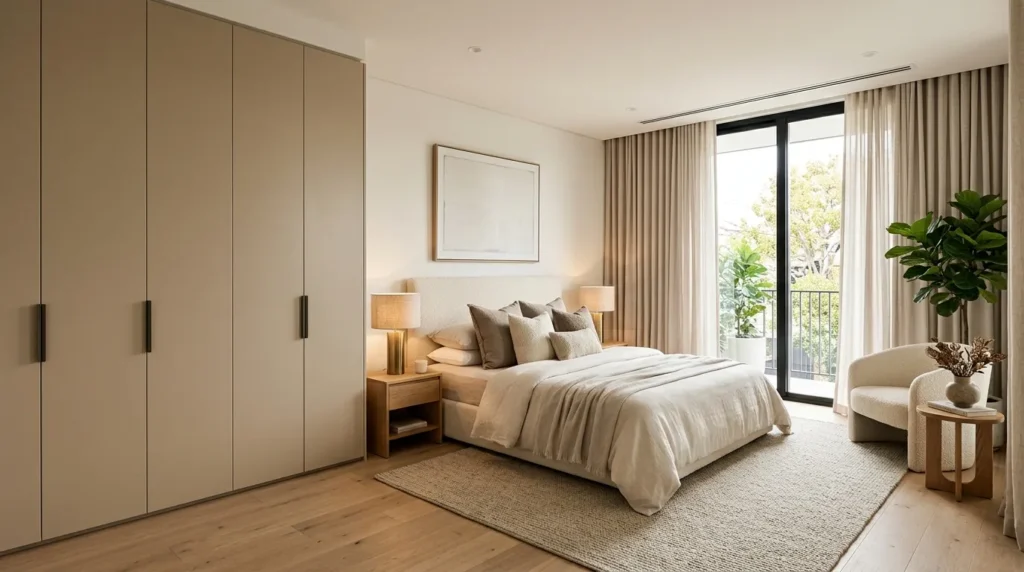
A full-height wardrobe maximizes vertical storage while creating a streamlined built-in appearance.
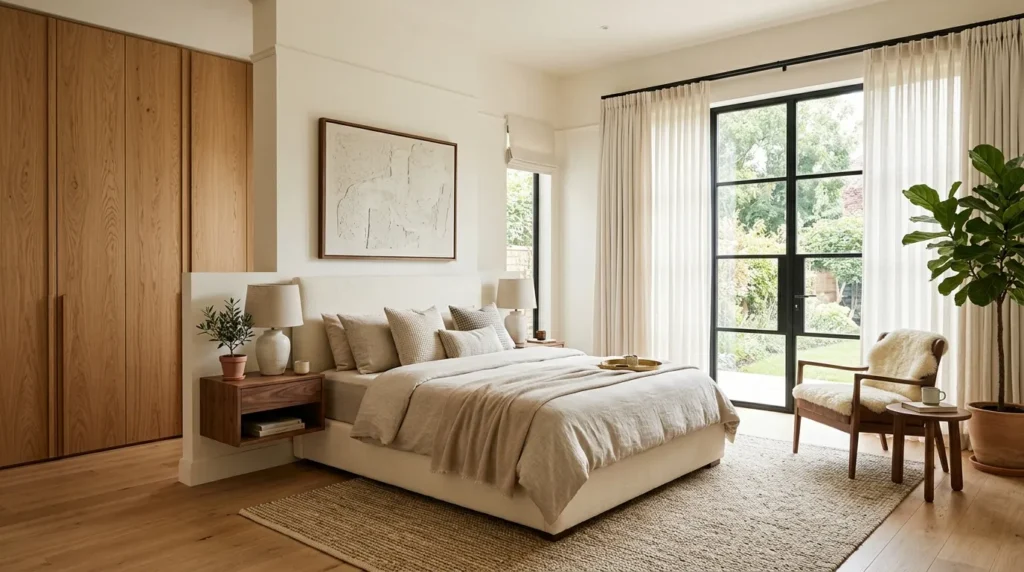
2. Warm Wood Panels
Natural wood cabinetry brings warmth and texture into a sophisticated master bedroom.
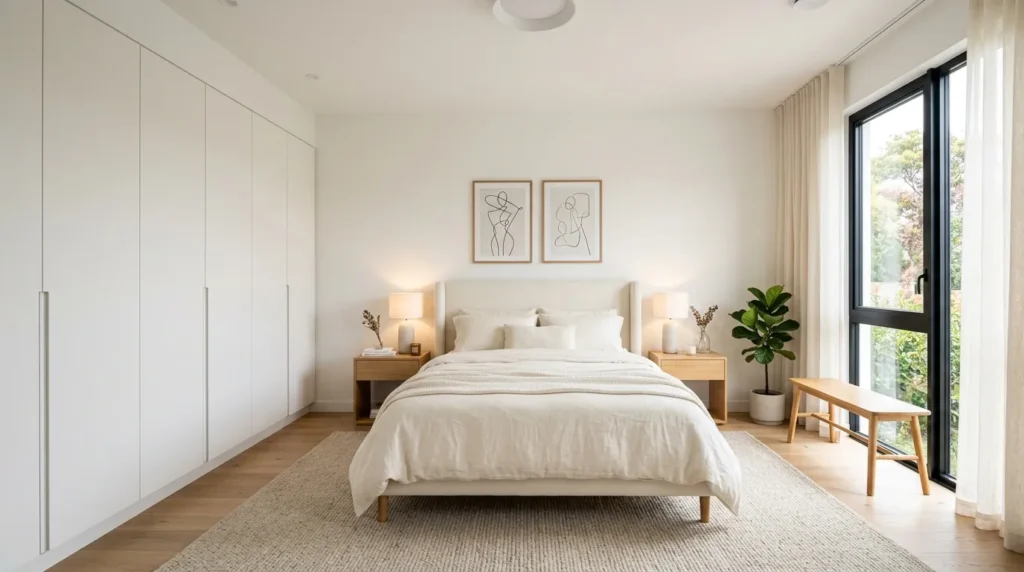
3. Minimal White Storage
White wardrobes create a bright, clean backdrop that works beautifully with modern interiors.
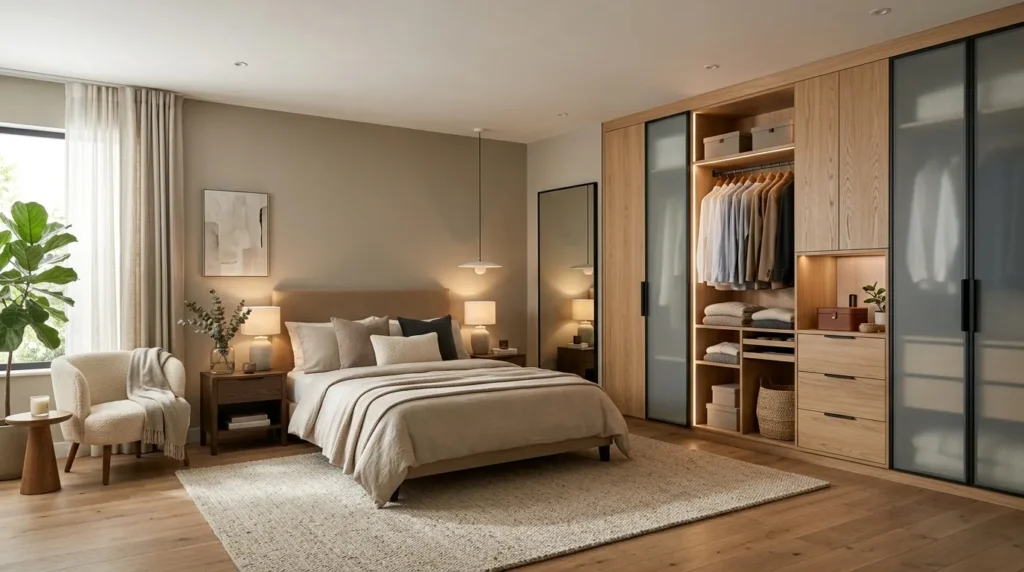
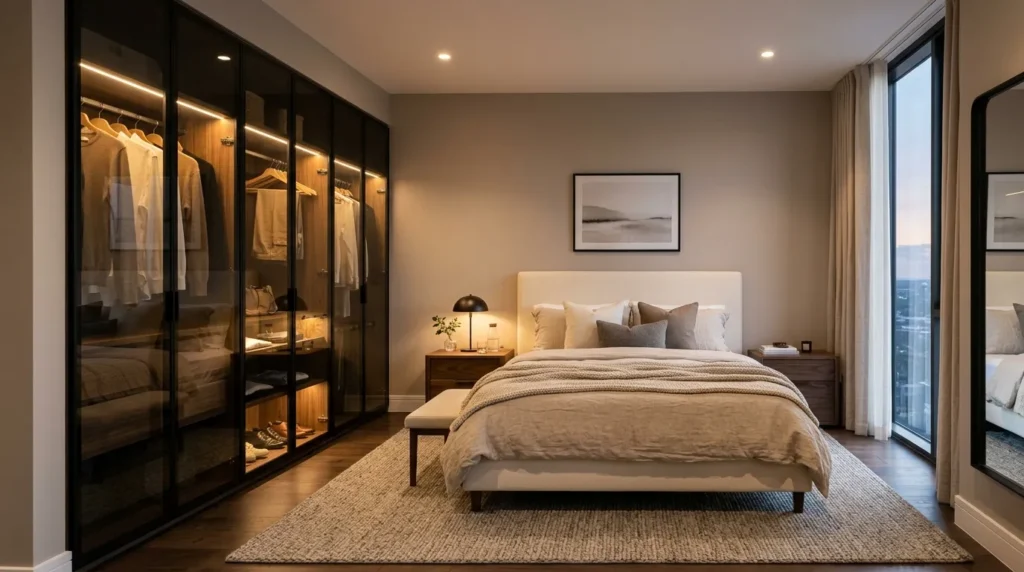
4. Glass Door Wardrobe
Glass doors make clothing storage visible while giving the bedroom a contemporary dressing-room feel.
5. Beige Built-In Wardrobe
Soft beige cabinetry blends into neutral bedrooms while adding generous concealed storage.
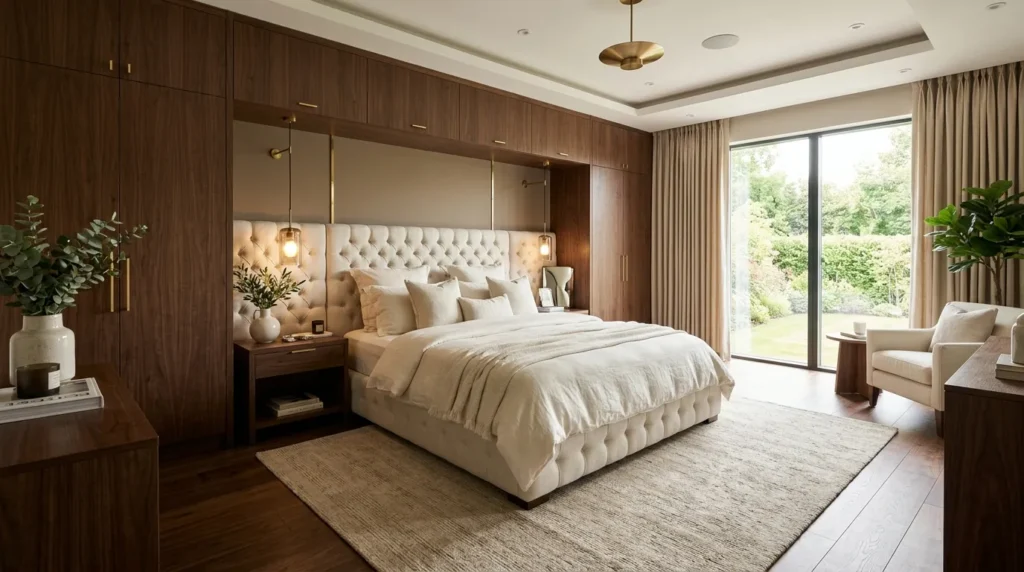
6. Dark Wood Wardrobe
Deep wood tones create a rich focal point and complement elegant bedroom furniture.
7. Mirrored Wardrobe Doors
Mirrored panels combine storage with reflective surfaces that can make a bedroom feel more open.
8. Open Wardrobe System
An open storage design creates an accessible dressing area with shelves, rails, and drawers.
9. Fluted Wardrobe Doors
Vertical fluting adds subtle texture and architectural detail to modern cabinetry.
10. Two-Tone Wardrobe Design
Combining two finishes creates visual depth while allowing the wardrobe to coordinate with the rest of the room.
11. Compact Corner Wardrobe
A corner wardrobe makes efficient use of overlooked space in smaller master bedrooms.
1. Floor-To-Ceiling Wardrobe
Quick Benefits
- Maximizes vertical storage
- Creates a built-in appearance
- Reduces visual clutter
- Uses otherwise wasted wall space
- Works well in modern bedrooms
Why It Works
Floor-to-ceiling wardrobes are practical because they take advantage of the full height of the room. Instead of leaving an awkward strip of unused wall above the cabinets, the storage extends upward and creates a more architectural appearance.
The continuous surface can also make a bedroom feel more organized. When doors remain closed, clothing, accessories, and miscellaneous items disappear behind one clean facade.
This design works particularly well in contemporary master bedrooms because simple uninterrupted cabinetry complements clean furniture lines.
The interior can contain a combination of hanging rails, drawers, shelves, and upper storage for less frequently used items.
How To Style It
Choose cabinetry that relates to the bedroom’s main color palette.
Warm white, beige, light oak, and soft gray create an airy appearance. Dark walnut or charcoal can create a more dramatic effect.
Use simple handles or push-to-open doors for a minimalist look.
If the wardrobe reaches the ceiling, reserve the highest compartments for seasonal clothing, luggage, bedding, or other items that do not require daily access.
Keep the surrounding furniture relatively streamlined so the large wardrobe wall does not dominate the room.
2. Warm Wood Panels
Quick Benefits
- Adds natural warmth
- Creates visual texture
- Works with neutral bedrooms
- Complements wooden furniture
- Creates a timeless appearance
Why It Works
Wood wardrobe doors can make a large storage wall feel warmer and more inviting. Natural grain adds visual movement without relying on bold colors or patterns.
Light oak works especially well in Scandinavian and modern organic bedrooms. Walnut creates a richer atmosphere suited to more sophisticated interiors.
The key is choosing a wood tone that relates to existing furniture rather than trying to make every wooden element identical.
Wood can also soften the hard appearance often associated with built-in cabinetry.
How To Style It
Pair warm wood wardrobe doors with cream bedding, beige curtains, and textured rugs.
For a lighter room, choose pale oak with white or ivory walls.
For a richer appearance, use walnut alongside warm beige, caramel, or muted green accents.
Keep hardware simple. Slim black or brushed brass handles can add subtle contrast.
Repeat the wood finish through a bed frame, nightstand, bench, or decorative shelving.
3. Minimal White Storage
Quick Benefits
- Creates a bright appearance
- Visually simplifies the room
- Works with many decorating styles
- Makes storage feel less dominant
- Pairs easily with colorful accents
Why It Works
White wardrobes are especially useful when you want storage to blend into the background.
A large wardrobe can visually dominate a bedroom if it has a strong finish or complicated door design. White cabinetry reduces that effect and creates a clean backdrop for the bed, artwork, lighting, and textiles.
This approach works particularly well in smaller bedrooms where visual simplicity can help the space feel less crowded.
How To Style It
Choose a warm white if the room contains beige, cream, or natural wood.
Use matte finishes for a contemporary appearance.
Pair white wardrobe doors with warm wood flooring and a textured neutral rug.
Introduce color through bedding, artwork, curtains, or an upholstered headboard.
If you want additional detail, choose subtle paneling or slim vertical grooves rather than elaborate molding.
4. Glass Door Wardrobe
Quick Benefits
- Creates a contemporary appearance
- Makes stored clothing visible
- Adds reflective surfaces
- Creates a boutique-style feel
- Works well in dressing areas
Why It Works
Glass-front wardrobes can make storage feel more like a curated dressing display. Tinted, fluted, frosted, or clear glass can create different visual effects while allowing some visibility into the wardrobe.
Tinted glass creates a more sophisticated appearance and partially conceals clothing. Fluted glass adds texture and reduces the need for perfectly arranged shelves.
This design is particularly attractive in master bedrooms where wardrobe storage is intended to feel like part of the overall interior architecture.
How To Style It
Choose black or dark metal framing for a contemporary look.
Use warm interior lighting inside the wardrobe to create a boutique-inspired effect.
Keep clothing organized by color or category if the doors are transparent.
For a softer look, choose smoked or fluted glass.
Pair the wardrobe with simple bedding and understated furniture so the glass cabinetry remains elegant rather than visually busy.
5. Beige Built-In Wardrobe

Quick Benefits
- Creates a soft neutral backdrop
- Blends with modern interiors
- Works with warm lighting
- Feels sophisticated
- Helps large wardrobes look less imposing
Why It Works
Beige cabinetry can provide more warmth than white while remaining subtle enough for a large storage wall.
It works especially well in bedrooms using cream bedding, taupe upholstery, warm wood, and natural textiles.
Because beige has many undertones, testing samples beside the flooring and other furniture is important.
A warm beige can create a cozy atmosphere, while a gray-beige can feel more contemporary.
How To Style It
Use matte beige doors with minimal handles.
Pair the wardrobe with an upholstered cream headboard and warm neutral bedding.
Add a walnut or oak nightstand for contrast.
Use brass lighting for subtle warmth or black fixtures for a sharper modern look.
Keep the surrounding palette tonal to create a calm, hotel-inspired bedroom.
6. Dark Wood Wardrobe
Quick Benefits
- Creates visual depth
- Adds warmth
- Makes a strong focal point
- Works with neutral bedding
- Creates a sophisticated atmosphere
Why It Works
Dark wood can give a master bedroom a rich, grounded appearance. Walnut, espresso, and deep brown finishes can make the wardrobe feel like a substantial architectural feature.
Because dark cabinetry has more visual weight, lighting becomes important. Natural daylight, bedside lamps, wall sconces, and ceiling lighting can keep the bedroom balanced.
This style works particularly well with cream, beige, warm gray, and muted green.
How To Style It
Pair dark wood wardrobes with light bedding to create contrast.
Use a large neutral rug to soften the darker cabinetry.
Warm brass lighting can create an elegant atmosphere, while matte black provides a more contemporary finish.
Keep the walls lighter if you want the room to feel spacious.
Add natural textures through linen curtains, wool rugs, and woven accessories.
7. Mirrored Wardrobe Doors
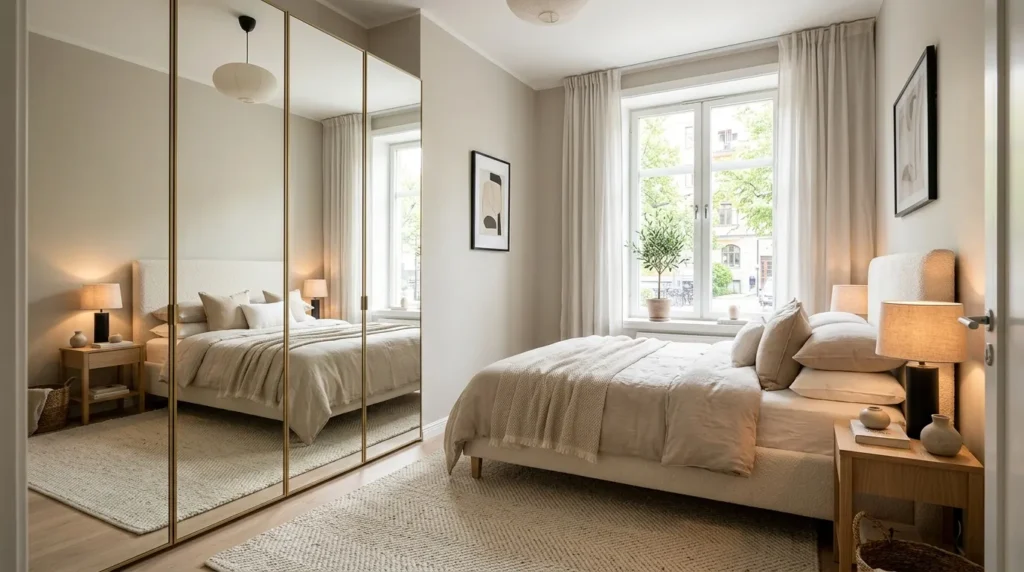
Quick Benefits
- Reflects natural light
- Creates a sense of openness
- Combines storage and functionality
- Works in smaller rooms
- Adds a dressing-room feel
Why It Works
Mirrored wardrobe doors can serve two purposes at once: they provide storage while also functioning as a full-length reflective surface.
In a compact master bedroom, this can reduce the need for a separate standing mirror and introduce additional visual depth.
Mirrors can also reflect windows or light sources, making the room feel brighter when positioned thoughtfully.
How To Style It
Use full-height mirrored panels for maximum visual impact.
Choose a simple frame in black, bronze, silver, or a matching neutral.
Keep the surrounding furniture relatively simple because the mirrored surface already adds visual activity.
Place the wardrobe where it reflects something attractive rather than a cluttered corner.
Warm wood furniture and soft neutral bedding can balance the cooler appearance of the mirror.
8. Open Wardrobe System
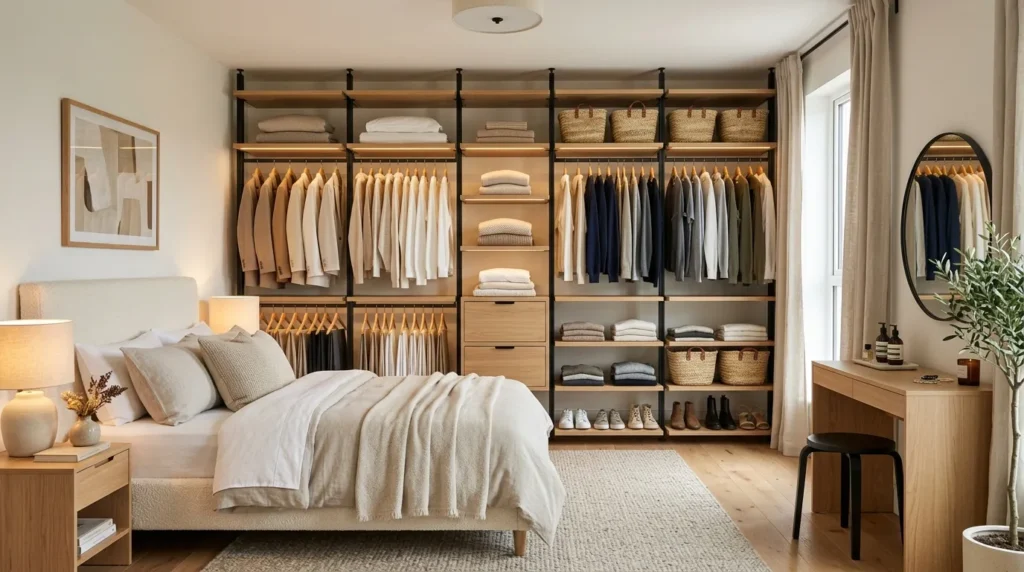
Quick Benefits
- Provides easy access
- Makes clothing visible
- Allows flexible organization
- Works in dressing zones
- Creates a customized storage system
Why It Works
Open wardrobes can work beautifully when storage is organized intentionally. Instead of hiding everything behind doors, clothing becomes part of the room’s visual composition.
This design can be useful when a separate dressing room is not available. Rails, shelves, drawers, and baskets can be arranged according to actual storage needs.
It also makes frequently used items easy to reach.
The tradeoff is that open storage requires more visual discipline than closed cabinetry.
How To Style It
Group clothing by category or color.
Use matching or coordinated hangers for a cleaner appearance.
Place folded items on shelves and smaller accessories in baskets or drawers.
Add warm LED lighting to illuminate the wardrobe.
A curtain can also be installed in front of the system if you want the option of concealing the storage.
9. Fluted Wardrobe Doors
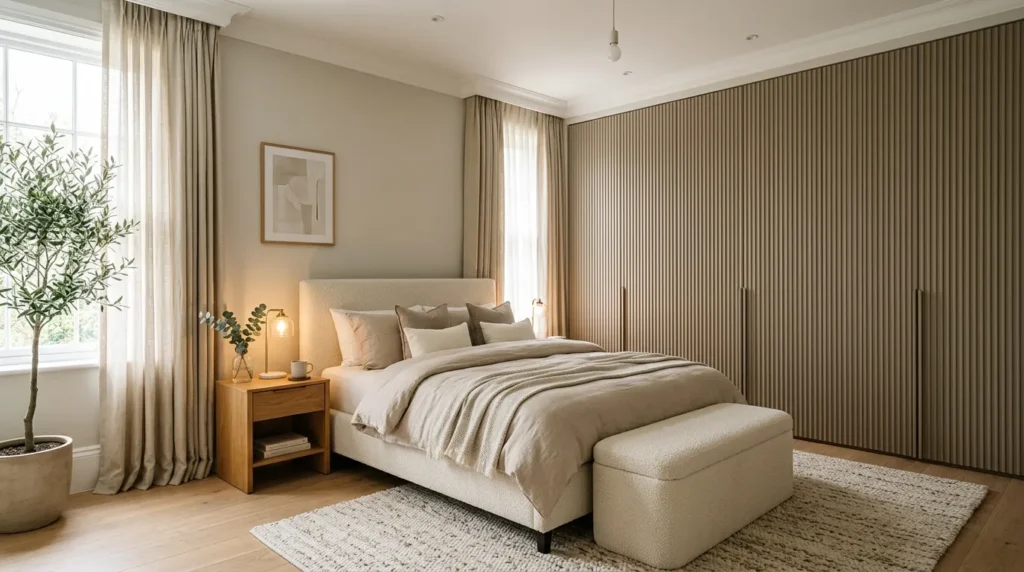
Quick Benefits
- Adds subtle texture
- Creates architectural detail
- Works with minimalist rooms
- Makes plain cabinetry more interesting
- Creates vertical emphasis
Why It Works
Fluted or reeded wardrobe doors add texture without introducing a complicated pattern.
The vertical lines can also emphasize the height of the room, making floor-to-ceiling cabinetry appear more architectural.
This design works particularly well when the rest of the bedroom has smooth surfaces. The fluting becomes a subtle tactile element without requiring bold color.
How To Style It
Choose warm beige, cream, natural wood, or muted gray for a refined appearance.
Pair fluted doors with simple furniture and understated bedding.
Use warm lighting to highlight the texture in the evening.
Repeat vertical lines subtly through curtains, wall paneling, or tall artwork if desired.
Avoid combining too many heavily textured surfaces in one room.
10. Two-Tone Wardrobe Design
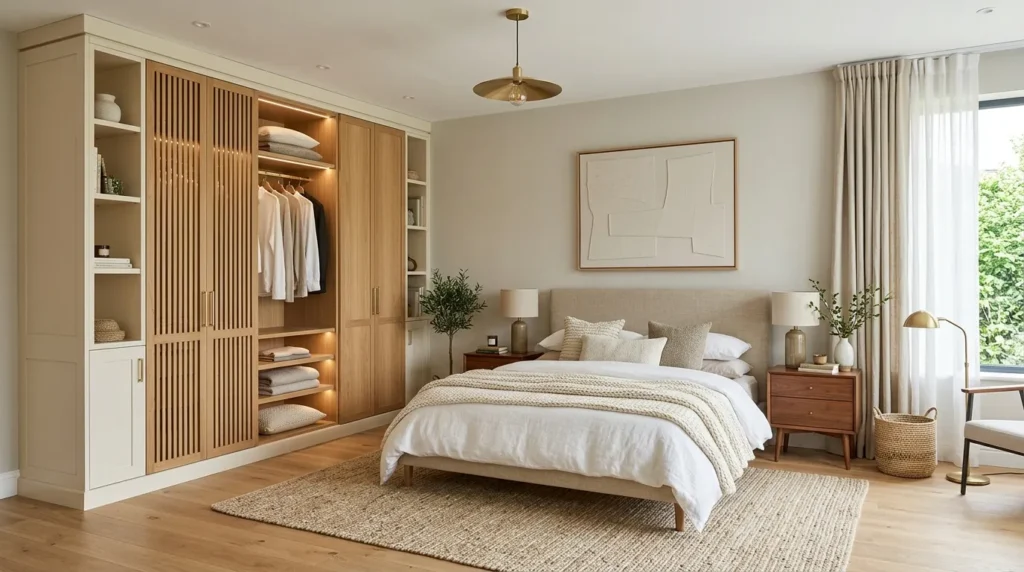
Quick Benefits
- Creates visual depth
- Adds personality
- Connects different finishes
- Breaks up a large wardrobe
- Works with modern interiors
Why It Works
Two-tone wardrobes can make a large storage wall feel more visually interesting.
One section might use natural wood while another uses cream cabinetry. Another option is dark lower cabinets paired with lighter upper doors.
This allows the wardrobe to connect multiple elements already present in the bedroom.
For example, wood doors can relate to the floor while beige cabinetry matches the walls.
How To Style It
Choose one neutral and one accent finish.
For a warm modern bedroom, combine light oak and cream.
For a dramatic room, pair walnut with beige.
For a contemporary palette, combine matte white with charcoal.
Keep the two finishes clearly defined rather than adding multiple competing materials.
11. Compact Corner Wardrobe
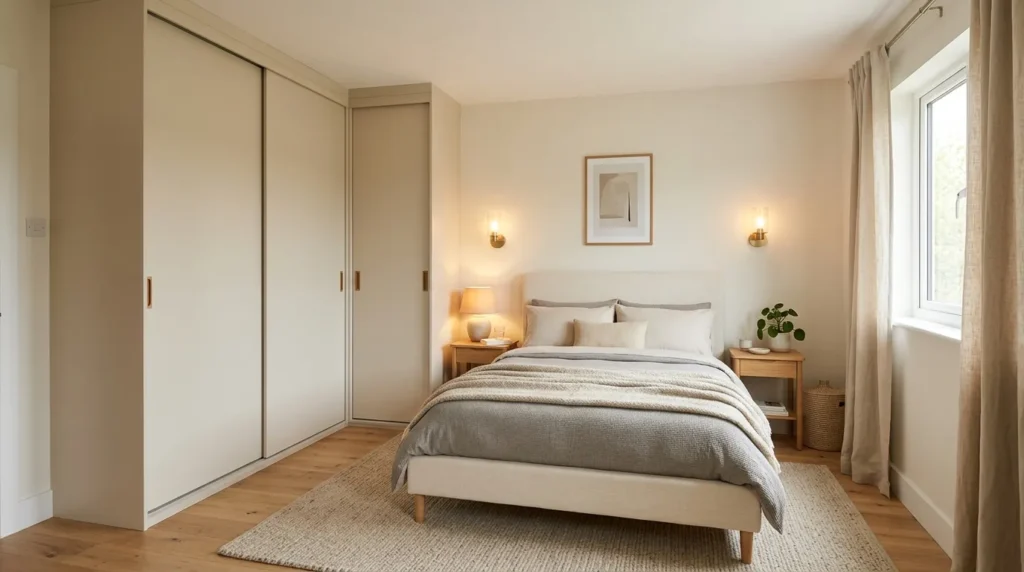
Quick Benefits
- Uses overlooked space
- Works in small bedrooms
- Maximizes storage
- Creates a dedicated clothing zone
- Helps maintain open floor space
Why It Works
Corners can become valuable storage areas when the bedroom layout is compact.
A corner wardrobe can connect two walls and create more storage without placing separate cabinets throughout the room.
This approach can be especially helpful when the bed, windows, and doors leave limited uninterrupted wall space.
Built-in corner solutions can also make awkward architectural areas feel intentional.
How To Style It
Use light cabinetry if the room is small and you want a brighter appearance.
Choose sliding doors when swing clearance is limited.
Add drawers at waist level and hanging storage above.
Use the uppermost section for seasonal items.
Keep the bed and nightstands relatively simple so the wardrobe remains integrated into the room rather than feeling like a separate furniture block.
How To Choose the Right Wardrobe Design
Start by measuring the available wall space, ceiling height, door clearance, and distance from the bed.
Then make a list of what the wardrobe actually needs to store.
Consider:
- Long hanging clothes
- Short hanging clothes
- Folded clothing
- Shoes
- Accessories
- Bags
- Bedding
- Seasonal items
- Luggage
This list helps determine how much hanging space, shelving, and drawer storage you require.
Next, decide whether you prefer concealed or visible storage.
Closed wardrobes create a cleaner appearance. Open wardrobes provide easier access but require more organization. Glass doors sit somewhere between the two.
Finally, choose the exterior finish based on the rest of the bedroom. A wardrobe occupying an entire wall can become visually heavy if its color contrasts too strongly with everything else.
How To Make a Wardrobe Look Built-In
The simplest way to create a built-in appearance is to extend the cabinetry from floor to ceiling and wall to wall where possible.
Matching the cabinet color to the walls can make the wardrobe blend into the architecture.
Minimal handles or push-to-open doors also reduce visual interruptions.
Another useful technique is creating a continuous line across multiple doors rather than mixing different door styles.
Lighting can also improve the built-in effect. Warm LED strips inside the wardrobe provide practical illumination while creating a refined appearance.
Best Wardrobe Colors for a Master Bedroom
Warm white is versatile and bright.
Beige creates a softer, warmer appearance.
Greige works well with modern neutral interiors.
Light oak introduces natural texture.
Walnut adds richness and depth.
Muted green creates an earthy atmosphere.
Charcoal produces stronger contrast.
The best option depends on the room’s natural light and existing finishes.
If the bedroom already contains dark flooring and furniture, a lighter wardrobe can create balance. If the room is mostly pale, a wood or darker wardrobe can provide visual depth.
Common Wardrobe Design Mistakes
One common mistake is prioritizing appearance while overlooking storage requirements.
A beautiful wardrobe becomes frustrating when there are not enough drawers, shelves, or hanging rails for everyday clothing.
Another issue is insufficient clearance. Hinged doors require space to open, while sliding doors can be more practical in compact bedrooms.
Using too many different finishes can also make the room feel disconnected.
A large wardrobe should usually have a clear visual relationship with the bed, flooring, walls, or other major elements.
Finally, remember the top of the wardrobe. Floor-to-ceiling cabinetry uses this space effectively, but the highest compartments are best reserved for items used less frequently.
Frequently Asked Questions
What is the best wardrobe design for a master bedroom?
Floor-to-ceiling built-in wardrobes are among the most practical choices because they maximize vertical storage and create a streamlined appearance. The ideal design depends on the room size and storage requirements. Options include hinged doors, sliding doors, glass panels, open systems, and mirrored fronts.
Are built-in wardrobes better for master bedrooms?
Built-in wardrobes can provide efficient use of available wall space and create a cohesive appearance. They can be customized with drawers, shelves, hanging areas, and specialized storage. Freestanding wardrobes offer more flexibility if you expect the room layout to change.
What wardrobe color makes a bedroom look bigger?
Light colors such as warm white, cream, beige, and pale gray can make cabinetry visually blend into the room. Mirrored doors can also create additional reflection. Matching the wardrobe closely to the wall color is another way to reduce visual contrast.
Are mirrored wardrobes good for small bedrooms?
Mirrored wardrobes can be useful in small bedrooms because they combine storage with a full-length reflective surface. They can reflect natural or artificial light and create a greater sense of visual depth. Positioning matters because mirrors are most effective when they reflect an attractive or well-lit part of the room.
Which is better, sliding or hinged wardrobe doors?
Both options can work well. Sliding doors save clearance space and are useful in compact rooms. Hinged doors provide full access to the wardrobe interior and can offer more flexibility for internal organization. The room’s available floor space and layout are important factors.
How do I make a large wardrobe look less bulky?
Choose a wall-matching color, use simple door fronts, extend cabinetry to the ceiling, and avoid excessive hardware. Natural wood or subtle fluted textures can also add character without requiring bold decorative details. Good lighting helps prevent a large wardrobe wall from feeling visually heavy.
How deep should a bedroom wardrobe be?
A wardrobe needs enough depth for the intended storage, particularly for hanging clothes, but the exact dimensions depend on the internal system and door style. Measure the actual storage components and allow adequate room for doors, drawers, and comfortable movement before finalizing the design.
Related Articles
- 10 Modern Bedroom Ideas with Elegant Wood Accents
- 10 Bedroom Wall Decor Ideas That Feel Warm and Stylish
- 10 Cozy Neutral Aesthetic Bedroom Ideas
- 10 Modern Bedroom Ideas with Hotel-Inspired Comfort
- 10 Bedroom Organization Ideas for a Calm Space
Conclusion
A master bedroom wardrobe can become one of the most important design elements in the room. It occupies significant wall space, influences the visual balance, and determines how easily clothing and personal belongings can be organized.
Start with function. Decide what needs to be stored, how much hanging space is required, and which items need drawers or shelves. Once those practical decisions are clear, choosing the exterior style becomes much easier.
Floor-to-ceiling cabinetry creates a streamlined appearance, while warm wood brings natural character. White and beige wardrobes keep the room bright and calm, while dark wood creates richness. Glass and mirrored doors add a contemporary dressing-room feel, while fluted and two-tone designs provide subtle architectural interest.
For smaller bedrooms, corner wardrobes and sliding doors can make better use of limited space. Open systems can also work well when accessibility and organization are priorities.
The most successful wardrobe is not simply the one that looks beautiful. It is the one that fits the room, supports daily routines, provides enough storage, and complements the surrounding decor.
Choose finishes that connect naturally with your bed, flooring, walls, and textiles. Keep the design intentional, and your wardrobe can become an elegant part of the bedroom rather than something that simply occupies storage space.