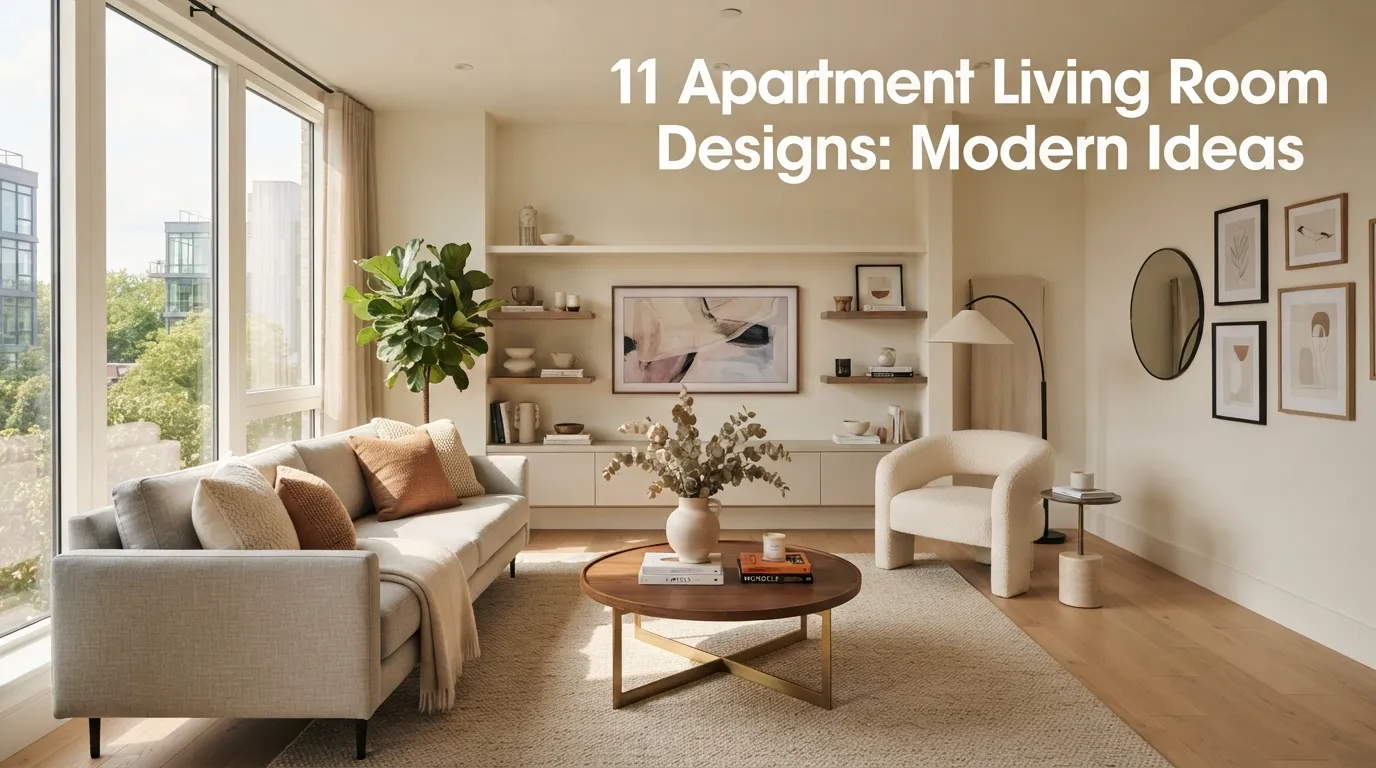
11 Apartment Living Room Designs: Modern Ideas
Apartment living rooms have a special decorating challenge: you want the space to feel stylish and personal, but you often have to work around limited square footage, rental restrictions, awkward layouts, shared spaces, and less-than-ideal natural light.
The good news is that a smaller living room doesn’t need to look or feel limited. With the right furniture scale, color palette, lighting, and layout, even a compact apartment can feel polished, comfortable, and surprisingly spacious.
Modern apartment decorating is especially useful because it focuses on clean lines, practical furniture, intentional accessories, and visual simplicity. You don’t need a huge sectional or an enormous collection of decor to create a beautiful room. Sometimes a well-sized sofa, attractive rug, floor lamp, and one statement piece can completely change the atmosphere.
I’ve noticed that the biggest difference usually comes from how the available space is used rather than how much furniture is purchased. A room can feel crowded with expensive pieces if the proportions are wrong, while a modestly furnished apartment can feel sophisticated when every item has a clear purpose.
These 11 apartment living room designs modern ideas cover a range of styles, from warm neutral spaces and minimalist layouts to cozy small-room solutions, colorful accents, and renter-friendly decorating. You’ll also find practical ways to make furniture work harder, create visual zones, add personality without clutter, and make your apartment feel like a home rather than a temporary space.
Whether you’re decorating your first apartment, refreshing a rental, or simply trying to make a small living room more functional, these ideas can help you create a modern space that looks beautiful and works for everyday life.
Table of Contents
1. Soft Neutral Layers
Warm neutrals create an airy, comfortable foundation that works beautifully in apartments.
2. Compact Sectional Layout
A carefully sized sectional can provide generous seating without overwhelming a smaller room.
3. Modern Black Accents
Small amounts of black create definition and give a neutral apartment a contemporary edge.
4. Light Wood Warmth
Natural wood introduces warmth and texture while keeping the room feeling bright and modern.
5. Cozy Corner Seating
An overlooked corner can become a useful and inviting part of the living room.
6. Minimalist Apartment Style
A restrained furniture arrangement can make a compact apartment feel more spacious.
7. Colorful Accent Pieces
A few carefully selected colors can bring personality to a neutral modern apartment.
8. Modern Gallery Wall
A curated wall display adds character without taking up valuable floor space.
9. Floating Furniture
Strategically positioning furniture away from walls can improve flow and define the living area.
10. Layered Ambient Lighting
Multiple light sources make an apartment feel warmer, brighter, and more sophisticated.
11. Multi-Functional Design
Furniture that serves more than one purpose helps small apartments work harder.
1. Soft Neutral Layers
Quick Benefits
- Makes small rooms feel brighter
- Creates a calm modern atmosphere
- Works with many furniture styles
- Makes future decor changes easier
- Helps visually connect open-plan spaces
Why It Works
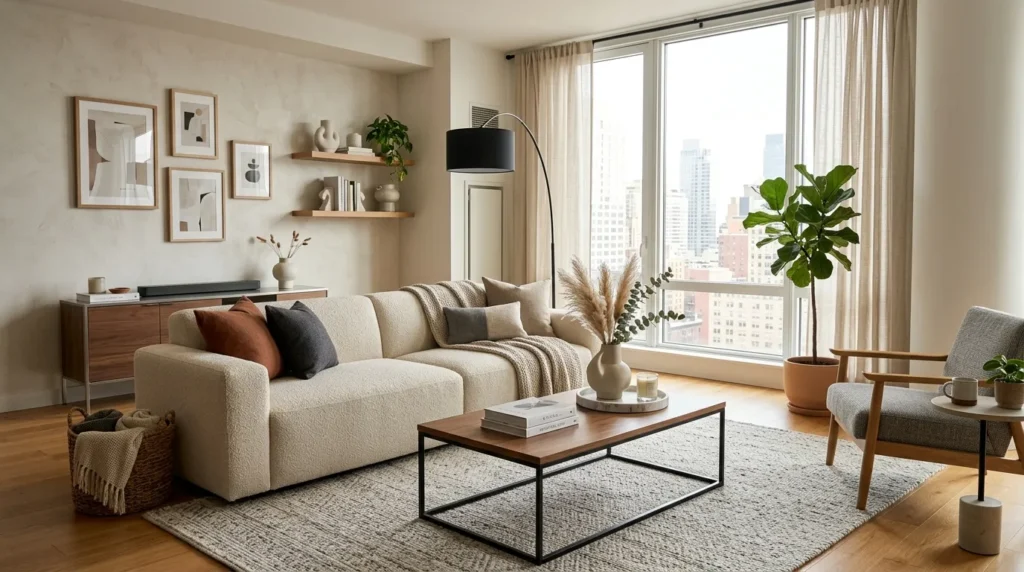
Soft neutrals are a reliable starting point when you’re decorating an apartment because they make the room feel open without making it look empty. Cream, warm white, beige, taupe, and light gray can work together to create subtle contrast while keeping the overall appearance cohesive.
The key is layering rather than matching. A cream sofa doesn’t need a cream rug, cream walls, and cream accessories. Instead, introduce slightly different shades and textures so the room has dimension.
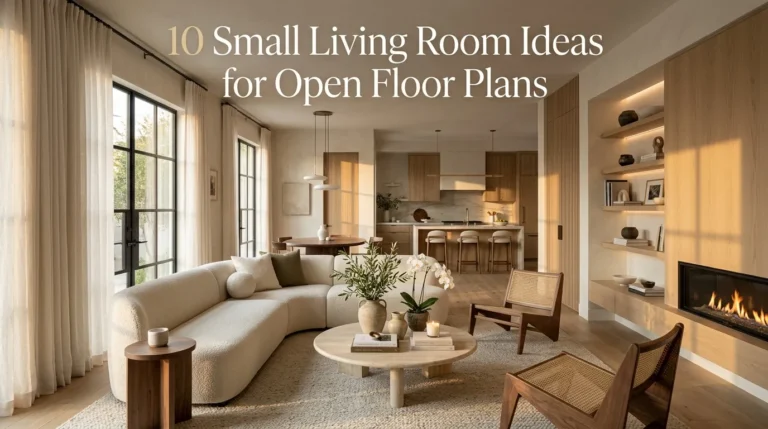
This approach is particularly useful in apartments with open kitchens or combined living and dining areas. A restrained palette can visually connect several zones without requiring every piece of furniture to match.
A common mistake is assuming that a neutral room needs to be plain. Texture, shape, wood grain, artwork, and lighting can provide plenty of visual interest even when the color palette remains quiet.
How To Style It
Choose a sofa in warm gray, oatmeal, beige, or cream. Pair it with a textured rug that is one or two shades lighter or darker than the sofa.
Add a light wood coffee table to introduce warmth. If the room is especially small, choose a table with a slim profile or open base so more of the floor remains visible.
Use curtains in a similar family of colors, preferably hung close to the ceiling to create the impression of greater height. Layer pillows using linen, boucle, cotton, or woven fabrics.
Add one darker accent, such as a black lamp or charcoal picture frame, to prevent the palette from becoming too washed out.
Keep everyday necessities organized in attractive baskets or closed storage. The result should feel relaxed rather than overly staged.
2. Compact Sectional Layout
Quick Benefits
- Maximizes seating
- Makes use of awkward corners
- Creates a defined conversation area
- Can eliminate the need for multiple chairs
- Works well in open-plan apartments
Why It Works
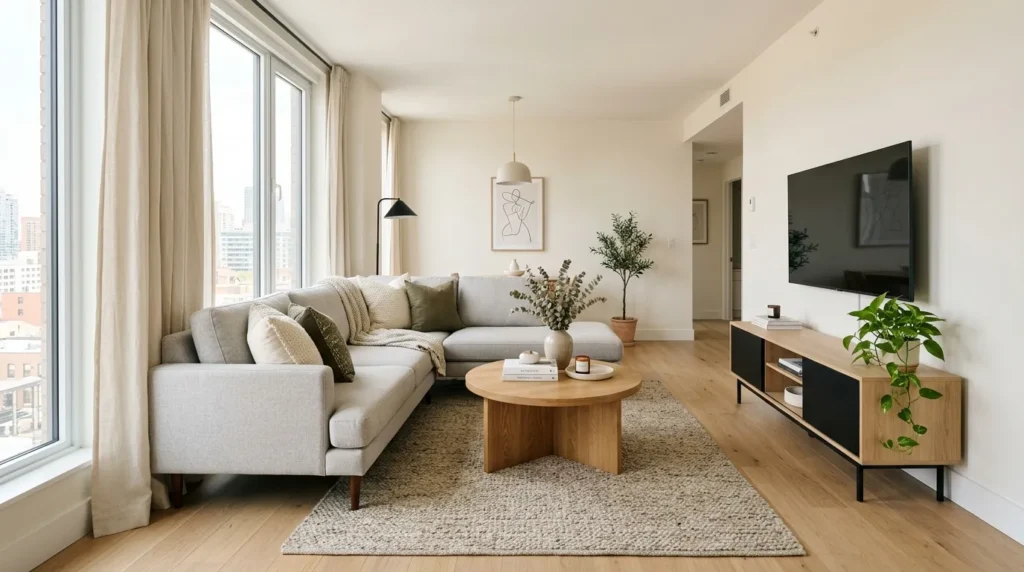
A sectional can be surprisingly practical in an apartment when its dimensions are carefully considered. Many people assume a sectional automatically makes a small room feel crowded, but the right L-shaped design can actually use space more efficiently than a sofa plus several separate chairs.
The important word is compact. A massive sectional may overwhelm a small living room, while a streamlined apartment-sized model can provide comfortable seating without consuming the entire floor.
An L-shaped sectional is particularly useful when one corner of the room would otherwise be difficult to furnish. It can naturally establish the boundaries of the living area, which is valuable in an open floor plan.
How To Style It
Measure the room before purchasing anything. Pay attention not only to the sofa’s overall width but also to its depth and chaise length.
Choose a sectional with clean lines and a relatively slim frame. Light upholstery can help it feel visually lighter, although a darker sofa can also work when balanced with a pale rug and walls.
Place a coffee table within comfortable reach of the primary seating areas. A round table is often easier to navigate around than a large rectangular one.
Add a narrow console behind the sectional if there is enough room. It can provide a surface for a lamp, books, or decorative objects without requiring another large piece of furniture.
Keep the surrounding area relatively simple. When the sectional is the largest item in the room, too many additional furnishings can quickly make the apartment feel crowded.
3. Modern Black Accents
Quick Benefits
- Adds definition to neutral spaces
- Creates a contemporary appearance
- Works with small amounts of decor
- Makes pale colors look more sophisticated
- Adds contrast without changing the entire room
Why It Works
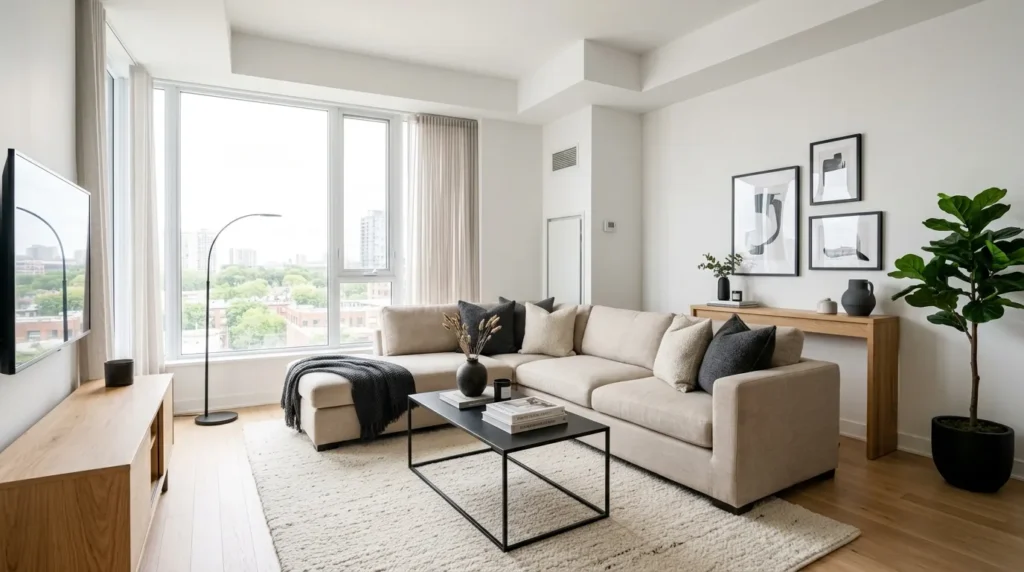
Black is an effective decorating tool because a little can make a big difference. In a mostly neutral apartment, black picture frames, lighting, furniture legs, curtain rods, or small tables can create visual structure.
The secret is repetition. Instead of putting one random black object in the room, repeat the finish in several locations. This makes the contrast feel intentional.
Black also works particularly well with modern furniture because it emphasizes clean lines and simple silhouettes. Against white, cream, beige, or pale gray, it creates a crisp visual relationship.
You don’t need to repaint the apartment or replace major furniture pieces to achieve the effect. A few well-chosen accents may be enough to make an existing room feel more contemporary.
How To Style It
Start with a neutral sofa and light-colored rug. Introduce black through a slim coffee table, floor lamp, picture frames, and perhaps one decorative object.
If the apartment has white walls, a black-framed gallery wall can become a strong focal point. If the space is already dark, use thinner black accents rather than large solid pieces.
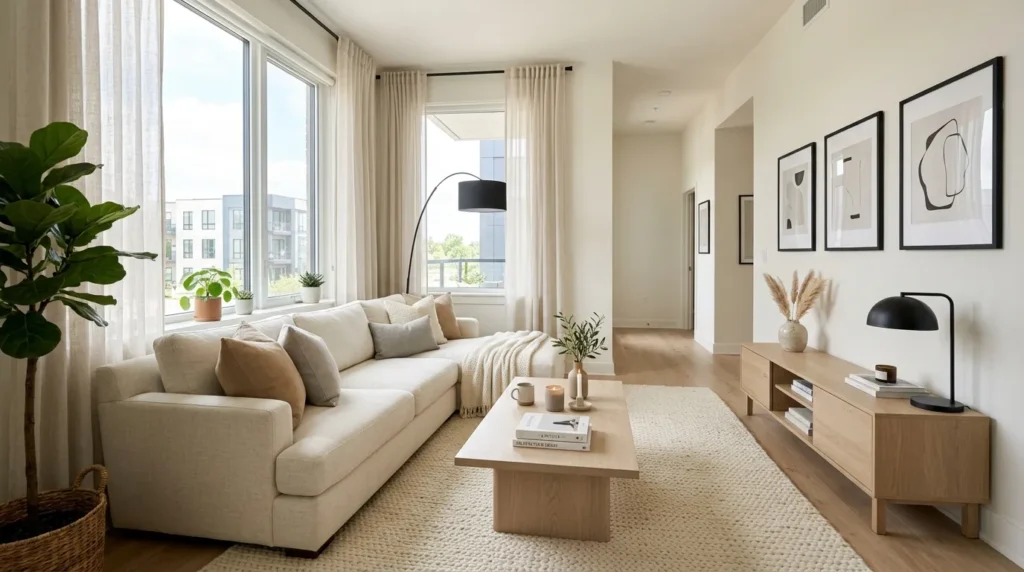
Natural wood can soften the combination. A black metal table paired with an oak console, for example, creates a balanced modern palette.
Keep other colors restrained. Cream, gray, tan, muted green, and warm wood work particularly well.
For renters, this is also one of the easiest approaches because most of the changes can be made through furniture and accessories rather than permanent alterations.
4. Light Wood Warmth

Quick Benefits
- Makes modern interiors feel warmer
- Adds natural texture
- Keeps a small room visually light
- Works with neutral colors
- Complements Scandinavian and contemporary styles
Why It Works
Modern apartment interiors can sometimes feel overly sleek, especially when they contain lots of white walls, metal, glass, and gray upholstery. Natural wood introduces an organic element that makes the room feel more comfortable.
Light oak, ash, maple-inspired finishes, and other pale woods are particularly useful in smaller apartments because they provide warmth without adding too much visual weight.
Wood also brings texture into a room. The natural grain gives the eye something interesting to notice, which means you can keep the rest of the decor relatively simple.
This combination works especially well when your apartment has modern architectural features. The contrast between clean lines and organic wood creates a relaxed contemporary aesthetic.
How To Style It
Use a light wood coffee table as the central starting point. Add a matching or complementary media console if you need storage.
Pair the wood with a warm-gray or cream sofa and a neutral area rug. For more texture, introduce woven baskets, linen curtains, or a jute-style rug.
Avoid making every piece of furniture the exact same wood finish. Two complementary tones can look more natural and collected.
Add black metal in small amounts if you want a stronger modern effect. For a softer look, use brass, cream ceramics, or muted green accessories.
If your apartment has limited natural light, keep the larger wood pieces relatively pale and use mirrors strategically to help reflect available light.
5. Cozy Corner Seating
Quick Benefits
- Makes unused corners functional
- Adds extra seating
- Works in compact rooms
- Creates a relaxed reading area
- Adds visual interest without large furniture
Why It Works
Apartment layouts often contain awkward corners that aren’t large enough for another major furniture piece but are too useful to leave completely empty.
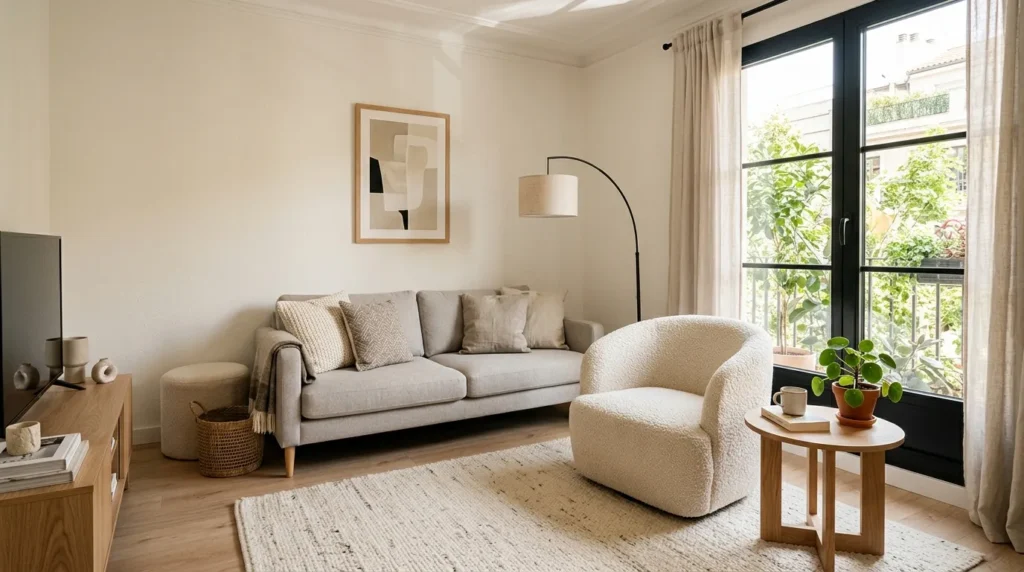
A small accent chair, reading chair, bench, or compact chaise can turn one of these spaces into a purposeful part of the living room.
This also gives you an opportunity to create a second function. The main sofa can be for conversation and television viewing, while the corner becomes a reading or relaxing area.
The design doesn’t have to be elaborate. A comfortable chair, small side table, and floor lamp can be enough.
How To Style It
Choose a chair that complements the sofa without matching it exactly. A boucle chair beside a fabric sofa can add texture, while a leather chair can introduce warmth and contrast.
Place a small round side table beside the chair. Round furniture tends to make tight spaces easier to navigate.
Add a floor lamp with a relatively narrow footprint. This provides useful lighting without taking up the surface area needed for a table lamp.
A small plant or piece of artwork can complete the corner.
If the apartment is very compact, consider a lightweight chair that can be moved when guests arrive. Flexibility is often more valuable than having every item permanently fixed in place.
6. Minimalist Apartment Style
Quick Benefits
- Makes the room feel less crowded
- Simplifies cleaning
- Highlights architectural features
- Works well in small apartments
- Creates a calm contemporary appearance
Why It Works
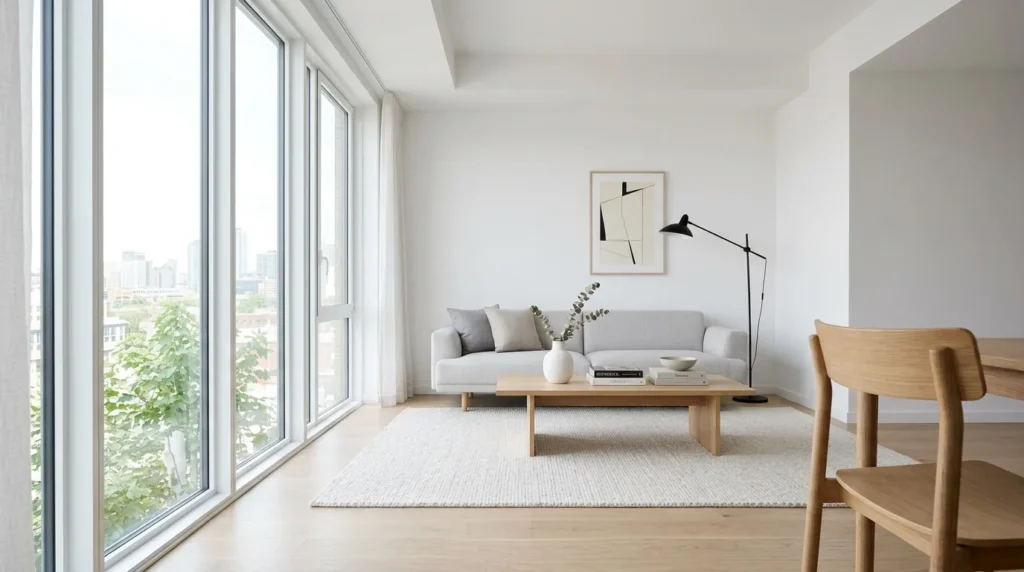
Minimalist decorating can be particularly effective in apartments because limited space naturally rewards restraint. Instead of filling every corner, focus on a few pieces that provide comfort, function, and visual impact.
The goal isn’t to make the room look empty. It is to remove unnecessary visual competition.
A well-designed minimalist living room might include a sofa, rug, coffee table, media console, lighting, and one or two substantial decorative elements. Every piece has a reason for being there.
This approach can also make moving easier, which is worth considering for renters who may not stay in the same apartment long-term.
How To Style It
Begin with the sofa and rug. Choose furniture with simple silhouettes and avoid excessive decorative details.
Use closed storage for items you don’t want visible. A clean media console can hide electronics, cables, and everyday clutter.
Rather than filling shelves with many small objects, display a few larger pieces. One ceramic vase, sculptural object, or framed artwork may have more impact than a collection of tiny decorations.
Choose a restrained palette such as cream, gray, black, and light wood.
Leave some empty space around furniture and accessories. That breathing room is part of the design.
If the room begins to feel too sterile, add texture through a soft rug, linen curtains, plants, or woven materials rather than adding more furniture.
7. Colorful Accent Pieces
Quick Benefits
- Adds personality to neutral apartments
- Easy to change over time
- Creates a focal point
- Helps avoid a bland appearance
- Works without permanent decorating changes
Why It Works
A modern apartment doesn’t have to be completely neutral. In fact, one carefully selected accent color can make a neutral room feel much more personal.
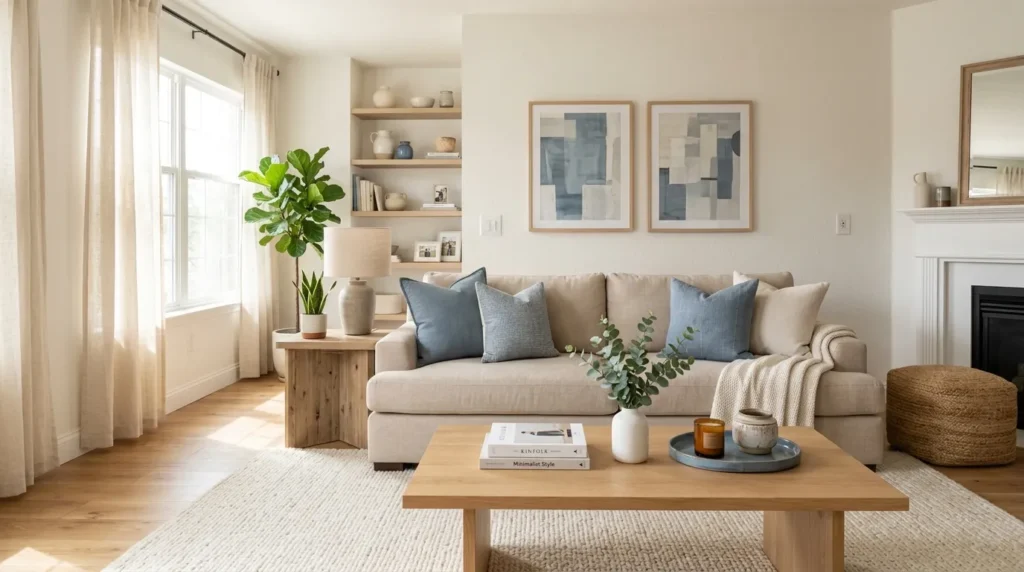
The easiest approach is to keep the larger pieces neutral and introduce color through items that are easy to replace: pillows, artwork, throws, vases, lamps, or an occasional chair.
This means you can experiment without committing to an entire colorful interior.
Muted shades often work particularly well in modern spaces. Terracotta, olive, dusty blue, mustard, rust, and muted pink can add character while maintaining a sophisticated appearance.
How To Style It
Choose one main accent color and repeat it two or three times.
For example, a beige sofa can be paired with dusty-blue pillows, a blue-toned artwork, and a small ceramic vase in a similar shade.
If you want a warmer atmosphere, use terracotta or rust with cream, beige, and natural wood.
Keep the accent color away from every single surface. Allow neutral areas to remain neutral so the color has more impact.
For renters, colorful textiles are particularly useful because they can dramatically change the room without painting walls or replacing expensive furniture.
Seasonal changes are easy too. Warm rust and camel can create a cozy fall look, while sage, pale blue, and cream can feel fresh during spring and summer.
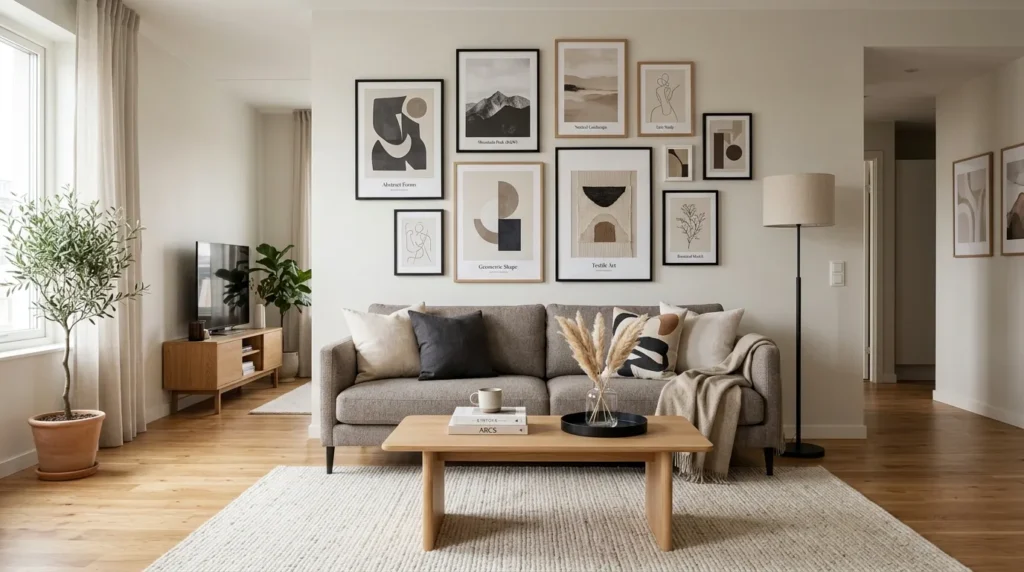
8. Modern Gallery Wall
Quick Benefits
- Uses vertical space
- Adds personality
- Creates a strong focal point
- Works well above a sofa
- Can be renter-friendly with suitable hanging solutions
Why It Works
Walls are valuable real estate in an apartment. When floor space is limited, using vertical surfaces allows you to add personality without making the room physically smaller.
A gallery wall is especially effective above a sofa or console because it establishes a clear focal point.
The modern version doesn’t have to mean dozens of frames. A collection of three to seven carefully chosen pieces can be enough, particularly when the artwork shares a consistent color palette.
The display should feel collected rather than random. Repeating frame colors, matting, or artwork tones helps create cohesion.
How To Style It
Start by deciding on the overall shape. A rectangular arrangement usually feels organized, while a more organic arrangement can feel relaxed.
Choose artwork that connects with colors already present in the room. If the sofa is beige and the rug is cream, artwork containing black, tan, and muted green can tie everything together.
Black or natural wood frames work especially well in modern apartments.
Before hanging anything, lay the pieces on the floor and experiment with spacing. You can also use paper templates to visualize the arrangement on the wall.
For rental apartments, use appropriate removable hanging systems where allowed and suitable for the weight of each frame.
Keep the display at a comfortable viewing height rather than placing it too close to the ceiling.
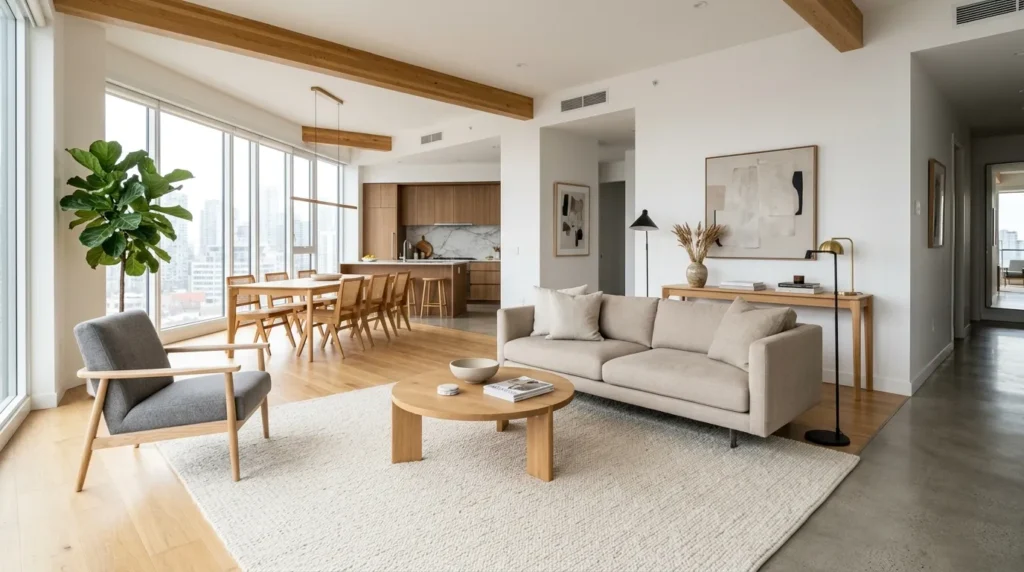
9. Floating Furniture
Quick Benefits
- Improves room flow
- Defines separate zones
- Can make open spaces feel intentional
- Creates flexibility in furniture placement
- Prevents the room from feeling pushed against the walls
Why It Works
One of the most common apartment decorating habits is placing every piece of furniture against the walls. Sometimes that is the right solution, but it isn’t always the most functional one.
Floating a sofa slightly away from the wall can create a defined living zone, particularly in an open-plan apartment.
This arrangement can also create space behind the sofa for a narrow console or pathway. Instead of making the room feel smaller, it can give the living area clearer boundaries.
The trick is to maintain enough circulation space. Floating furniture only works when people can move comfortably around it.
How To Style It
If your apartment combines the living room and dining area, position the sofa so it helps define the living zone.
Place a slim console behind it if there is sufficient clearance. Keep the console shallow so it doesn’t interfere with circulation.
Use a large enough rug to visually group the sofa and coffee table. Ideally, at least the front legs of the main seating should sit on the rug.
Avoid placing too many pieces in the center. The sofa should remain the dominant anchor.
If you’re unsure about the arrangement, use painter’s tape to mark the footprint before moving furniture. Walk through the space several times to see whether the paths feel natural.
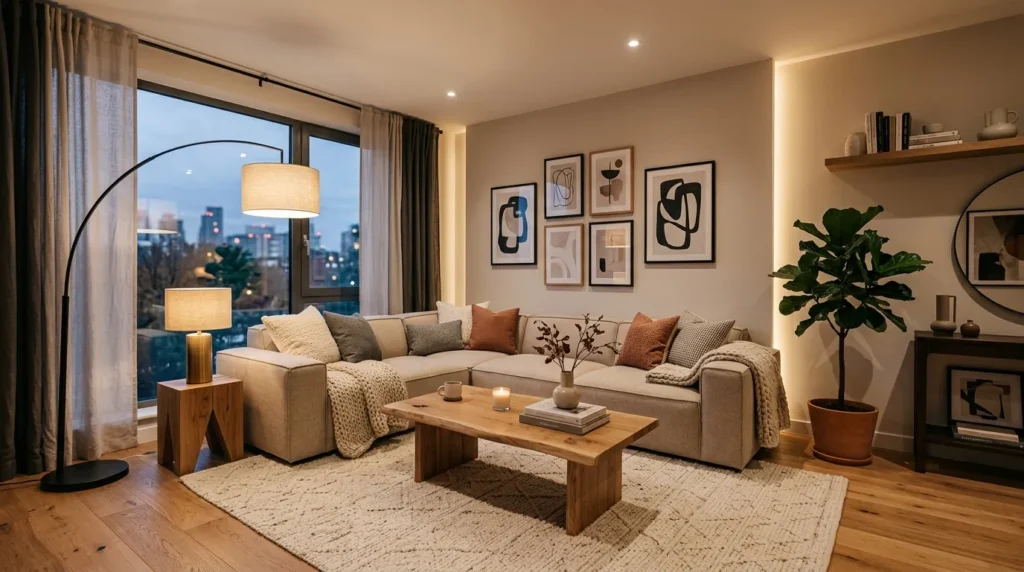
10. Layered Ambient Lighting
Quick Benefits
- Makes the apartment feel warmer
- Helps compensate for limited natural light
- Creates different moods
- Adds decorative interest
- Makes the room more functional at night
Why It Works
Lighting can completely change how an apartment living room feels. Even a beautifully decorated space can seem dull if it relies entirely on one overhead fixture.
Layered lighting uses several sources at different heights. This might include a floor lamp, table lamp, wall light, pendant, or existing ceiling fixture.
Each source contributes to the atmosphere differently. A floor lamp can illuminate a reading chair, while a table lamp adds warmth beside the sofa.
This approach is particularly helpful in apartments with small windows or rooms that receive little direct sunlight.
How To Style It
Start with the room’s existing ceiling lighting and identify what areas remain dark.
Add a floor lamp beside the sofa or reading chair. If you have a console or side table, place a table lamp there.
Use warm-toned bulbs where appropriate for a cozy evening atmosphere. If the apartment has a dimmer-compatible fixture, that can provide additional flexibility.
Choose lighting fixtures that complement your furniture. A sculptural black lamp can reinforce a modern palette, while a brass fixture can add warmth.
Avoid placing every lamp at the same height. Different levels create more visual depth.
Mirrors can also help distribute available light, especially when positioned where they can reflect a window or bright part of the room.
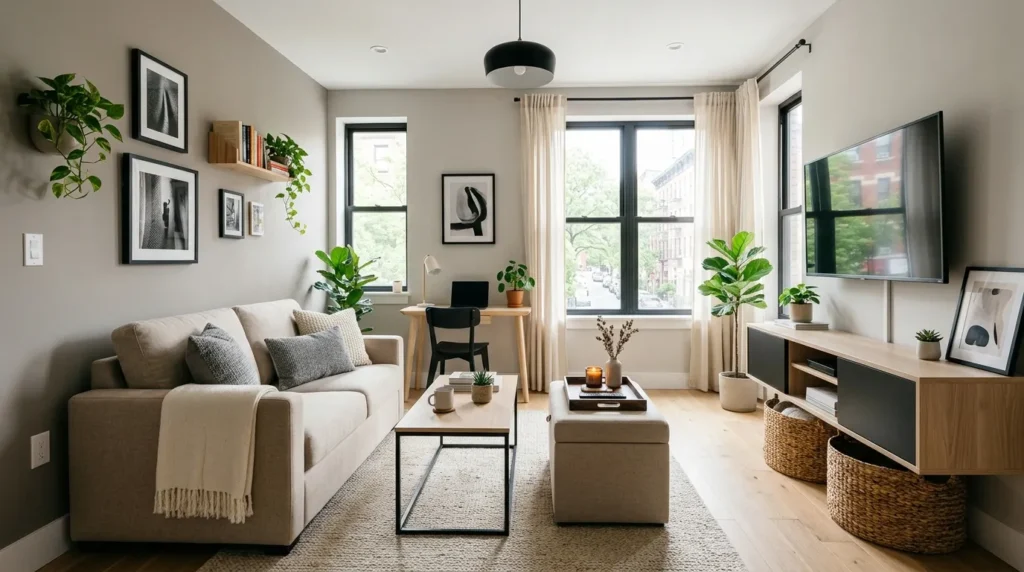
11. Multi-Functional Design
Quick Benefits
- Makes limited space more useful
- Reduces furniture clutter
- Supports multiple activities
- Works especially well for renters
- Helps small rooms adapt throughout the day
Why It Works
Apartment living often means one room has several jobs. The living room may be a place for relaxing, working, entertaining, reading, and sometimes eating.
Furniture that serves multiple functions can make those competing needs easier to manage.
An ottoman can work as extra seating, a footrest, and a coffee-table surface. A console can provide storage and double as a work area. A sofa bed can accommodate overnight guests without requiring a dedicated guest room.
The best multi-functional furniture doesn’t look like it has a second purpose. It should still fit naturally into the overall design.
How To Style It
Choose a coffee table with storage underneath if you need somewhere to keep blankets, books, or remote controls.
An upholstered ottoman can replace a traditional coffee table while providing flexible seating. Add a tray to create a stable surface for drinks and accessories.
If you work from home, consider a narrow desk that visually blends with the living room rather than a large office-style workstation.
Use attractive baskets for items that need to be accessed regularly.
For overnight guests, a streamlined sleeper sofa can provide additional functionality without permanently sacrificing floor space.
The goal is to make the room work harder while still looking calm and intentional.
Making A Small Apartment Feel Bigger
You don’t necessarily need to knock down walls to make a living room feel more spacious. Visual tricks can make a meaningful difference.
Start by choosing furniture that fits the room. Oversized pieces can quickly dominate an apartment, even if they are comfortable.
Keep pathways clear. A room with good circulation often feels larger than a room with more furniture but poor flow.
Mirrors can reflect light and create the impression of additional depth. Position them thoughtfully rather than simply hanging one wherever there is empty wall space.
Furniture with visible legs can also make more floor area visible. A sofa that sits directly on a heavy solid base may look visually heavier than one with elevated legs.
Use curtains strategically. Hanging them higher and allowing the fabric to fall toward the floor can emphasize ceiling height.
Finally, avoid filling every surface. Some empty space is useful because it allows the eye to rest.
Choosing Apartment-Friendly Furniture
Before buying furniture for an apartment, measure more than the room.
Check elevator dimensions, stairwell turns, doorways, hallways, and building entrances if you’re moving into a new space. A sofa that fits the living room may still be impossible to get through the front door.
Look for pieces that are reasonably easy to move. Modular sofas, lightweight occasional chairs, nesting tables, and compact storage units can be useful when flexibility matters.
Consider the scale of every item together. A small sofa with an enormous coffee table can feel just as awkward as an oversized sectional.
Prioritize the pieces you use most. If you spend most evenings watching movies, invest in comfortable seating. If you frequently host guests, prioritize flexible seating. If storage is the main challenge, look for furniture with hidden compartments.
Beautiful furniture should support your lifestyle rather than simply fill the room.
Renter-Friendly Modern Decorating
You can create a highly personalized apartment without making permanent changes.
Textiles are one of the easiest tools. Rugs, curtains, pillows, throws, and removable covers can dramatically change the atmosphere.
Artwork can also personalize blank walls. Use suitable hanging methods based on the rental agreement and the weight of the artwork.
Lighting is another powerful option. Floor and table lamps can change the mood without altering electrical fixtures.
Plants, mirrors, baskets, and freestanding shelving can add personality without permanent installation.
If you want to change the wall color but painting isn’t permitted, consider removable wallpaper or large-scale artwork where appropriate.
Always check your lease and building rules before making changes. Rental-friendly design should be both beautiful and respectful of the property.
Common Apartment Living Room Mistakes
Buying furniture before measuring the room is one of the easiest mistakes to avoid. Measure both the room and the access route.
Using too many small pieces can make an apartment look busier than a few well-scaled items.
Ignoring vertical space leaves useful decorating potential untouched. Use artwork, curtains, shelves, and tall plants to draw the eye upward.
Choosing style over comfort can make the living room unpleasant to use. Test seating whenever possible.
Pushing everything against the walls isn’t always the best arrangement. Experiment with floating furniture when the room allows it.
Relying on one ceiling light can make the apartment feel harsh at night. Add multiple light sources.
Overdecorating open shelving can create visual clutter. Leave some empty space between objects.
Forgetting hidden storage allows everyday items to accumulate in visible areas. Use baskets, cabinets, ottomans, and storage furniture to keep the room manageable.
Frequently Asked Questions
How do I make my apartment living room look modern?
Focus on clean-lined furniture, a restrained color palette, simple lighting, natural materials, and intentional accessories. Choose a few strong pieces rather than filling the room with small decorations. Black accents, light wood, neutral upholstery, contemporary artwork, and layered lighting are easy ways to create a modern appearance without a complete renovation.
What furniture is best for a small apartment living room?
Look for furniture that is appropriately scaled and, when possible, serves multiple purposes. Compact sofas, apartment-sized sectionals, nesting tables, storage ottomans, slim media consoles, and lightweight accent chairs can all work well. Measure the room and access points before buying, and leave enough space for comfortable movement.
What colors make an apartment living room look bigger?
Light neutrals such as warm white, cream, pale beige, light gray, and soft greige can help create an airy appearance. You don’t need to avoid dark colors completely. Use charcoal, navy, black, or other deeper shades as accents rather than covering every surface if your goal is to maximize the sense of openness.
How can I decorate an apartment without damaging the walls?
Use removable hanging solutions appropriate for the weight of your artwork, along with freestanding mirrors, floor lamps, plants, rugs, curtains, and furniture to add personality. Removable wallpaper may also be an option where permitted. Always check your lease and follow the manufacturer’s weight limits for hanging products.
Should a small apartment have a sectional?
It can, provided the sectional is appropriately scaled. A compact L-shaped sectional can sometimes use space more efficiently than a sofa and multiple chairs because it takes advantage of a corner. Measure the room carefully and make sure the chaise doesn’t interfere with doorways, walkways, or other essential circulation paths.
How do I make my apartment living room cozy?
Combine comfortable seating with soft textiles, layered lighting, warm colors, and natural materials. An area rug can anchor the room, while pillows and throws add texture. Wood, woven baskets, plants, and warm lighting can make a modern apartment feel much more inviting without requiring lots of decorative objects.
How can I add storage without making my living room look cluttered?
Choose furniture with hidden or integrated storage. Storage ottomans, closed media consoles, baskets, nesting tables, and slim cabinets can keep everyday items organized. Keep frequently used items accessible but contained, and reserve open shelving for a small number of decorative pieces rather than storing everything in plain sight.
Conclusion
A modern apartment living room doesn’t have to be large to feel beautiful, functional, and welcoming. The most successful spaces usually come from making thoughtful decisions about scale, layout, lighting, storage, and visual balance rather than simply adding more decor.
Start with the way you actually use the room. If you entertain often, prioritize flexible seating. If space is tight, look for furniture that performs multiple jobs. If the apartment feels dark, work on layered lighting and lighter materials. And if the room feels bland, add personality through artwork, greenery, texture, or one carefully chosen accent color.
You don’t have to change everything at once. Sometimes a new rug, better lighting, or a properly scaled coffee table can make a bigger difference than an entire room makeover.
The best apartment interiors feel personal without feeling crowded. Give your favorite pieces enough space to stand out, keep everyday clutter under control, and allow the room to evolve as you discover what works for your lifestyle.
Choose one or two ideas from this guide and start there. With a little planning, even a compact apartment living room can become a stylish space that feels comfortable, practical, and completely your own.
Related Articles
- Small Living Room Layout Ideas
- Modern Home Decor Ideas for a Cozy Space
- Neutral Living Room Ideas That Feel Warm
- Apartment Bedroom Decorating Ideas
- Minimalist Home Decor Ideas for Small Spaces