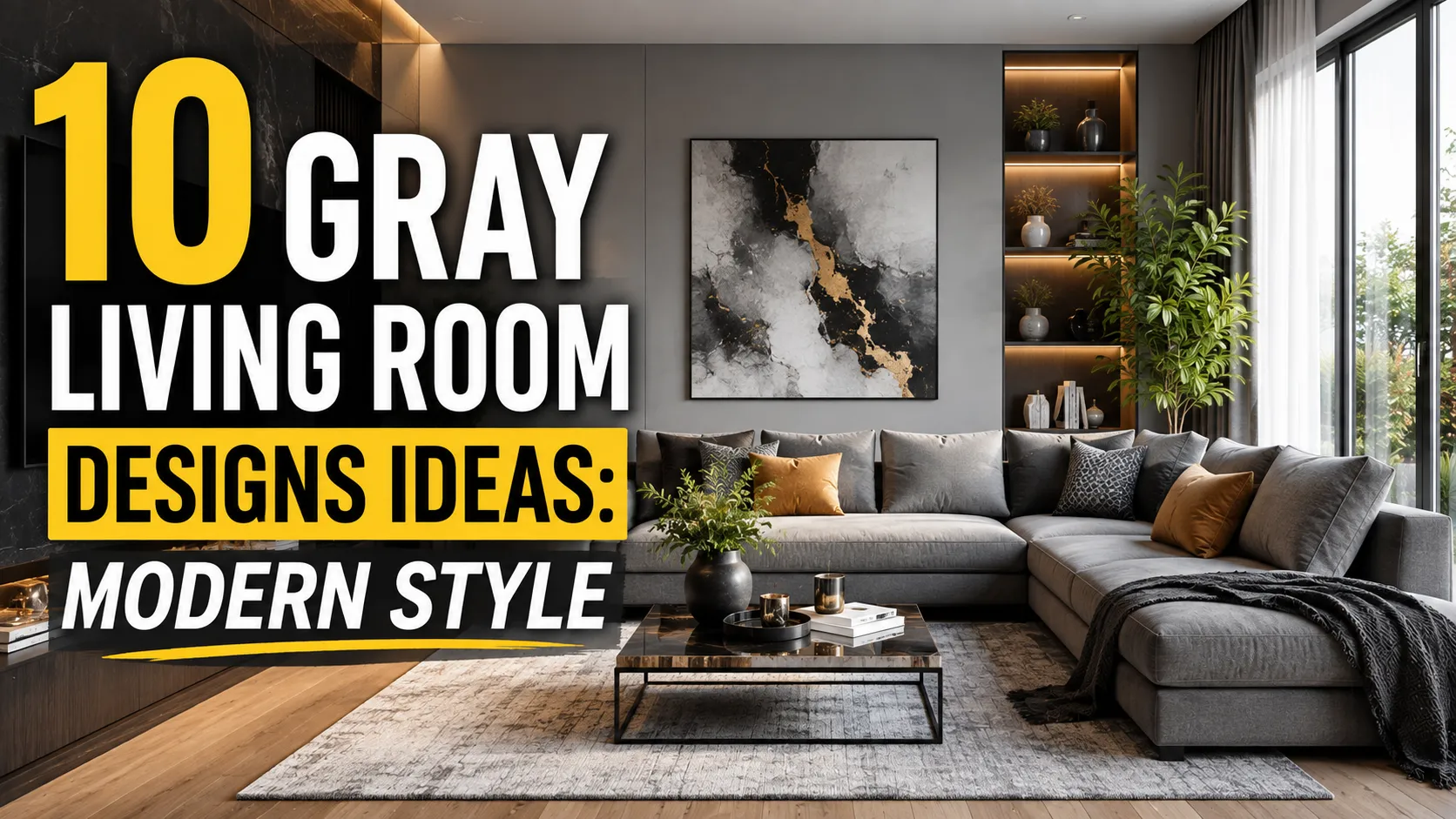
10 Gray Living Room Designs Ideas: Modern Style
Gray has a reputation for being simple, but in a living room, it can be surprisingly versatile. From soft dove gray paired with creamy white to deep charcoal layered with warm wood, the right shade can make a space feel polished, comfortable, and distinctly modern without becoming cold or overly formal.
The challenge is that gray can sometimes feel flat when it is used without enough contrast, warmth, or texture. A room filled with one gray tone from the sofa to the walls and accessories may look unfinished rather than intentionally designed. The good news is that a few thoughtful choices can completely change the effect.
That is what makes modern gray living rooms so appealing. You can keep the overall palette calm while bringing in personality through natural wood, black accents, warm metals, greenery, textured fabrics, artwork, and carefully chosen lighting. The result can work just as well in a small apartment as it does in a spacious family room.
If you’re anything like me, you probably want a living room that looks beautiful in photos but still feels comfortable on an ordinary Tuesday evening. These ideas are designed with both goals in mind. You’ll find ways to combine shades of gray, choose complementary colors, arrange furniture, add texture, and create a modern look that doesn’t feel like a showroom.
Whether you already have a gray sofa or you’re starting with an empty room, these 10 gray living room designs ideas modern style can help you create a space that feels sophisticated, inviting, and easy to live with.
Table of Contents
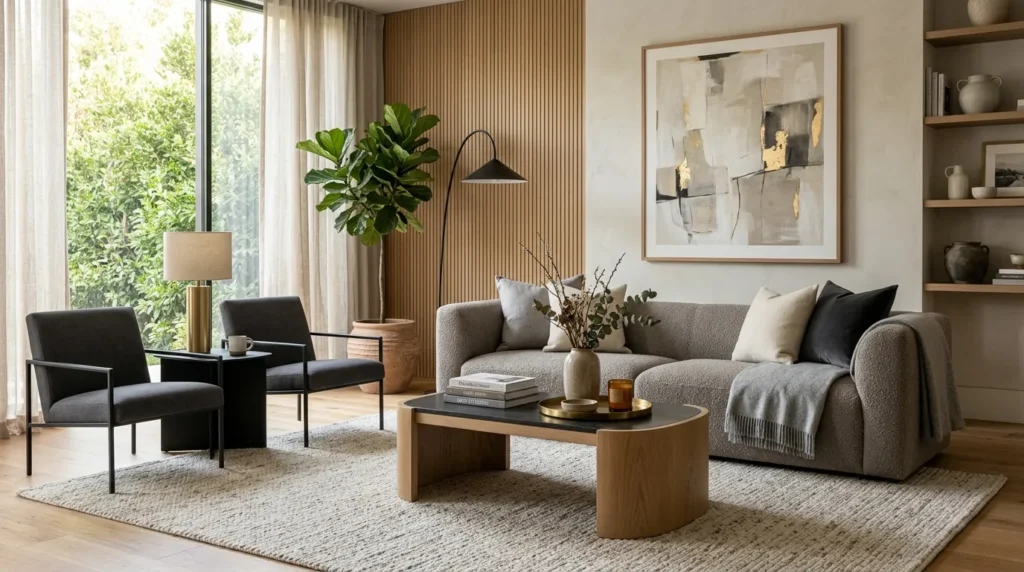
1. Soft Gray And White
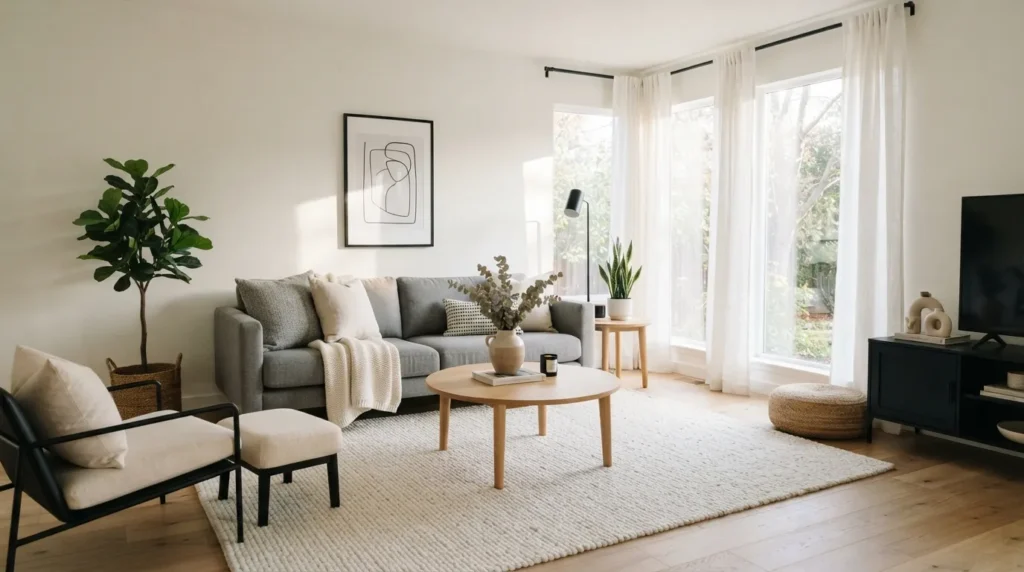
A light gray and white palette creates an airy modern room while leaving plenty of room for texture and personality.
2. Charcoal Statement Wall
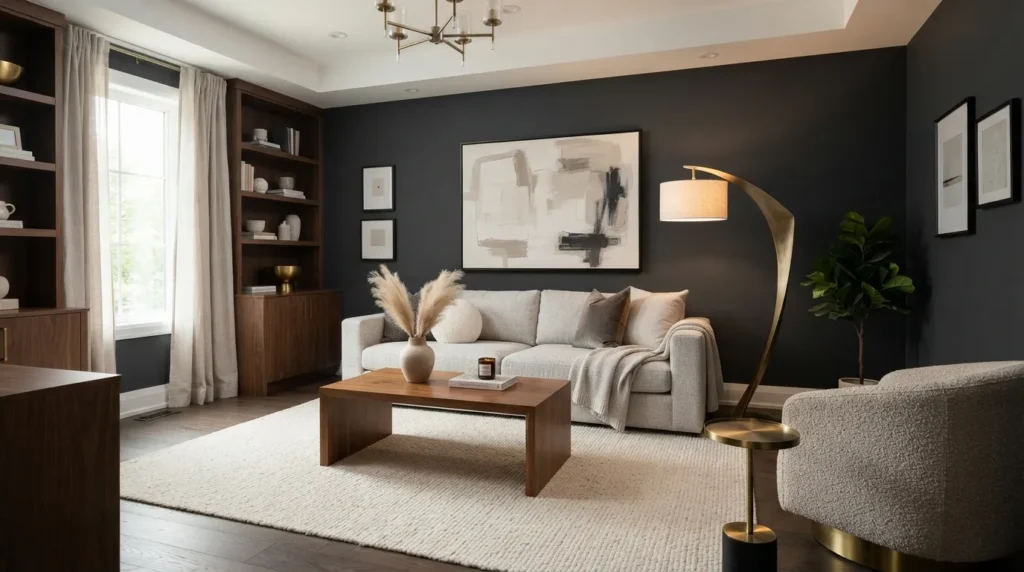
A deeper gray wall can add architectural drama and create a strong backdrop for contemporary furniture.
3. Warm Wood Contrast
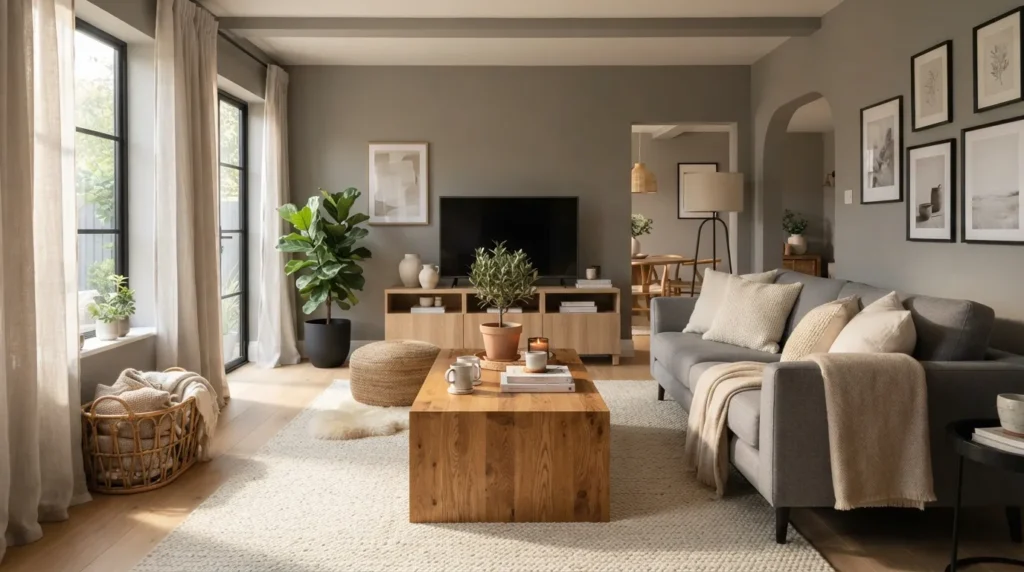
Natural wood keeps a gray living room from feeling cold while adding warmth, character, and organic texture.
4. Gray And Beige Layers
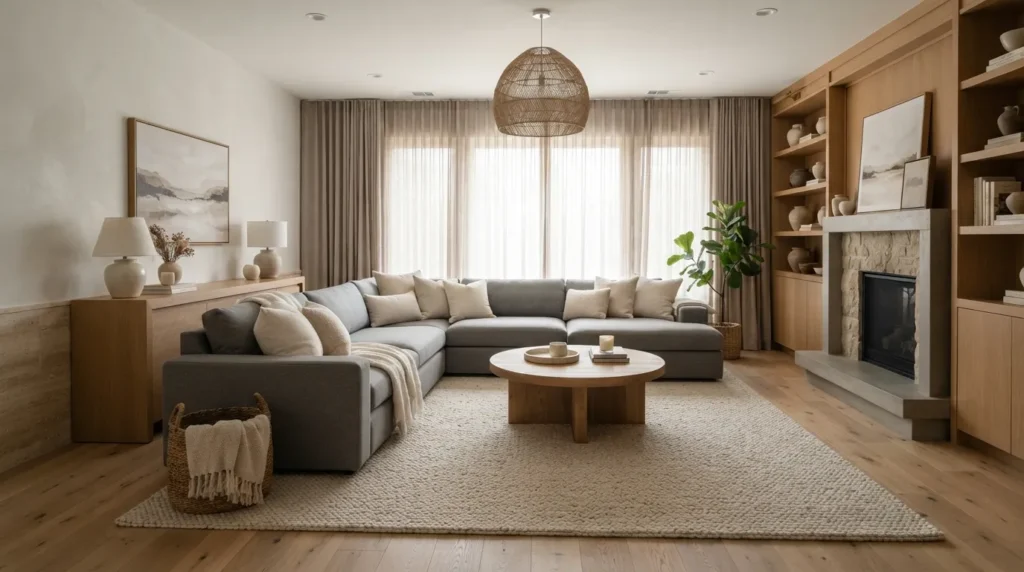
Combining gray with beige and creamy neutrals creates a softer modern look that feels especially welcoming.
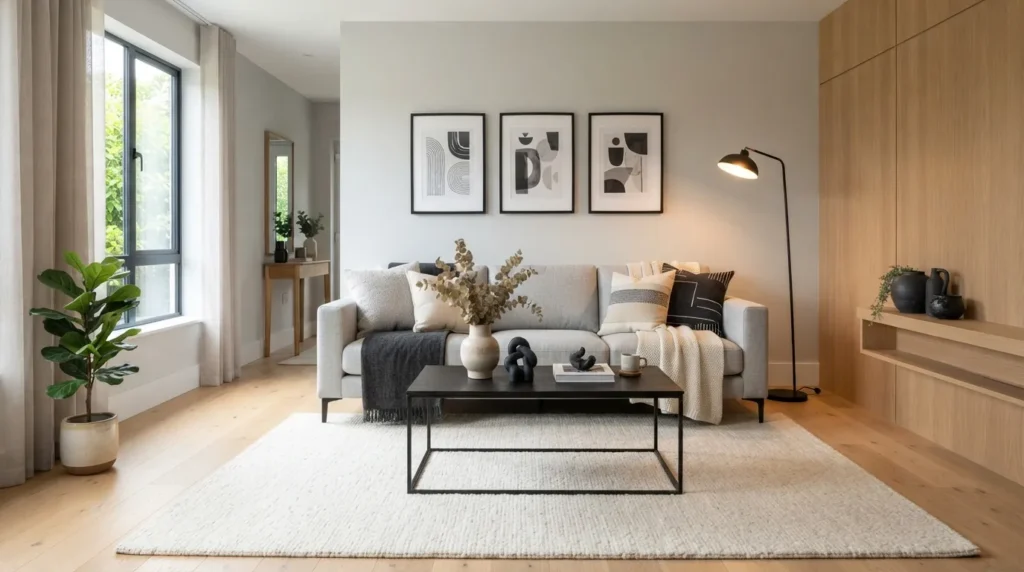
5. Black Modern Accents
Black details give gray rooms crisp definition and a sophisticated contemporary edge.
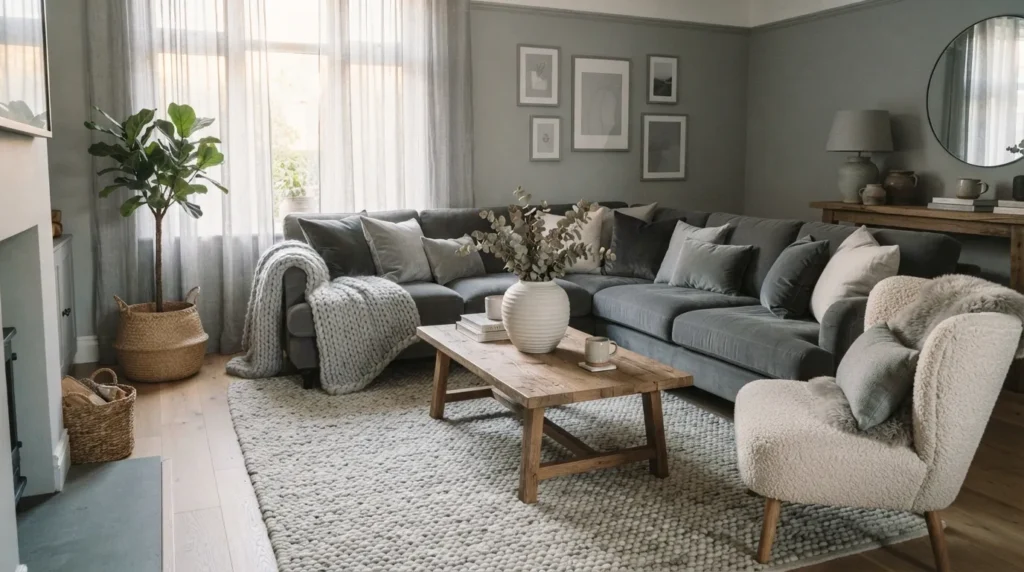
6. Cozy Textured Gray
Different fabrics and tactile surfaces can make a monochromatic gray room feel comfortable rather than flat.
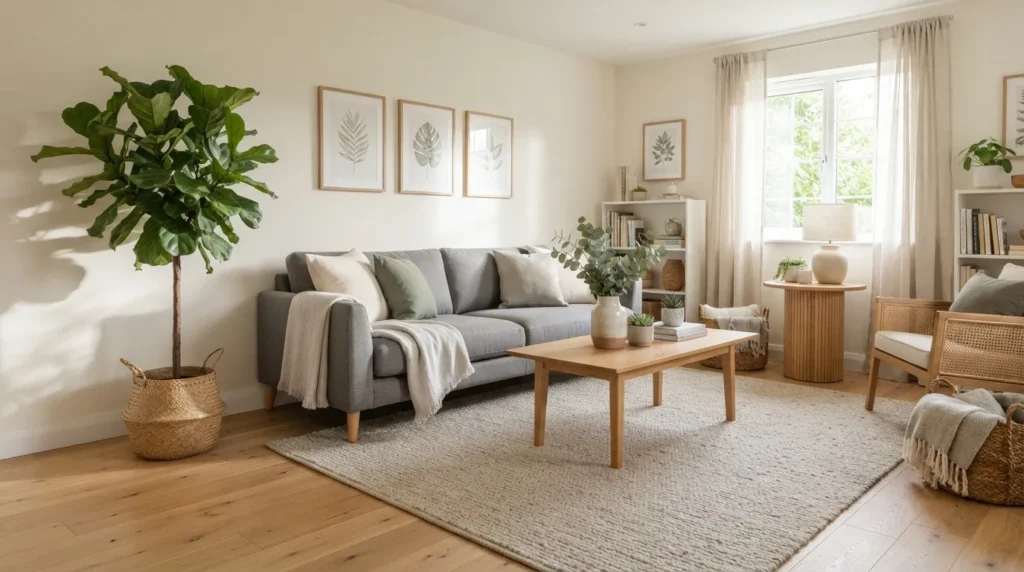
7. Gray With Greenery
Plants bring life and natural color into a neutral gray space while complementing modern furnishings.
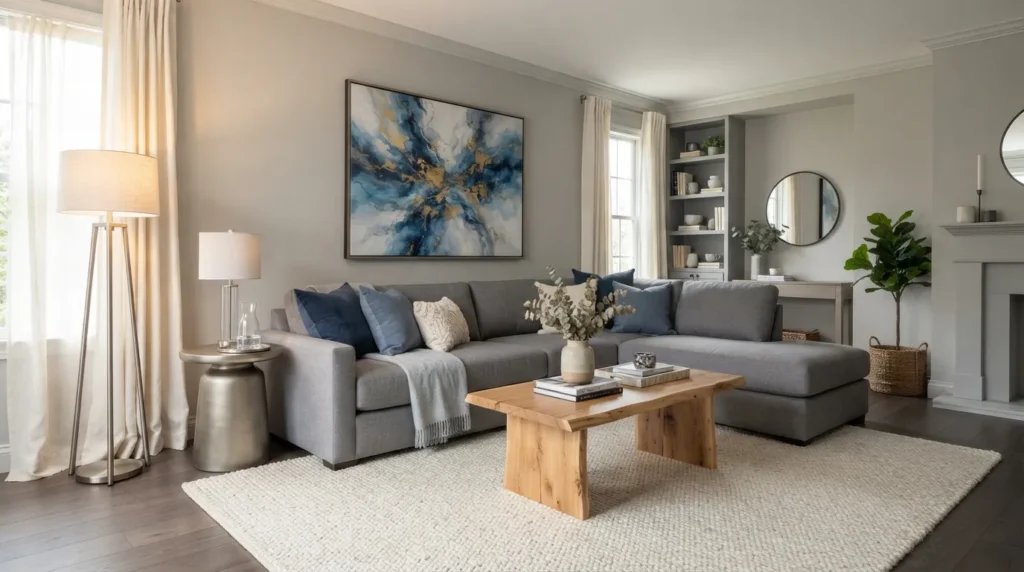
8. Gray And Blue Palette
Blue adds depth and personality to gray without overwhelming the calm foundation of the room.
9. Minimalist Gray Design
A restrained palette and uncluttered furniture arrangement create a clean, contemporary living space.
10. Layered Modern Gray
Combining several gray shades, materials, and accent colors creates a sophisticated room with visual depth.
1. Soft Gray And White
Quick Benefits
- Makes the room feel bright and open
- Works especially well in smaller spaces
- Creates a clean contemporary foundation
- Makes natural light feel more noticeable
- Provides a flexible backdrop for seasonal decorating
Why It Works
Soft gray and white are one of the easiest combinations for creating a modern living room that feels fresh without becoming stark. The key is choosing a gray with the right undertone. A warm or neutral gray generally feels more inviting than a very cool gray, particularly when the room has limited natural light.
White walls, trim, curtains, or a light rug can help reflect available daylight, while gray furniture gives the room enough contrast to prevent everything from blending together. Instead of using exactly one shade of gray, consider working with two or three closely related tones. A pale gray wall, medium-gray sofa, and slightly deeper gray throw can create subtle dimension.
This combination also gives you freedom to change accent colors later. You can introduce tan, black, blue, sage green, or natural wood without having to redesign the entire room.
How To Style It
Start with a comfortable medium- or light-gray sofa as the anchor. Pair it with a white or ivory area rug and simple light-colored curtains. If the walls are white, add gray through the seating, pillows, artwork, or an accent chair rather than making every surface gray.
For furniture, light oak and natural wood work beautifully with this palette. A round wood coffee table can soften the straight lines of a contemporary sofa, while a white media console keeps the room visually light.
Layer pillows in different materials rather than relying on matching sets. Think linen, boucle, cotton, and subtle woven textures. Add one darker gray element, such as a floor lamp or occasional chair, to give the room a visual anchor.
For evening comfort, warm-white lamps are particularly useful. They add warmth to the cool neutrality of the palette and make the room feel much more inviting after sunset.
2. Charcoal Statement Wall
Quick Benefits
- Creates an instant focal point
- Adds depth to large rooms
- Makes lighter furniture stand out
- Gives contemporary spaces more personality
- Works beautifully with brass, wood, and black accents
Why It Works
A charcoal wall can transform a living room because it creates visual weight in an otherwise neutral space. Instead of painting every wall a dark shade, using charcoal selectively gives you the drama without making the entire room feel enclosed.
This approach works especially well behind a television, fireplace, sofa, or large piece of artwork. The dark background allows lighter furniture and decorative objects to stand out clearly, creating the kind of contrast often associated with contemporary interiors.
The important consideration is lighting. Dark gray absorbs more light than pale colors, so a charcoal feature wall works best when balanced with good overhead, floor, table, or natural lighting. In a room with plenty of daylight, it can look rich and sophisticated. In a darker room, choosing a softer charcoal with warm undertones may produce a more comfortable result.
How To Style It
Choose one architectural or visually important wall rather than automatically painting the largest wall in the room. A charcoal wall behind a cream or light-gray sofa can create a beautiful contrast.
Bring in warm materials to prevent the space from feeling too severe. A walnut coffee table, oak shelving, leather accent chair, or woven basket can add organic warmth. If you prefer a more polished look, introduce brushed brass lighting or hardware.
Keep the accessories relatively restrained. The charcoal background already makes a statement, so a few oversized pieces of artwork may work better than numerous small decorations.
A large cream rug can visually separate the furniture from the dark wall and keep the floor area bright. Add pillows in gray, ivory, taupe, and perhaps one muted accent color to connect the wall to the rest of the room.
This is particularly effective in open-plan homes because the feature wall can visually define the living area without physically separating it from the kitchen or dining space.
3. Warm Wood Contrast
Quick Benefits
- Adds warmth to neutral gray
- Introduces natural texture
- Prevents a room from feeling overly cool
- Complements contemporary furniture
- Creates an organic modern atmosphere
Why It Works
Gray becomes much more inviting when it is paired with natural wood. This is one of the simplest design tricks for anyone who likes modern interiors but doesn’t want the room to feel sterile.
Wood introduces variation in color and texture that gray alone cannot provide. Even a fairly minimal room can feel layered when you combine a gray sofa with an oak coffee table, wooden shelving, woven baskets, or a natural wood console.
The beauty of this combination is its flexibility. Pale oak creates a light Scandinavian-inspired feeling, medium wood gives the room a traditional warmth, and darker walnut can make the space feel richer and more sophisticated.
I’ve noticed that natural materials are particularly helpful when a homeowner wants a modern room that still feels relaxed and livable. Wood gives the eye something warm and organic to rest on.
How To Style It
Begin with a gray sofa in a simple contemporary shape. Add a wood coffee table with visible grain rather than a heavily lacquered surface. If you have a larger room, a matching or complementary wood console can help balance the composition.
Don’t feel the need to make every wood item identical. A mixture of closely related wood tones can look more natural than a perfectly matched furniture set. Just avoid combining too many dramatically different finishes in a small room.
Layer in woven materials through baskets, a jute-style rug, rattan accessories, or linen curtains. These materials reinforce the natural feeling without making the room look rustic.
For the color palette, stick with warm neutrals such as ivory, cream, oatmeal, tan, and muted brown. A few black accents can provide definition.
The finished room should feel modern at first glance but comfortable enough for everyday life. That balance is what makes gray and wood such a dependable combination.
4. Gray And Beige Layers
Quick Benefits
- Creates a softer neutral palette
- Makes gray feel warmer
- Works well with traditional and modern furniture
- Provides an elegant foundation
- Makes the room feel comfortable and relaxed
Why It Works
Gray and beige are sometimes treated as competing neutrals, but together they can create one of the most comfortable palettes for a modern living room. The trick is to use the two colors in different proportions and allow their undertones to work together.
Instead of thinking about gray and beige as two separate colors, think about the room as a collection of warm and cool neutrals. A gray sofa can sit on a cream rug, while beige curtains, taupe pillows, and light wood furniture bridge the colors.
This combination is especially useful if you already own gray furniture but feel that your room looks a little too cool. You don’t necessarily need to replace the sofa. Adding warm neutrals around it can completely change the atmosphere.
How To Style It
Use gray as your primary furniture color and beige or cream for larger soft furnishings. A medium-gray sectional paired with an oversized ivory rug is an easy starting point.
Add beige curtains that extend close to the ceiling to create a softer, taller appearance. Pillows can combine taupe, cream, gray, and subtle patterns. For an especially polished look, choose patterns that contain at least two colors already present in the room.
Furniture in warm oak, natural stone, or light brown leather can strengthen the palette. If you have a fireplace, a warm-toned stone surround can work beautifully against gray furniture.
Lighting also matters. Choose lamps with warm bulbs rather than very cool white lighting. The warmer illumination will bring out the beige and taupe tones and make the gray look softer.
This palette is a great choice for homeowners who want a modern living room that feels calm and timeless rather than sharply contemporary.
5. Black Modern Accents
Quick Benefits
- Creates strong visual contrast
- Adds contemporary definition
- Makes pale gray feel more sophisticated
- Works with minimalist furniture
- Provides a simple way to update an existing room
Why It Works
Black accents can give a gray living room a completely different personality. Where gray provides softness and neutrality, black adds structure and contrast.
You don’t need a lot of black to create the effect. In fact, using too much can make the room feel visually heavy. A few repeated black elements are usually more effective: a black-framed coffee table, modern floor lamp, picture frames, curtain rods, or metal shelving can create a cohesive thread throughout the room.
This is particularly useful in contemporary interiors where clean lines are important. Black outlines furniture and architectural features, giving the room a crisp, finished appearance.
A mistake many homeowners make is introducing black in only one location. Repeating the accent two or three times around the room helps it feel intentional rather than random.
How To Style It
Start with a light or medium-gray sofa and a neutral rug. Then introduce black through smaller architectural details.
A black metal coffee table is an easy option. You could repeat the finish in a floor lamp and picture frames. If you have a fireplace, black hardware or a dark fireplace surround can become another anchor.
Keep the remaining colors restrained. White, cream, gray, natural wood, and muted green all work well with the combination.
For artwork, oversized black-and-white photography can make a dramatic statement without introducing another strong color. Abstract artwork with charcoal, gray, and cream is another good option.
If the room is small, use black primarily in thin frames and slender furniture legs rather than large solid pieces. This preserves the visual contrast without making the space feel crowded.
The goal is not to make the room black and gray. It is to let black act almost like punctuation throughout an otherwise softer palette.
6. Cozy Textured Gray
Quick Benefits
- Adds depth to a monochromatic room
- Makes gray furniture feel more inviting
- Creates a comfortable family-friendly atmosphere
- Works well in fall and winter
- Prevents a neutral palette from looking flat
Why It Works
When a living room uses mostly one color family, texture becomes just as important as color. This is especially true with gray because multiple gray surfaces can look visually similar even when their shades are slightly different.
Texture solves that problem. A chunky knitted throw, boucle chair, linen curtains, wool-style rug, ribbed ceramic vase, woven basket, or textured artwork can create layers that make the room feel richer.
The goal is to create contrast that you can see and feel without adding lots of different colors. This makes a textured gray room particularly appealing for people who love neutral interiors but still want their homes to feel cozy.
A monochromatic palette can actually look more sophisticated when the materials are varied. Smooth stone next to soft fabric, rough wood next to glass, and woven materials next to metal create subtle visual tension.
How To Style It
Choose a gray sofa with a fabric that has some visible texture. Add pillows in several materials rather than using five pillows made from identical fabric.
A soft throw casually placed over the sofa can make the space feel lived-in. Underneath, use a textured area rug to establish a comfortable foundation.
Introduce one or two contrasting surfaces. A smooth stone or marble coffee table can look beautiful next to soft upholstery. Alternatively, a weathered wood table can provide a more casual effect.
Keep the color palette close: gray, ivory, taupe, oatmeal, and charcoal are enough. Then let the materials create the visual interest.
For a family room, prioritize washable or durable fabrics where possible. Beautiful design does not have to mean impractical furniture. A room should be comfortable enough to use rather than something that has to be protected from everyday life.
7. Gray With Greenery
Quick Benefits
- Adds natural color
- Makes gray feel fresher
- Brings organic shapes into modern interiors
- Works with light and dark gray
- Helps soften straight furniture lines
Why It Works
Plants are one of the easiest ways to add life to a neutral living room. Green works naturally with gray because the two colors create a pleasing contrast without competing for attention.
The organic shapes of plants are also useful in modern rooms, where furniture often has straight edges and clean silhouettes. A tall plant beside a sectional can soften the corner, while a smaller plant on a console can add height and visual interest.
You don’t need to turn the room into a jungle. A few strategically placed plants can have more impact than dozens of small pots scattered throughout the space.
If natural plants aren’t practical for your lifestyle, high-quality artificial greenery can provide a similar visual effect. The important thing is choosing realistic shapes and placing them where they look intentional.
How To Style It
Pair a gray sofa with a neutral rug and warm wood furniture. Then introduce one large floor plant in an attractive ceramic or woven planter.
A tall olive-style tree can create a refined look, while broad-leaf plants bring a more tropical feeling. For a smaller room, use compact plants on a coffee table, bookshelf, or side table.
Repeat green in one or two smaller elements, such as a muted green pillow or piece of botanical artwork. This keeps the greenery connected to the overall design.
Use planters made from ceramic, terracotta, woven fiber, or concrete depending on the style you want. Natural materials tend to complement gray especially well.
For a polished Pinterest-worthy arrangement, avoid placing every plant at the same height. One tall plant, one medium arrangement, and a small tabletop plant can create a more natural rhythm.
8. Gray And Blue Palette
Quick Benefits
- Adds personality without overwhelming gray
- Creates a calm, sophisticated atmosphere
- Works with coastal and contemporary styles
- Provides an easy accent-color strategy
- Looks beautiful with silver and natural wood
Why It Works
Blue and gray share a naturally calming quality, which makes them a strong pairing for living rooms. The combination can feel sophisticated when deeper navy is used, airy when paired with pale blue, or relaxed when combined with dusty blue and warm neutrals.
The best approach is usually to let gray remain the foundation while blue appears through selected accessories. This makes the room easier to update later and prevents the accent color from becoming overwhelming.
The undertone of the gray matters here. A cool gray can blend naturally with blue, while a warmer gray creates more contrast and a slightly softer appearance. Both can work as long as the colors are balanced with appropriate lighting and materials.
How To Style It
Use a gray sectional or sofa as the main piece and introduce blue through pillows, artwork, an accent chair, or a patterned rug.
Navy works particularly well when you want a more sophisticated appearance. Dusty blue is better if your goal is softness. If you prefer a coastal-inspired room, combine pale blue-gray with white, natural wood, and woven accents.
Silver or brushed nickel lighting can reinforce a cooler blue-gray palette, while brass or warm wood can make it feel less formal.
Avoid introducing too many blue shades at once. Choose one main blue and perhaps one lighter variation.
A large piece of blue artwork can also be an effective focal point. Pull one or two shades from the artwork into the pillows and decorative accessories so the room feels coordinated without looking overly matched.
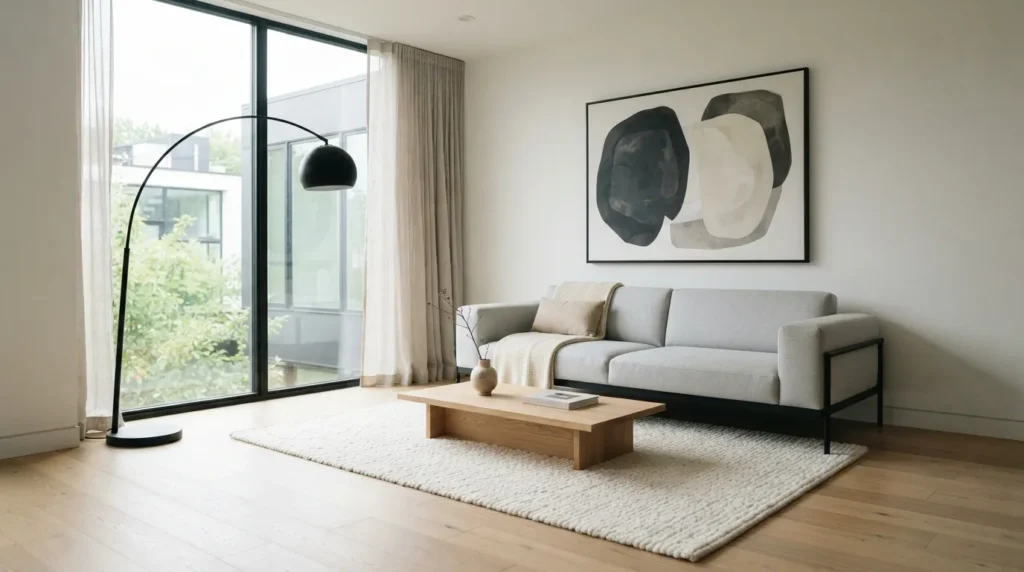
9. Minimalist Gray Design
Quick Benefits
- Creates a clean, uncluttered appearance
- Makes small rooms feel more spacious
- Highlights quality furniture
- Simplifies everyday maintenance
- Works beautifully with modern architecture
Why It Works
Minimalism isn’t simply about owning fewer things. A successful minimalist living room is about giving each important element enough visual space to matter.
Gray works particularly well in this setting because it creates a calm background without demanding attention. A simple sofa, understated rug, streamlined coffee table, and carefully selected artwork can be enough to create a complete room.
The challenge is avoiding the line between minimalist and empty. The room still needs warmth, scale, and texture. Otherwise, it may feel unfinished rather than intentionally restrained.
Focus on proportion. One large piece of artwork can have more impact than a wall filled with small frames. One beautiful coffee table can look more sophisticated than several small tables competing for attention.
How To Style It
Begin with the largest furniture pieces and remove anything that isn’t serving a clear purpose. A streamlined gray sofa can become the central feature.
Choose a simple rug in a slightly lighter or darker neutral shade. Add a low-profile coffee table in wood, stone, or black metal.
Keep accessories limited to a few meaningful pieces. A large ceramic vase, sculptural object, or substantial coffee-table book can provide personality without clutter.
Use concealed storage whenever possible. A modern media console with closed cabinets can keep electronics and everyday items organized.
Lighting should be part of the design rather than an afterthought. A sculptural floor lamp can function as both a practical light source and an architectural accent.
The final room should feel peaceful, intentional, and easy to maintain. That is one of the biggest advantages of a well-planned minimalist approach.
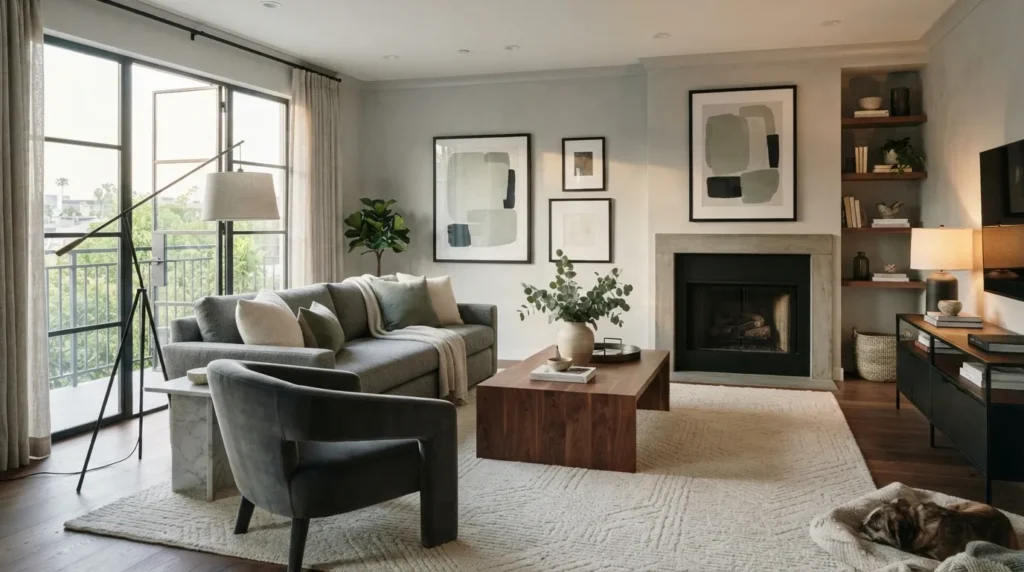
10. Layered Modern Gray
Quick Benefits
- Creates sophisticated visual depth
- Works in both large and small living rooms
- Allows several neutral shades to coexist
- Makes the room feel professionally styled
- Gives you flexibility with accent colors
Why It Works
Layering is what takes a gray living room from basic to beautifully designed. Instead of choosing one gray and repeating it everywhere, combine light, medium, and dark variations throughout the space.
Think of the room vertically as well as horizontally. A pale wall can transition to a medium-gray sofa, a charcoal accent chair, a lighter rug, and dark decorative details. Then introduce warm materials such as wood, leather, linen, or woven fibers to add another dimension.
This approach gives you plenty of freedom. You can create a warm modern room with taupe and wood, a dramatic contemporary room with charcoal and black, or a softer space with ivory and pale gray.
The secret is repetition. If you introduce a color or material, repeat it somewhere else so the room feels connected.
How To Style It
Start with three primary tones: a light gray, a medium gray, and a darker charcoal. Use the lightest shade on the largest visual surfaces when you want an airy feeling, and reserve the darkest tone for smaller anchor pieces.
For example, a pale gray rug can ground a medium-gray sofa while a charcoal chair adds contrast. Add ivory pillows and a warm wood coffee table to break up the gray.
Then introduce a small accent color. Sage green, dusty blue, muted terracotta, or warm tan can work beautifully depending on the atmosphere you want.
Pay attention to height. Combine low furniture with taller floor lamps, curtains, artwork, or plants so the eye moves around the entire room.
Finally, step back and look at the room as a whole. If one area feels too heavy, lighten it with a pale textile or reflective surface. If everything feels too similar, add contrast through wood, black metal, or a stronger accent shade.
Layering is ultimately about balance rather than matching. When the colors, materials, and proportions work together, even a neutral gray palette can feel rich and highly personalized.
Choosing The Right Gray
Not every gray creates the same atmosphere. Before buying paint, furniture, or large decorative pieces, look at the undertone.
Warm grays often contain subtle beige, brown, or taupe influences. They tend to feel welcoming and work particularly well with cream, beige, natural wood, and warm lighting.
Cool grays can contain blue or violet undertones. They often look crisp and contemporary and pair naturally with white, black, silver, and blue.
Greige sits between gray and beige and is useful when you want the sophistication of gray without an overly cool appearance.
Lighting can dramatically change how a gray looks. A sample that appears warm in a sunny room may look considerably different under artificial lighting at night. For paint, test samples on multiple walls and observe them throughout the day before making a final decision.
The same principle applies to furniture. Look at upholstery samples beside your flooring, curtains, countertops, and existing furniture rather than choosing a gray in isolation.
Making Gray Feel Warmer
One of the most common concerns about gray interiors is that they can feel cold. Fortunately, warmth can be introduced without abandoning the gray palette.
Start with natural materials. Wood is particularly effective because its grain and warm color immediately create contrast. Leather, woven baskets, linen, jute, rattan, and ceramic accessories can have a similar effect.
Lighting is equally important. Warm-white bulbs generally create a softer atmosphere than very cool lighting. Multiple light sources are also more comfortable than relying entirely on one overhead fixture.
Color can help too. Cream, tan, camel, muted green, dusty blue, and terracotta can all work with gray depending on the desired style.
You can also use texture as warmth. A plush rug and soft throw can make a gray sofa feel far more inviting without adding another strong color.
Gray Living Room Layout Tips
A beautiful color palette won’t solve a poor furniture arrangement. Before purchasing additional decor, consider how people actually move through the room.
Keep major walking paths clear, especially between the living room and nearby doors, hallways, or dining areas. Furniture does not always need to sit directly against the walls. In larger rooms, floating the sofa can create a more defined conversation area.
For a sectional, make sure the chaise or extended portion doesn’t unnecessarily block the main pathway. In smaller rooms, a compact sofa paired with one or two lightweight chairs may provide better flexibility than an oversized sectional.
The coffee table should be practical as well as attractive. Leave enough space around it for comfortable movement and choose a size that relates to the sofa.
If your living room includes a television, consider sightlines from the primary seating positions. Decorative styling should never make everyday use inconvenient.
One simple trick I always suggest is to map the furniture with painter’s tape on the floor before moving heavy pieces into place. It lets you test proportions without committing to an arrangement.
Common Gray Decorating Mistakes
Gray itself is rarely the problem. Usually, the issue is how it is distributed.
Using only one gray shade can make the room look flat. Mix related shades and add contrasting materials.
Ignoring undertones can create an accidental clash. A blue-gray sofa may not look harmonious next to a strongly yellow-beige wall.
Making everything gray removes visual anchors. Introduce white, cream, wood, black, green, blue, or another restrained accent.
Choosing furniture for appearance alone can make a living room uncomfortable. Think about how the sofa feels, how much seating you need, and how the room is used every day.
Adding too many small decorations can undermine a modern aesthetic. A few larger, intentional pieces often create a stronger result.
Forgetting lighting can make even a beautiful palette feel dull. Layer natural light with floor lamps, table lamps, sconces, or other suitable fixtures.
Frequently Asked Questions
Is gray still a good color for a modern living room?
Yes. Gray remains a flexible neutral for contemporary interiors because it works with many materials and accent colors. The most important consideration is the undertone. Warm gray creates a softer atmosphere, while cool gray can feel crisp and modern. Combining gray with wood, cream, black, greenery, or blue can also keep the room from feeling flat.
What colors go best with a gray living room?
Gray pairs well with white, cream, beige, black, natural wood, navy, dusty blue, sage green, and muted earth tones. The best choice depends on the mood you want. For a bright room, try gray with white and light wood. For something warmer, combine gray with beige and walnut. For a dramatic look, use charcoal with black and cream.
How do I make a gray living room feel cozy?
Texture is one of the easiest solutions. Add soft throws, layered pillows, a comfortable area rug, linen or woven curtains, and natural materials such as wood. Warm lighting also makes a significant difference. You can further soften gray with cream, beige, camel, muted green, or warm brown accents.
Should my walls be gray if I have a gray sofa?
They can be, but they don’t have to be. A white, cream, greige, or very pale gray wall can provide contrast against a medium- or dark-gray sofa. If you prefer a monochromatic appearance, choose a wall gray that differs noticeably in depth or undertone from the sofa and use texture to create additional separation.
Is gray good for a small living room?
Yes, particularly when lighter shades are used strategically. Pale gray walls, light rugs, reflective surfaces, and appropriately scaled furniture can help a small room feel open. Avoid filling a compact room with too many dark or oversized pieces. A few charcoal accents can provide contrast without visually overwhelming the space.
What wood color looks best with gray furniture?
Most wood tones can work with gray. Light oak creates a bright, contemporary feeling, medium natural wood provides warmth, and walnut gives the room a richer appearance. The important thing is coordination. Consider the undertone of the gray and the other finishes already present before introducing a new wood tone.
How many shades of gray should I use in one room?
There is no strict number, but using two or three related gray shades usually creates enough variation without making the room feel disconnected. You can then introduce cream, white, beige, wood, black, or a muted accent color for additional contrast. Texture is another effective way to create depth without adding more colors.
Conclusion
A gray living room doesn’t have to feel plain, cold, or predictable. When the right shades are combined with thoughtful furniture, natural materials, lighting, and texture, gray can become one of the most versatile foundations for a modern home.
The easiest place to begin is with the pieces you already own. If you have a gray sofa, look around the room and ask what it needs: perhaps warmer wood, a lighter rug, a few textured pillows, greenery, or stronger black accents. If you’re starting from scratch, choose your main gray carefully and build the rest of the palette around it rather than buying everything at once.
Remember that modern style is less about following a strict formula and more about creating balance. Clean-lined furniture can feel warm when paired with natural materials. A dark charcoal wall can feel inviting when balanced with cream and good lighting. Even a minimalist room can have plenty of personality when every piece has a purpose.
Start with one or two ideas from this guide rather than trying to change everything in a single weekend. A thoughtfully layered room will almost always feel more personal than one that was decorated all at once.
Whether you prefer soft neutrals, dramatic charcoal, warm wood, fresh greenery, or cool blue accents, there is plenty of room to make gray work for your home and your everyday lifestyle.
Related Articles
- Modern Living Room Ideas for a Cozy Home
- Small Living Room Layout Ideas
- Neutral Home Decor Ideas That Feel Warm
- Modern Farmhouse Living Room Ideas
- Cozy Home Styling Ideas for Every Season