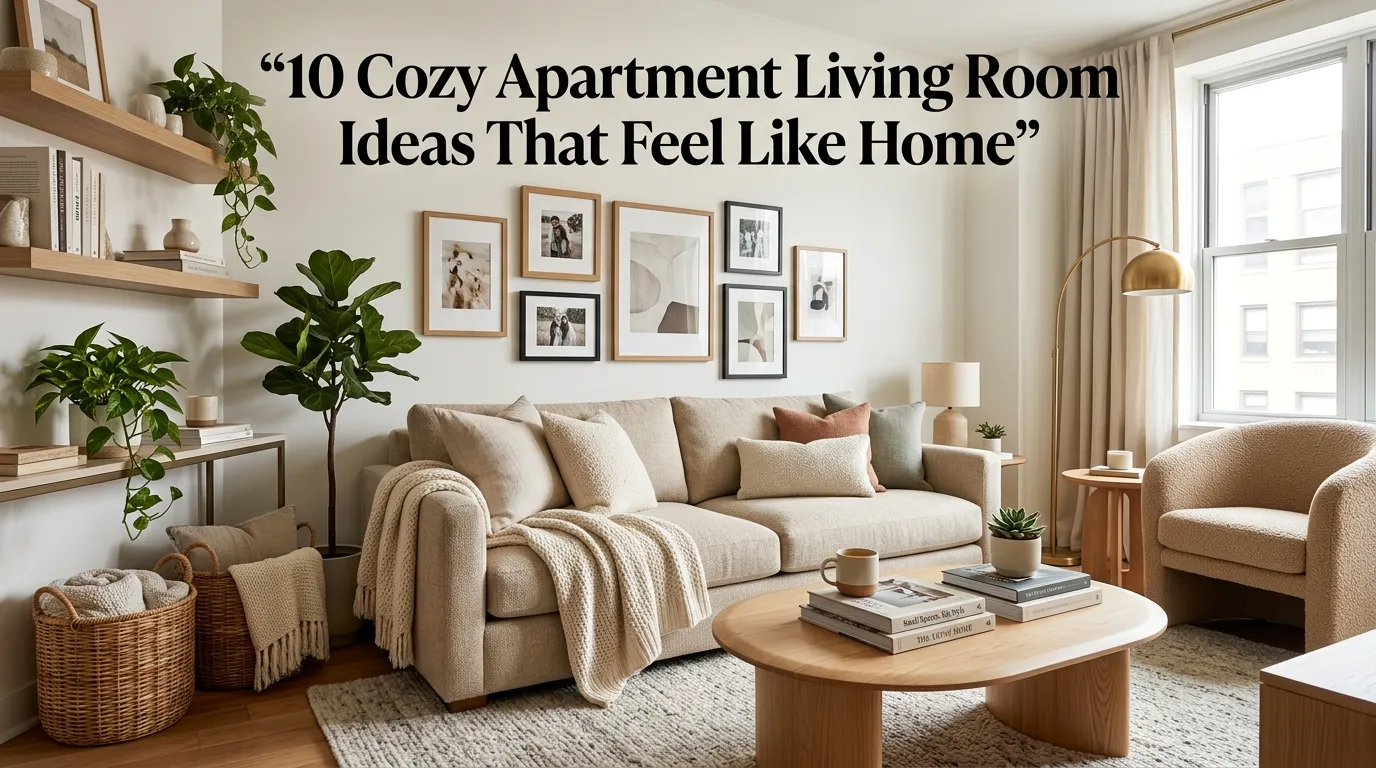
10 Cozy Apartment Living Room Ideas That Feel Like Home
If you’ve ever walked into your apartment after a long day and felt… nothing — no warmth, no pull to sink into the couch, no sense that this space is actually yours — you’re not alone. I’ve worked with more renters and first-apartment owners than I can count, and the complaint is almost always the same: the room looks fine, but it doesn’t feel like home. That gap between “looks fine” and “feels like home” is almost never about square footage. It’s about layering, texture, and a handful of intentional choices that most people simply never learned.
Apartment living rooms come with real constraints. You’re often working with rental-safe walls, limited square footage, awkward layouts, and furniture that has to earn its keep in more than one way. A mistake many renters make is trying to fix that with more stuff — another lamp, another throw pillow, another piece of wall art — without a plan for how those pieces work together. In my experience, the apartments that feel the coziest aren’t the ones with the most decor. They’re the ones where every element is doing something on purpose: softening a hard edge, warming up a cool light, or drawing the eye toward a spot that invites you to slow down.
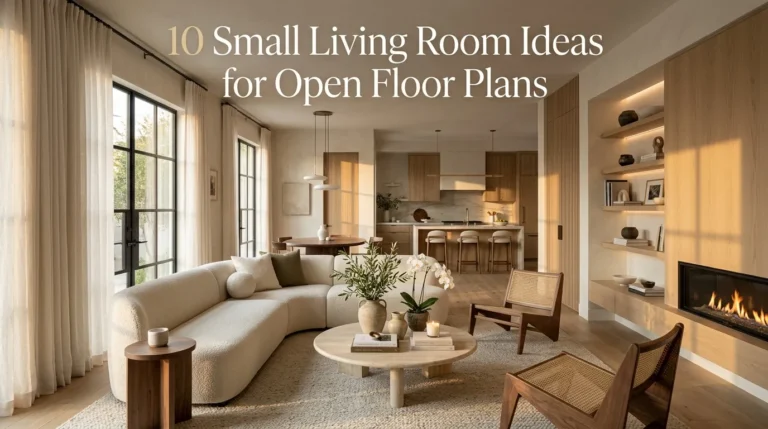
This guide walks through ten cozy apartment living room ideas that actually hold up in real, lived-in spaces — not just in a styled photo. You’ll find practical guidance on lighting, texture, color, layout, and furniture choices, plus the reasoning behind why each idea works so you can adapt it to your own space instead of copying it exactly. Whether you’re furnishing your first apartment or trying to breathe new life into a room you’ve lived in for years, these ideas are meant to be mixed, matched, and made your own. Let’s get into it.
Table of Contents
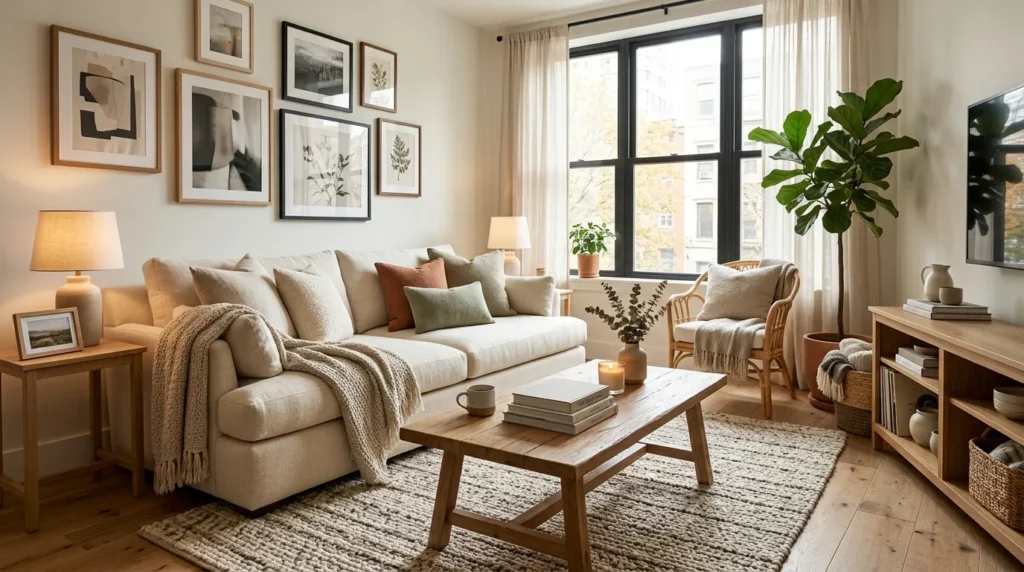
- Warm Layered Lighting — Replacing harsh overhead light with layers that make a room feel golden and relaxed.
- Soft Textured Throws — Using texture as the fastest, cheapest route to a cozier living room.
- Neutral Color Palette — Building a calm, cohesive base that still feels warm instead of cold.
- Vintage Rug Layering — Grounding the room and adding lived-in character with layered rugs.
- Curated Bookshelf Styling — Turning open shelving into a personal, gallery-like focal point.
- Oversized Floor Cushions — Adding flexible, low-commitment seating that instantly feels casual and inviting.
- Statement Accent Chair — Anchoring the room with one piece that carries personality and comfort.
- Natural Wood Accents — Bringing warmth and organic texture into a space full of hard surfaces.
- Gallery Wall Display — Filling vertical space with personality without a single nail hole penalty.
- Multi-Functional Furniture — Making small-space living feel intentional instead of cramped.
1. Warm Layered Lighting
Quick Benefits
- Instantly softens harsh apartment overhead lighting
- Creates depth and visual interest after dark
- Highlights textures, art, and architectural details
- Works with rental-friendly, no-hardwiring solutions
- Sets the mood for relaxing, reading, or hosting
Why It Works
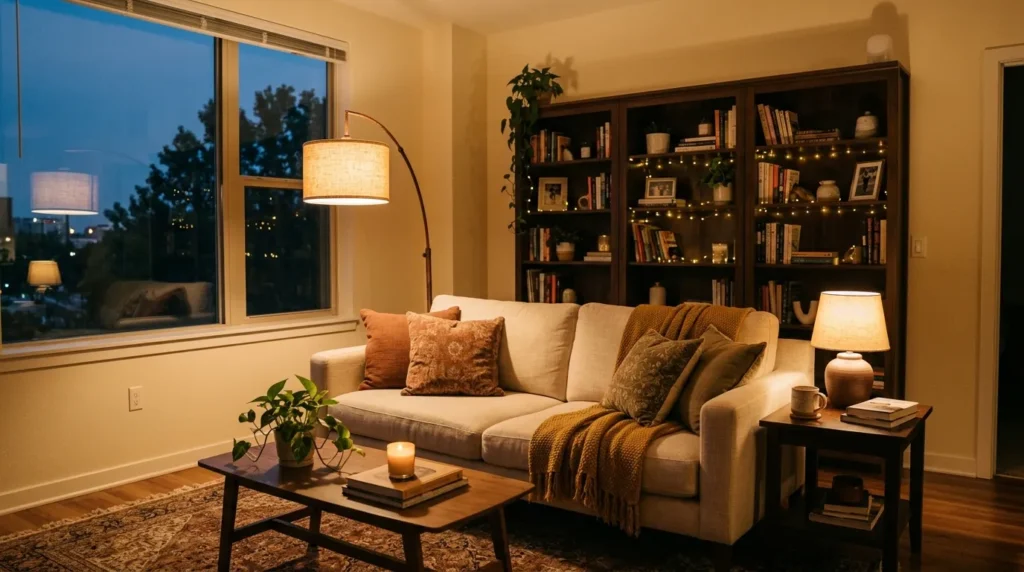
One thing that works especially well in almost any apartment is simply turning off the overhead light and building a lighting plan instead. Most apartment ceiling fixtures throw a flat, blue-white light that flattens a room and makes it feel more like an office than a living space. I’ve noticed that the single biggest shift a person can make — often for under $100 — is layering in three or four smaller light sources at different heights: a floor lamp, a table lamp, a plug-in sconce, and maybe a string of warm LED lights behind a shelf. That layering mimics the kind of ambient, golden-hour light our brains associate with comfort and rest, which is exactly why it changes the entire feel of a room without touching a single wall.
How To Style It
Start by choosing bulbs in the 2700K–3000K range, which reads as warm white rather than clinical. Place a floor lamp beside your seating area for reading height, add a smaller table lamp on a console or side table for a lower glow, and consider a plug-in wall sconce if outlets allow. If you’re anything like me, you’ll also want a dimmer switch adapter on at least one lamp so you can shift from bright and functional to soft and relaxed in seconds. Battery-operated LED candles on a coffee tray add one more low, flickering layer without any fire risk or landlord objections.
2. Soft Textured Throws
Quick Benefits
- Cheapest, fastest cozy upgrade available
- Adds visual and physical warmth to any sofa
- Easy to swap seasonally without a full redesign
- Hides worn or mismatched furniture
- Encourages guests to actually sit and stay
Why It Works
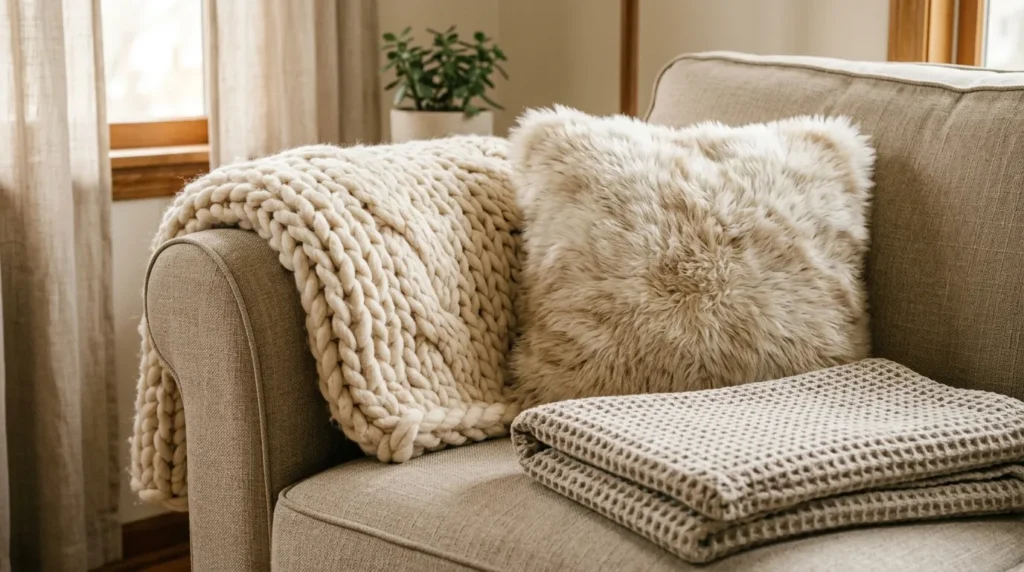
A mistake many apartment dwellers make is assuming coziness has to come from big furniture purchases. It doesn’t. Texture is one of the most underrated design tools because it works on a sensory level — your eyes register softness before your body ever touches it, and that visual cue alone makes a room read as more comfortable. I’ve seen this idea transform spaces where the furniture itself was outdated or borrowed; a chunky knit throw draped over the arm of an old couch does more psychological work than a brand-new sofa in a flat, single fabric. Layering different textures — bouclé, knit, faux fur, linen — also keeps a neutral room from feeling flat or sterile.
How To Style It
Drape one throw loosely over the back or arm of the sofa rather than folding it flat, which reads as more lived-in and intentional. Add a second throw in a different texture on an accent chair or ottoman to create contrast. Stick to two or three tones within the same color family so the layering feels curated rather than cluttered. Wool and chunky-knit blends work well for fall and winter, while a lighter linen or waffle-weave throw keeps things breathable for warmer months, so you can rotate for the season without buying new furniture.
3. Neutral Color Palette
Quick Benefits
- Creates a calm, cohesive backdrop for everything else
- Makes small apartment rooms feel larger
- Pairs easily with rental-safe decor like rugs and art
- Ages well instead of feeling trendy or dated
- Provides flexibility to change accent colors seasonally
Why It Works
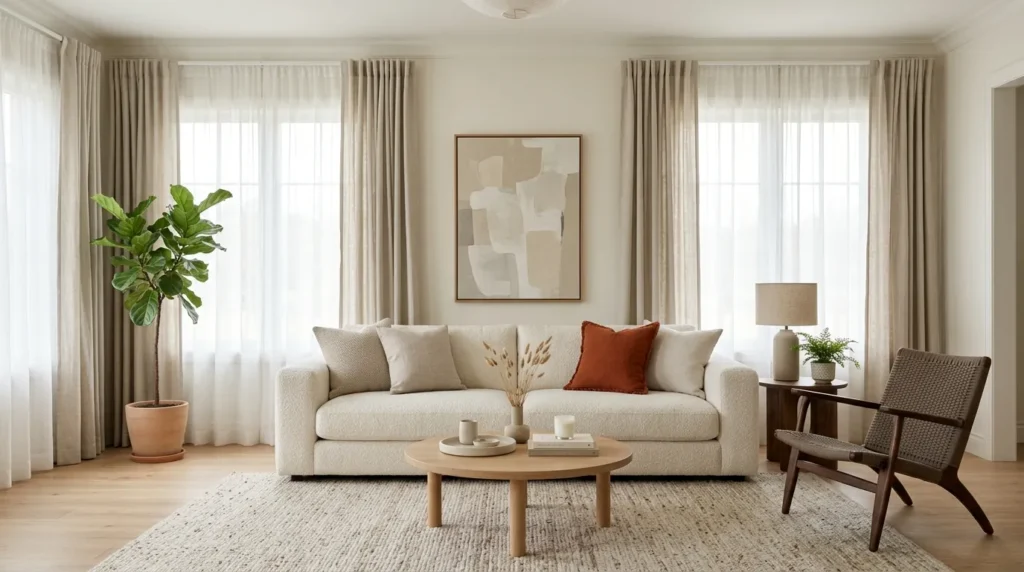
That’s why many designers recommend starting with a neutral base before adding any color at all — it’s not about avoiding color, it’s about giving your eye a place to rest. Warm neutrals like greige, oatmeal, cream, and soft taupe reflect light more gently than stark white, which keeps a small apartment living room from feeling clinical. In my experience, apartments that feel the most put-together almost always have a restrained palette of three to four core tones, with color introduced through pillows, art, or a single statement piece rather than scattered evenly across the room.
How To Style It
If you can’t paint (many rental leases restrict it), lean on textiles instead: a neutral sofa or slipcover, an oatmeal or ivory rug, and linen curtains in a matching warm tone. Add one deeper neutral, like a chocolate brown or charcoal accent chair, to anchor the room and keep it from feeling washed out. From there, introduce color sparingly — a single terracotta throw pillow, a sage green plant, or brass hardware — so each accent actually stands out instead of competing for attention.
4. Vintage Rug Layering
Quick Benefits
- Grounds the seating area and defines the space
- Hides worn or unattractive apartment flooring
- Adds pattern and history without permanent changes
- Muffles sound in echo-prone apartment units
- Instantly makes a room feel more finished
Why It Works
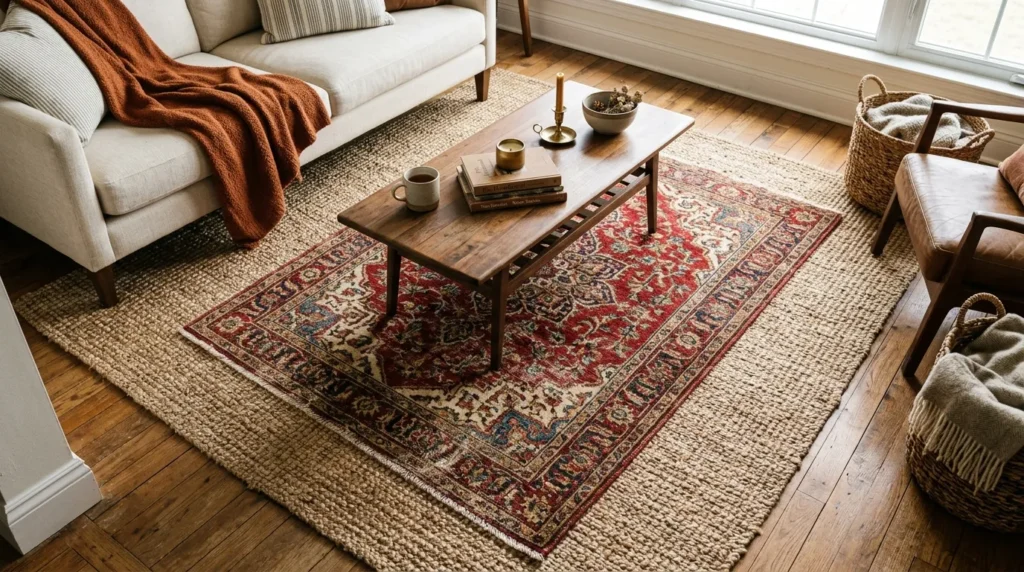
One simple trick I always suggest to renters dealing with builder-grade laminate or dated carpet is layering a smaller vintage-style rug on top of a larger, neutral jute or flatweave base. This does two things at once: it defines the seating area the way a rug should, and it introduces pattern and warmth without a full flooring replacement. Layered rugs also read as collected-over-time rather than store-bought-yesterday, which is a big part of why the look feels cozy instead of staged.
How To Style It
Choose a large, budget-friendly jute or sisal-look rug as your base layer, sized to fit under the front legs of your sofa and chairs. Then layer a smaller vintage or Persian-inspired rug on top, angled slightly or centered depending on your furniture arrangement, so it acts as a visual anchor beneath the coffee table. Rug pads underneath both layers keep everything from sliding on hardwood or laminate, which matters even more in a smaller apartment where the rug sees daily foot traffic.
5. Curated Bookshelf Styling
Quick Benefits
- Turns storage into a design feature
- Adds personality without permanent wall changes
- Creates a natural focal point in the room
- Doubles as display space for travel finds and art
- Works in nearly any apartment layout or size
Why It Works
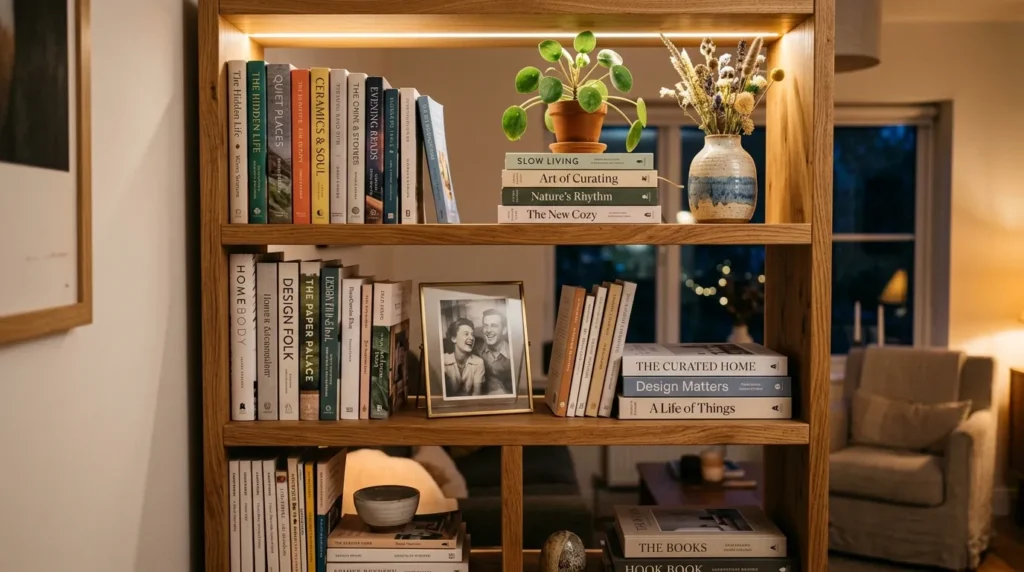
A well-styled bookshelf does more visual work per square foot than almost anything else in a living room, which matters enormously in an apartment where every surface counts. I’ve noticed that shelves styled with only books tend to look either sparse or overwhelming, while shelves that mix books, objects, and negative space read as curated and intentional. The goal isn’t to fill every inch — it’s to create rhythm, so your eye has somewhere to land and somewhere to rest.
How To Style It
Group books both vertically and in stacked horizontal piles rather than lining every shelf the same way. Use the horizontal stacks as a base for small objects — a candle, a small plant, a framed photo, or a travel souvenir — to break up the visual line. Leave roughly 20 to 30 percent of each shelf empty; that breathing room is what keeps the whole arrangement from feeling cluttered. If your shelving unit is plain, a strip of battery-powered LED lights along the top or back edge adds a soft glow that makes the whole display feel gallery-like at night.
6. Oversized Floor Cushions
Quick Benefits
- Adds flexible extra seating for guests instantly
- Creates a relaxed, low-to-the-ground gathering spot
- Easy to store or tuck away when not in use
- Softens the hard lines of standard furniture
- Budget-friendly compared to a second sofa or loveseat
Why It Works
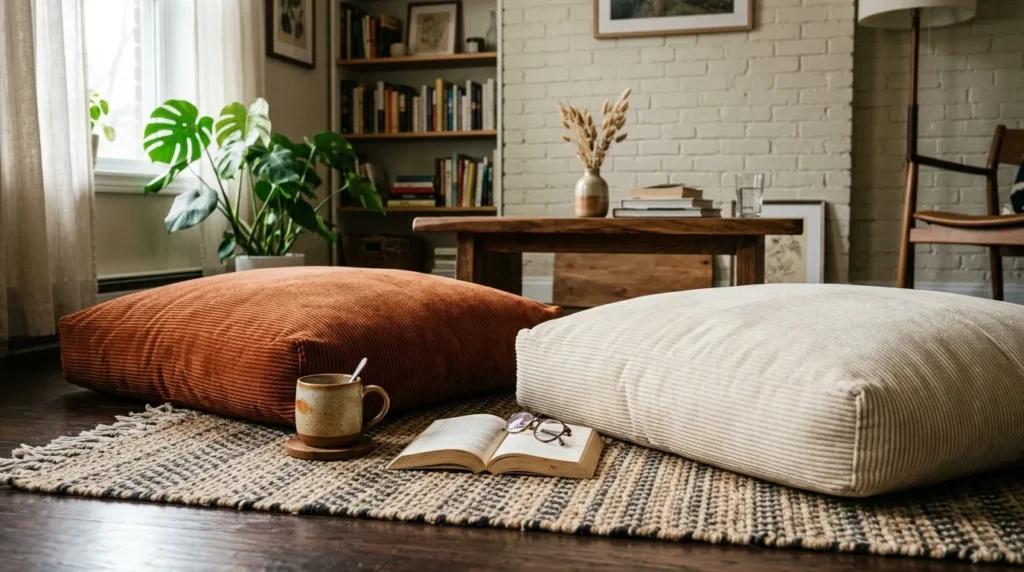
If you’re anything like me, you’ve hosted a small gathering in an apartment living room and realized halfway through that there simply isn’t enough seating. Oversized floor cushions solve that problem without requiring a second sofa you don’t have room for. They also lower the visual “furniture line” of a room, which — counterintuitively — often makes a small space feel bigger, because the eye isn’t stopped by tall, boxy shapes at every turn.
How To Style It
Place one or two large floor cushions near the coffee table, angled toward the main seating area so they feel like an extension of the conversation rather than an afterthought. Choose a textured cover — bouclé, corduroy, or a woven cotton — in a tone that complements your rug and throws. When you’re not entertaining, stack them in a corner or lean them against a bookshelf, where they double as a soft, sculptural accent instead of clutter.
7. Statement Accent Chair
Quick Benefits
- Adds personality without redesigning the whole room
- Provides a second, distinct seating option
- Works as a reading or plant corner anchor
- Introduces color, texture, or shape variety
- Easy to move if you rearrange later
Why It Works
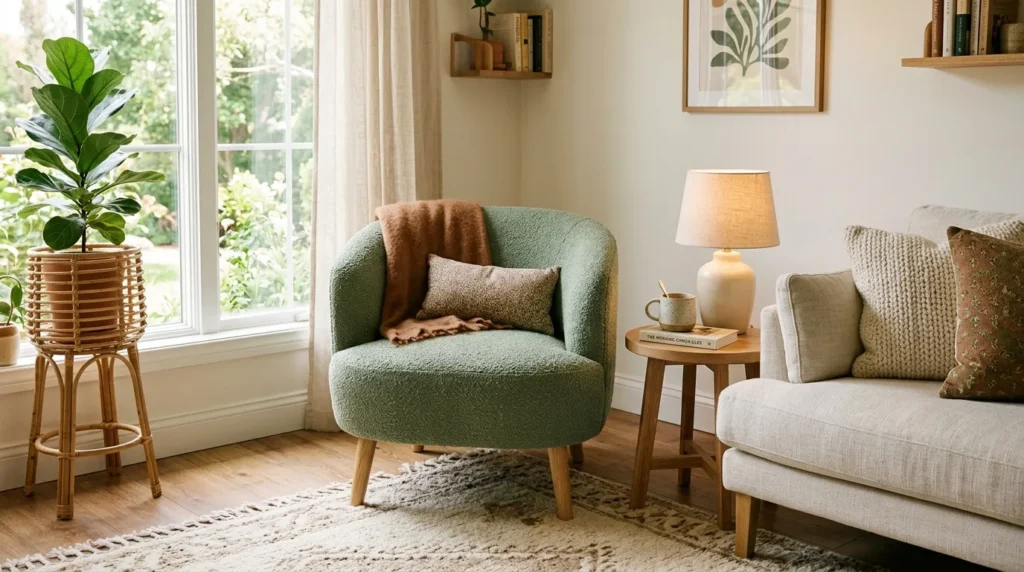
A mistake many people make is spending their entire furniture budget on the sofa and treating the rest of the room as an afterthought. One boldly shaped or textured accent chair — a curved bouclé chair, a rattan peacock chair, or a deep velvet armchair — does more to define a room’s personality than almost any other single piece. It gives the eye a second point of interest, breaks up a room full of straight lines, and creates a natural spot for reading, working, or simply sitting somewhere that isn’t the couch.
How To Style It
Position the chair at a slight angle to the sofa rather than directly across from it, which creates a more conversational, less formal layout. Pair it with a small side table and a floor lamp to give it its own little “zone” within the larger room. If your sofa is a simple neutral, this is the piece where you can take a bigger risk with color, pattern, or shape — a curved silhouette in particular tends to feel warmer and cozier than anything boxy or hard-edged.
8. Natural Wood Accents
Quick Benefits
- Warms up rooms dominated by hard, cool surfaces
- Adds organic texture that pairs with any style
- Balances metal, glass, and synthetic materials
- Brings a grounded, earthy feel indoors
- Works across furniture, decor, and small accents
Why It Works
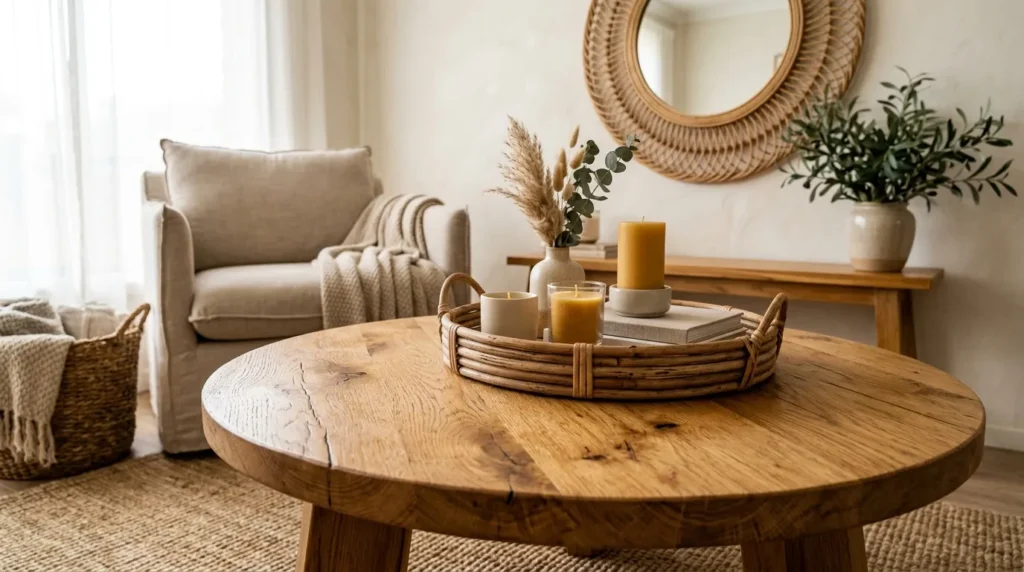
Apartments are often full of hard, cool surfaces by default — laminate counters, vinyl flooring, aluminum window frames — and that combination can leave a living room feeling sterile even when the decor itself is nice. In my experience, reintroducing natural wood tones is one of the fastest ways to counteract that coolness. Wood has a warmth and irregularity that synthetic materials can’t fully replicate, and even small doses go a long way toward making a space feel more organic and less like a hotel room.
How To Style It
Look for a wood coffee table, a set of nesting side tables, or even a simple wood tray to place on top of an existing table if buying new furniture isn’t in the budget. Rattan and woven-wood accents — a mirror frame, a plant stand, a set of wall hooks — layer in the same warmth at a smaller scale. Mixing wood tones is fine as long as they share similar undertones (warm honey tones together, or cooler gray-washed tones together), which keeps the room feeling intentional rather than mismatched.
9. Gallery Wall Display
Quick Benefits
- Fills vertical space without permanent wall damage
- Personalizes a rental in a way that’s fully removable
- Draws the eye upward, making ceilings feel taller
- Combines art, photos, and mirrors for depth
- Endlessly customizable as your taste evolves
Why It Works
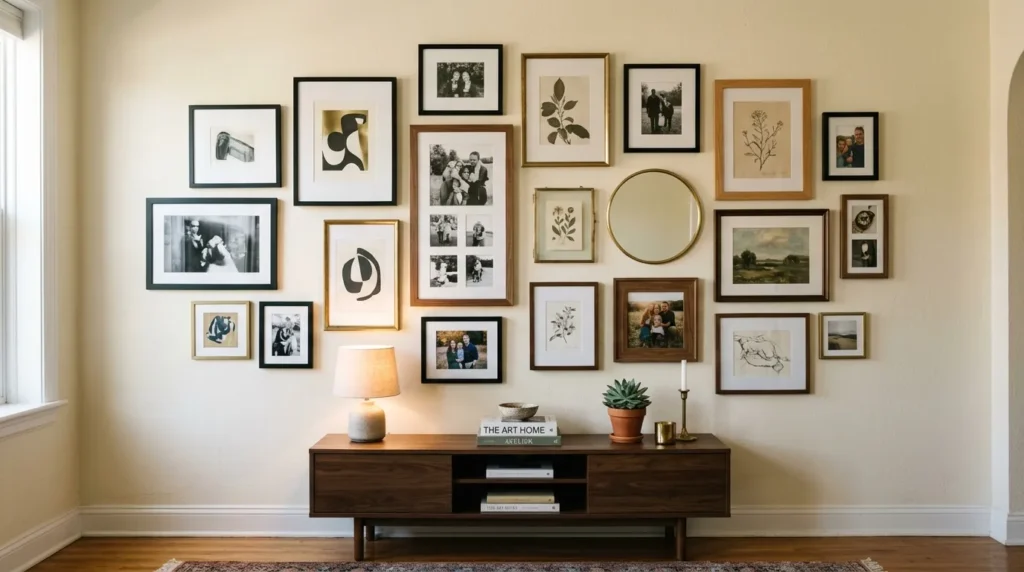
One thing that works especially well for renters specifically is a gallery wall built with removable adhesive strips rather than nails — it delivers the full visual impact of a curated wall without a single hole to patch at move-out. A well-composed gallery wall also does something a single large piece of art can’t: it tells a story across multiple pieces, mixing photography, illustration, and even small mirrors or textile hangings for depth and dimension.
How To Style It
Lay your pieces out on the floor first in your intended arrangement before hanging anything, adjusting spacing until it feels balanced rather than symmetrical. Mix frame finishes (a few black, a few natural wood, maybe one brass) rather than matching every frame exactly, which reads as more collected over time. Keep roughly two to three inches between each piece, and anchor the grouping around eye level from the main seating spot in the room, since that’s the vantage point it will actually be viewed from most often.
10. Multi-Functional Furniture

Quick Benefits
- Maximizes limited apartment square footage
- Reduces clutter by combining storage with seating
- Adapts the room for both daily use and hosting
- Cuts down on the number of pieces needed overall
- Keeps sightlines open in smaller floor plans
Why It Works
In a smaller apartment, every piece of furniture has to justify its footprint, and that’s exactly why multi-functional pieces have become such a go-to recommendation among designers working with compact spaces. A storage ottoman that doubles as a coffee table and extra seating, or a console table that also hides a printer and mail, reduces the total number of objects competing for floor space. Fewer, harder-working pieces almost always read as calmer and cozier than more, smaller ones scattered throughout the room.
How To Style It
Swap a traditional coffee table for a storage ottoman topped with a large tray, which gives you a surface for drinks and books while hiding blankets or remotes underneath. Choose a console table with drawers or shelving behind the sofa to hold everyday items instead of a decorative-only piece. If floor space is especially tight, a nesting table set lets you pull out extra surfaces only when guests are over, then tuck them away to keep the room feeling open the rest of the time.
FAQ
What is the cheapest way to make an apartment living room feel cozy? Swapping your lighting is usually the cheapest, highest-impact change. Replacing overhead lighting with a warm-toned floor lamp or table lamp, plus a couple of textured throw pillows, can transform the feel of a room for under $75 without touching furniture or walls at all.
How do I make a small apartment living room feel bigger and still cozy? Stick to a neutral color palette, keep furniture legs visible instead of skirted, and layer in soft texture rather than bulky pieces. Multi-functional furniture, like a storage ottoman instead of a coffee table and separate storage bin, also keeps floor space open.
Can I decorate a rental living room without damaging the walls? Yes. Removable adhesive strips, tension curtain rods, and peel-and-stick options let you hang art, curtains, and even lightweight shelving without drilling. A gallery wall built entirely with adhesive strips is one of the easiest rental-safe upgrades available.
What colors make a living room feel cozy instead of cold? Warm neutrals like oatmeal, taupe, cream, and soft brown tend to feel cozier than stark white or cool gray. Adding one or two deeper accent tones, like terracotta or chocolate brown, keeps the palette from feeling flat.
How many throw pillows and blankets are too many? As a general guideline, two to three pillows per seating spot plus one or two throws is usually the sweet spot. Beyond that, a sofa can start to feel cluttered rather than cozy, especially in a smaller apartment room.
Do I need a big budget to make an apartment living room cozy? Not at all. Texture, lighting, and layout changes — throws, rugs, lamp placement, and furniture arrangement — cost far less than new furniture and often make a bigger visual difference than a full replacement would.
What’s the easiest apartment living room mistake to fix? Relying solely on a single overhead light. It’s one of the most common issues in rental living rooms, and it’s also one of the fastest to fix with a couple of lamps and warm-toned bulbs.
Conclusion
A cozy apartment living room isn’t about square footage, a big budget, or a full renovation — it’s about layering the right details on purpose. Warm lighting, soft texture, a grounding rug, and a few pieces of furniture that actually work for your space can shift a room from “fine” to “this is where I want to be” faster than most people expect. You don’t need to tackle all ten ideas at once, and you shouldn’t try to. Start with one or two ideas and gradually build a space that reflects your style and supports everyday comfort. Notice how the room feels after each small change, and let that guide what you add next. Over time, those small, intentional choices add up to a living room that feels less like a temporary rental and more like a home you genuinely enjoy coming back to.
Related Articles
- Cozy Bedroom Ideas for Small Apartments
- Small Living Room Layouts That Actually Work
- Modern Farmhouse Decor on a Rental Budget
- Neutral Home Styling for Every Room
- DIY Accent Wall Ideas Without Damaging Walls