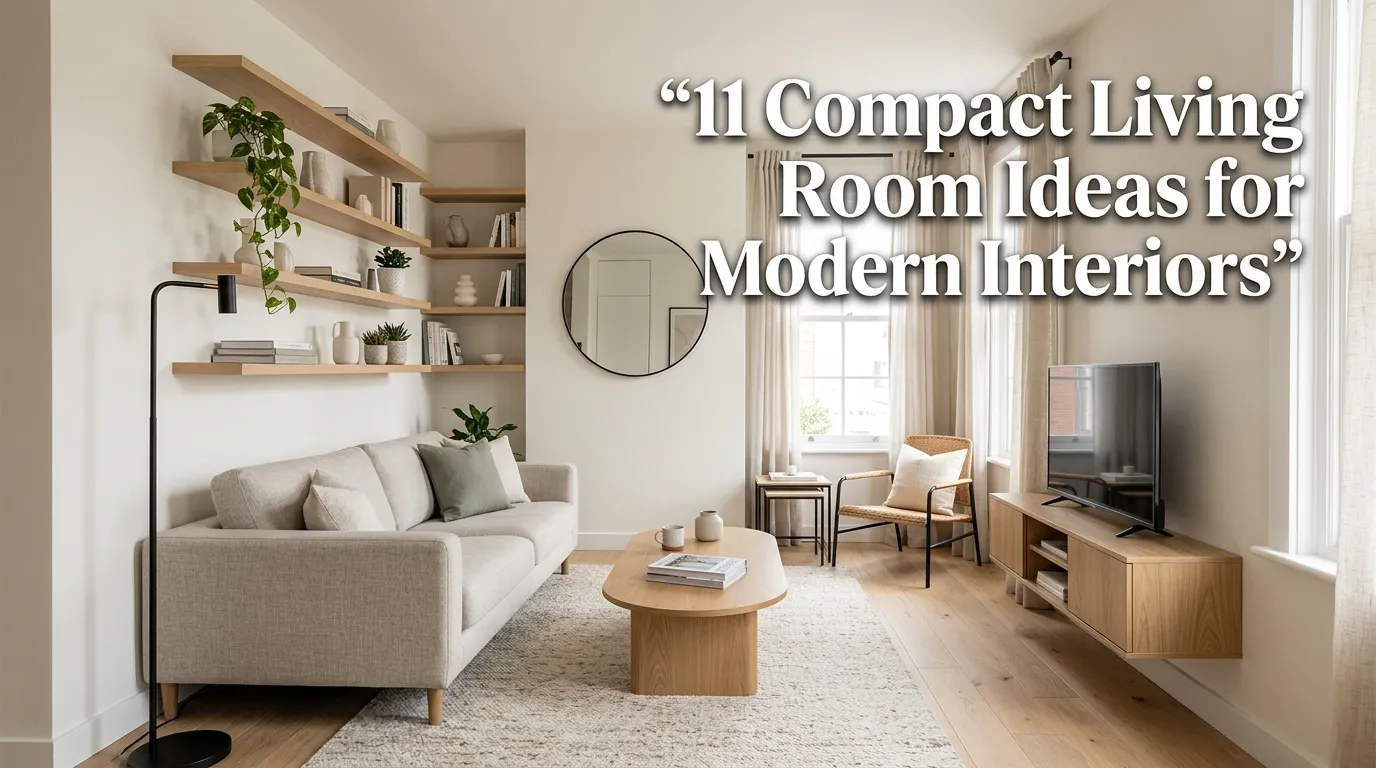
11 Compact Living Room Ideas for Modern Interiors
A compact living room can be one of the most rewarding spaces to decorate. When square footage is limited, every piece has a job to do, and thoughtful choices can make the room feel comfortable, polished, and surprisingly spacious. The goal isn’t to squeeze more furniture into the room. It’s to create enough breathing room around the pieces you actually use.
Whether you’re furnishing a small apartment, updating a modest family room, or trying to make an awkward living area work harder, modern design offers plenty of solutions. Slim furniture, thoughtful lighting, warm neutrals, hidden storage, and flexible layouts can completely change how a small room feels without requiring a major renovation.
I’ve noticed that the most successful small living rooms usually aren’t the ones with the fewest belongings. They’re the ones where everything feels intentional. A sofa fits the wall instead of fighting it. A coffee table leaves enough room to walk around. Curtains draw the eye upward. Decorative pieces add personality without covering every available surface.
That’s why these 11 compact living room ideas for modern interiors focus on both appearance and everyday usability. You’ll find ideas for furniture placement, color, lighting, storage, texture, and accessories, along with practical ways to adapt each look to a rental or a home you own.
The best part is that you don’t have to adopt an entire design style at once. Start with the problem your room has right now—too dark, too crowded, lacking storage, or simply feeling unfinished—and choose one or two ideas that solve it. Small changes can make a much bigger difference than expected.
Table of Contents
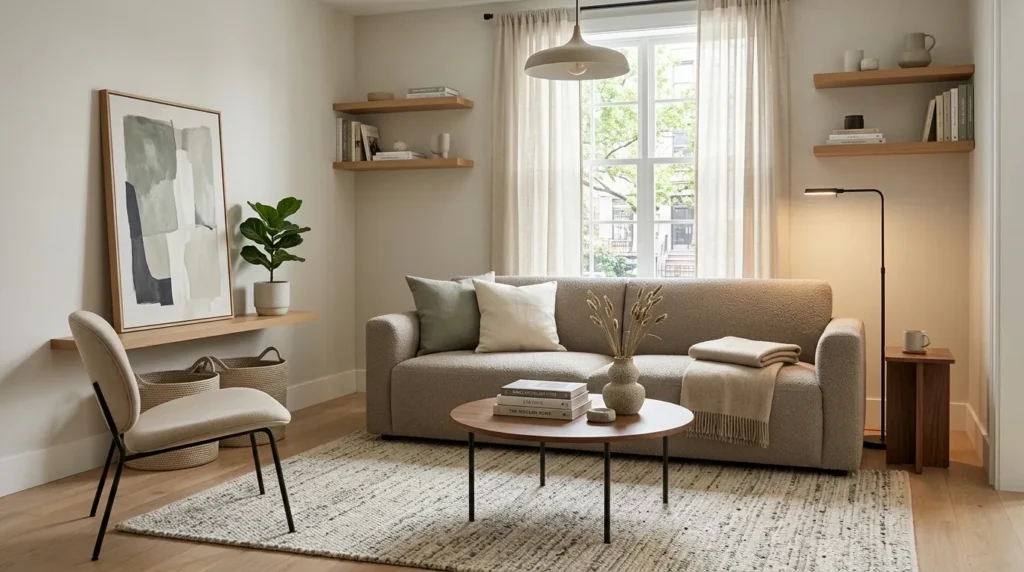
1. Slimline Seating
Create a comfortable seating area with streamlined furniture that leaves more visible floor space.
2. Floating Furniture
Pull selected pieces away from the walls to create a lighter, more intentional arrangement.
3. Light Neutral Palette
Use soft, layered neutrals to make the room feel brighter, calmer, and more open.
4. Vertical Storage
Take advantage of wall height with shelves and cabinets that keep valuable floor space clear.
5. Multifunctional Pieces
Choose furniture that performs more than one job so a small room can work harder.
6. Large Area Rug
Use one well-scaled rug to visually connect the seating area and give the room a finished look.
7. Mirror And Light
Combine reflective surfaces with strategic lighting to increase brightness and visual depth.
8. Warm Wood Accents
Bring warmth and character into a modern room through natural wood tones and organic textures.
9. Built-In Storage
Use customized or built-in solutions to turn awkward walls and unused corners into useful storage.
10. Minimalist Gallery
Create personality with a carefully edited collection of artwork rather than many small decorative objects.
11. Flexible Layout
Design the room around movement and everyday routines so the space remains comfortable and adaptable.
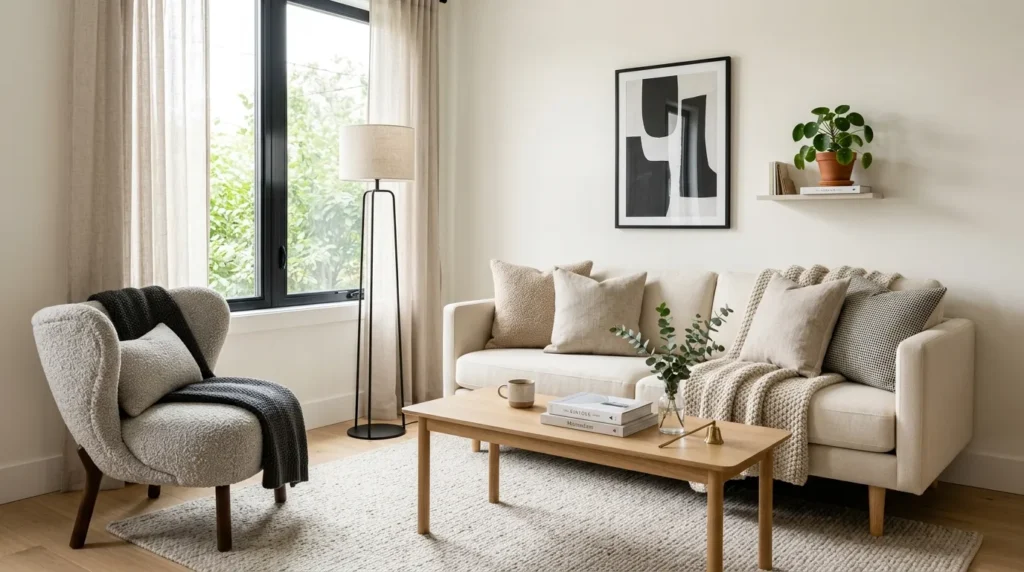
1. Slimline Seating
Quick Benefits
- Preserves valuable walking space
- Makes the room appear less crowded
- Works especially well in apartments
- Creates a cleaner modern silhouette
- Makes rearranging easier
Why It Works
A bulky sofa can dominate a small living room before you add anything else. Slimline seating takes a different approach by providing the comfort you need without visually overwhelming the room. Look for sofas with relatively narrow arms, clean profiles, raised legs, and proportions that match the wall where they will sit.
The visible floor beneath a raised sofa is particularly useful because it creates a sense of openness. Even though the actual floor area hasn’t changed, your eye can see more of it, which makes the room feel lighter.
A compact sofa doesn’t have to mean an uncomfortable sofa. Pay attention to seat depth, cushion construction, and back height rather than simply choosing the smallest model available. In my experience, getting the proportions right is more important than trying to save every possible inch.
How To Style It
Start by measuring the wall and allowing enough clearance for doors, windows, and walkways. A two- or three-seat sofa with a streamlined frame can become the main anchor. Pair it with one compact accent chair rather than two oversized chairs if additional seating is necessary.
Choose upholstery in a light neutral such as oatmeal, warm gray, cream, or soft beige. Add personality with two or three cushions in different textures rather than covering the sofa with accessories.
A slim wood or metal side table can replace a bulky end table. If the sofa sits beneath a window, avoid blocking the natural light with a tall back unless the arrangement absolutely requires it.
For an especially small room, consider an apartment-size sofa with a chaise only if the chaise doesn’t interfere with circulation. The finished arrangement should leave a comfortable path between the main seating pieces and the room’s entrance.
2. Floating Furniture
Quick Benefits
- Creates clearer zones
- Improves circulation
- Makes the layout feel intentional
- Can define an open-plan space
- Prevents a wall-to-wall furniture effect
Why It Works
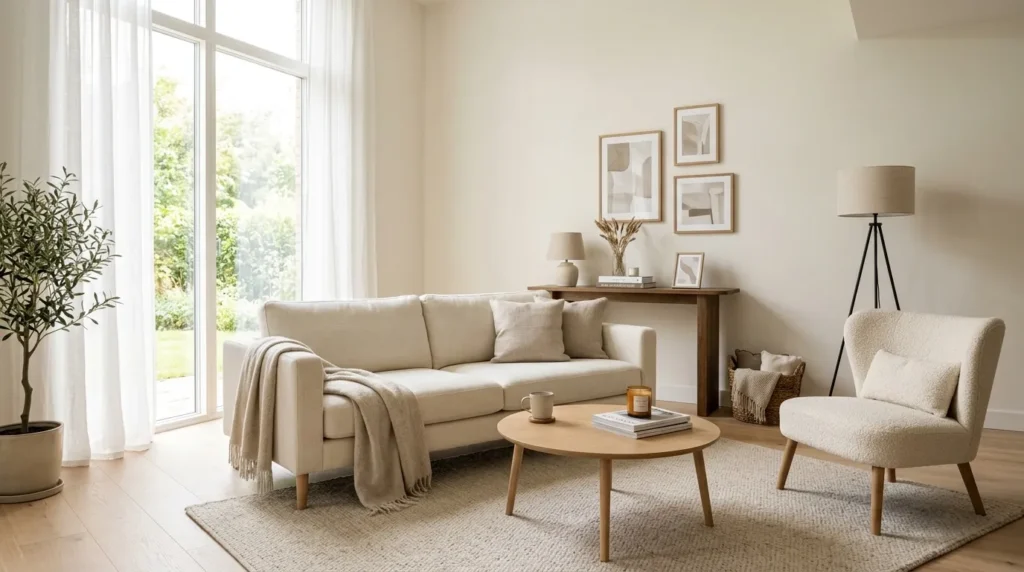
Small rooms often inspire the instinct to push every piece of furniture against a wall. While that can work in some layouts, it isn’t always the best solution. Floating one or two pieces can create breathing room and make the seating arrangement feel more deliberate.
A sofa positioned slightly away from a wall can establish a clear conversation area, particularly in an open-plan apartment where the living room shares space with a dining or kitchen area. The gap doesn’t need to be large. Even a modest amount of separation can create visual definition.
This approach also helps avoid the “furniture perimeter” look, where every object sits around the edge and the center of the room becomes an unused island. Good design is about movement as much as appearance, so consider how people actually enter, sit, talk, and move through the room.
How To Style It
Begin with the largest piece, usually the sofa, and identify the natural focal point. This could be a television, fireplace, large window, artwork, or architectural feature.
If space allows, float the sofa so it faces the focal point while leaving a practical walking route behind or beside it. Place a narrow console behind the sofa if you need a surface for lamps, books, or decorative objects.
In an open-plan home, use the back of the sofa to subtly separate the living area from another function. A slim console, rug, or pair of lamps can reinforce the boundary without making the room feel divided.
Keep furniture legs visually consistent where possible. A combination of raised sofa legs, a low coffee table, and an open-base chair can create a cohesive, airy composition.
3. Light Neutral Palette
Quick Benefits
- Reflects available daylight
- Creates a calm atmosphere
- Makes furnishings easier to coordinate
- Gives the room a timeless foundation
- Helps small spaces feel visually larger
Why It Works
Color cannot physically increase the size of a living room, but it can dramatically influence how spacious it appears. A light neutral palette allows natural and artificial light to move more easily around the room instead of creating strong visual boundaries.
White isn’t the only option. Soft taupe, warm ivory, pale greige, sand, light stone, and muted mushroom shades can create a sophisticated modern interior without making it feel stark.
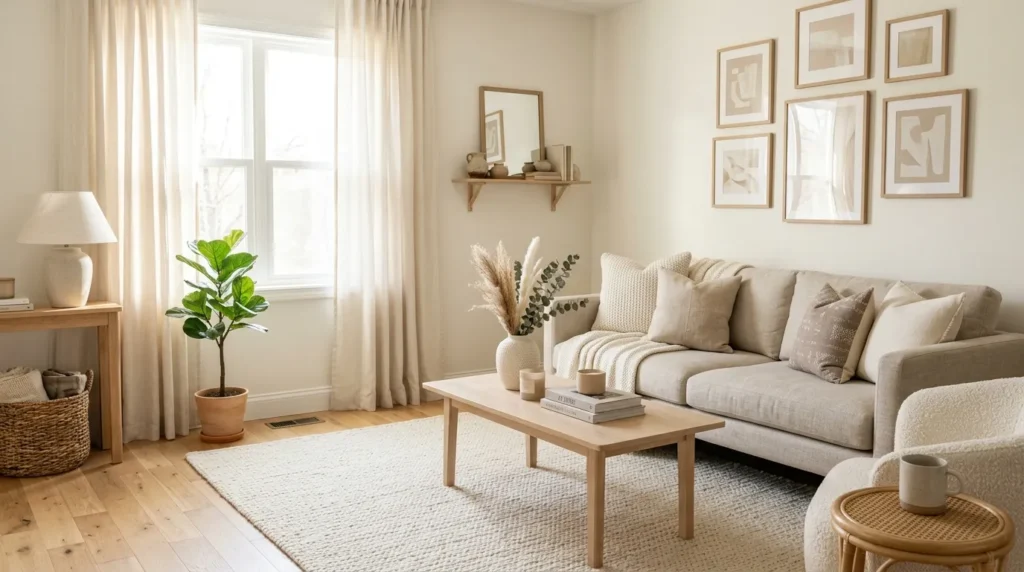
The secret is layering rather than using one identical shade everywhere. A cream sofa against a warm white wall can be complemented by a beige rug, light oak furniture, and textured curtains. The colors remain close enough to create continuity while subtle differences keep the room interesting.
I’ve found that warm neutrals are particularly effective when a small room needs to feel welcoming rather than clinical. They also provide a flexible background for seasonal changes and colorful accessories.
How To Style It
Choose one dominant neutral for the walls and larger surfaces. Then introduce two or three closely related shades through upholstery, rugs, curtains, and furniture.
For example, combine warm white walls with a beige sofa, oatmeal curtains, a natural jute or wool-blend rug, and pale wood furniture. Add black or dark bronze in small doses through lighting or frames for contrast.
Avoid making every surface the exact same color. Instead, vary texture. Bouclé, linen, cotton, wool, wood, ceramic, and woven materials can all create depth without introducing busy patterns.
If the room receives limited daylight, use warm-white light bulbs and place lamps at different heights. This helps the neutral palette retain warmth after sunset.
4. Vertical Storage
Quick Benefits
- Uses overlooked wall space
- Keeps floors clearer
- Provides display and storage
- Draws attention upward
- Works in small apartments and homes
Why It Works
When floor space is scarce, the walls become valuable real estate. Vertical storage allows you to add practical capacity without expanding the footprint of the room.
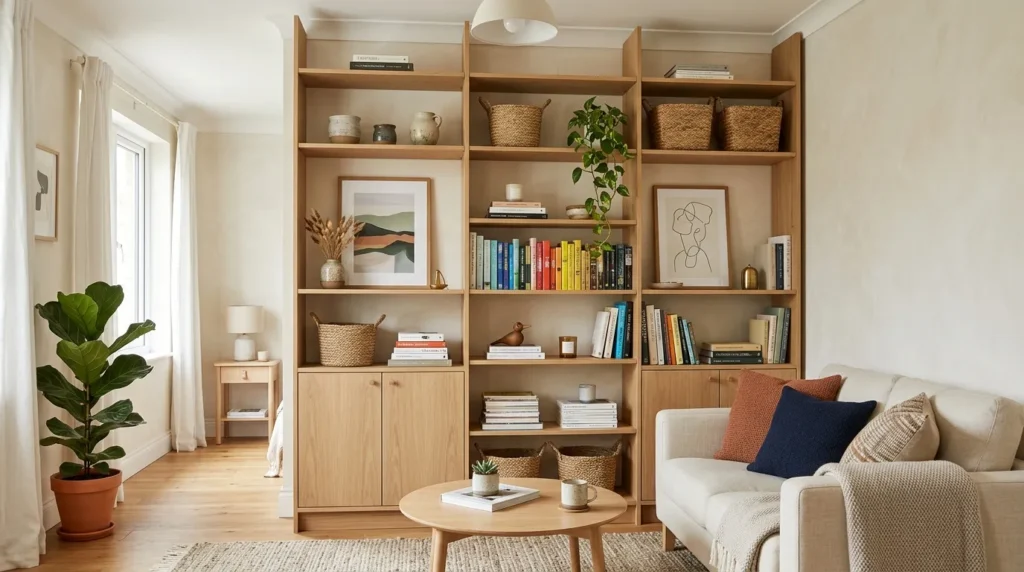
Tall shelving can hold books, baskets, framed artwork, and small decorative pieces while keeping the floor relatively open. A narrow cabinet can provide hidden storage for electronics, games, blankets, or everyday clutter.
Vertical furniture also changes the proportions of the room visually. The eye naturally travels upward, making the ceiling feel more prominent. This can be especially effective in rooms with standard or slightly higher ceilings.
The important distinction is between using wall height intelligently and filling every inch of it. Too many shelves or too much decor can make a compact room feel crowded again.
How To Style It
Choose one vertical storage feature rather than scattering several small storage units around the room. A tall bookcase, narrow cabinet, or wall-mounted shelving system can provide a strong focal point.
Keep heavier storage items toward the bottom and lighter decorative pieces toward the top. Use baskets to group smaller belongings so the shelves don’t become visually chaotic.
Leave some shelves partially empty. Negative space is part of the design, especially in a small room.
If you rent, consider freestanding shelving instead of permanent cabinetry. A tall, narrow unit in a wood finish can add warmth while remaining easy to move.
For a built-in appearance without custom construction, position matching shelving units side by side and style them as one visual composition.
5. Multifunctional Pieces
Quick Benefits
- Reduces furniture quantity
- Adds flexibility
- Makes better use of limited space
- Helps rooms serve multiple purposes
- Simplifies everyday organization
Why It Works
A compact living room often needs to do several jobs. It may be a place for relaxing, watching television, reading, working, entertaining, and storing everyday items. Multifunctional furniture allows one piece to support several of those activities.
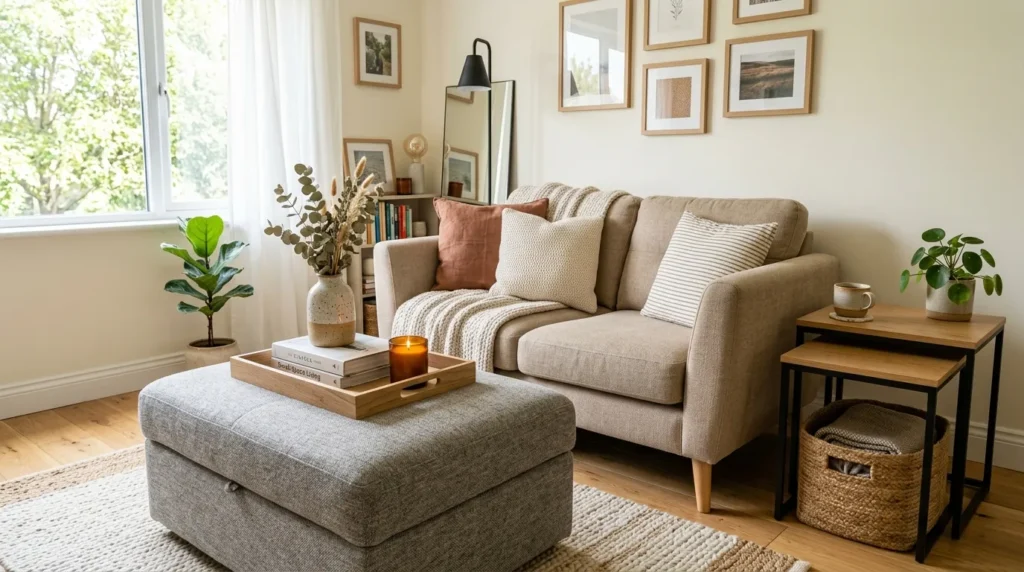
An ottoman can function as a footrest, extra seating, and a coffee table when paired with a tray. A storage bench can provide seating while hiding blankets and games. A nesting table can expand when guests arrive and tuck away when the room needs more floor space.
This isn’t about turning the room into a collection of clever gadgets. The best multifunctional pieces look like normal, attractive furniture first. Their additional purpose simply makes the room more efficient.
How To Style It
Think about what your household actually needs before shopping. If you frequently have guests, prioritize flexible seating. If clutter is the main problem, look for concealed storage. If you work from the living room, consider a compact desk or console that can double as a decorative surface.
A round upholstered ottoman can soften a room dominated by straight furniture while providing several functions. Add a flat tray when you need a stable surface for drinks or books.
Nesting tables are another useful option because you can separate them during entertaining and stack them afterward. Choose tables with simple silhouettes so they don’t introduce visual clutter.
Avoid buying multifunctional furniture simply because it has multiple features. Every function should solve a real problem in your room.
6. Large Area Rug
Quick Benefits
- Defines the seating zone
- Connects furniture visually
- Adds warmth and softness
- Makes the arrangement feel finished
- Can create a stronger sense of proportion
Why It Works
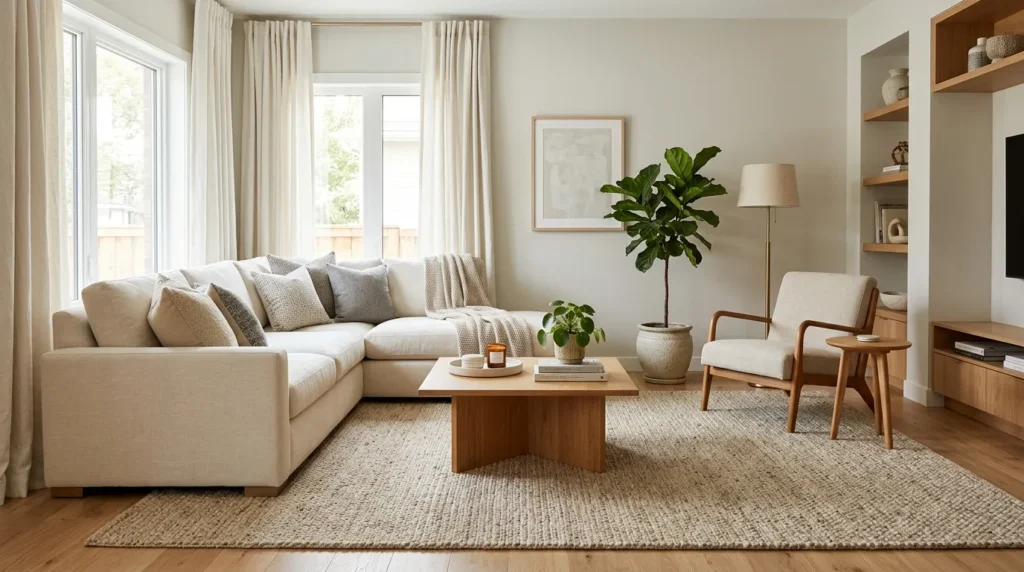
A surprisingly common mistake in a small living room is choosing a rug that is too small. A tiny rug floating underneath the coffee table can make the furniture arrangement look disconnected.
A properly scaled area rug does the opposite. It visually gathers the sofa, chairs, and coffee table into one cohesive zone. That sense of connection can make the room feel more organized, even when the actual furniture footprint remains unchanged.
The rug also introduces one of the easiest ways to add texture and personality. In a modern interior, a subtle geometric pattern, low-pile wool texture, faded vintage-inspired design, or natural fiber can add interest without overwhelming the space.
How To Style It
Ideally, place at least the front legs of the sofa and main chairs on the rug. If the room is too small for that arrangement, position the rug so it sits generously beneath the coffee table and reaches toward the seating rather than appearing like a small island.
Choose a rug with enough visual weight to anchor the room but avoid extremely busy patterns if the space already contains strong furniture shapes.
Cream, taupe, muted gray, warm beige, and soft earth tones are easy starting points. For a more contemporary look, try a subtle abstract pattern.
Measure the room before purchasing. A few extra inches can make a meaningful difference in how finished the final arrangement appears.
7. Mirror And Light
Quick Benefits
- Maximizes available brightness
- Adds visual depth
- Creates a decorative focal point
- Helps dark corners feel more open
- Works with many modern styles
Why It Works
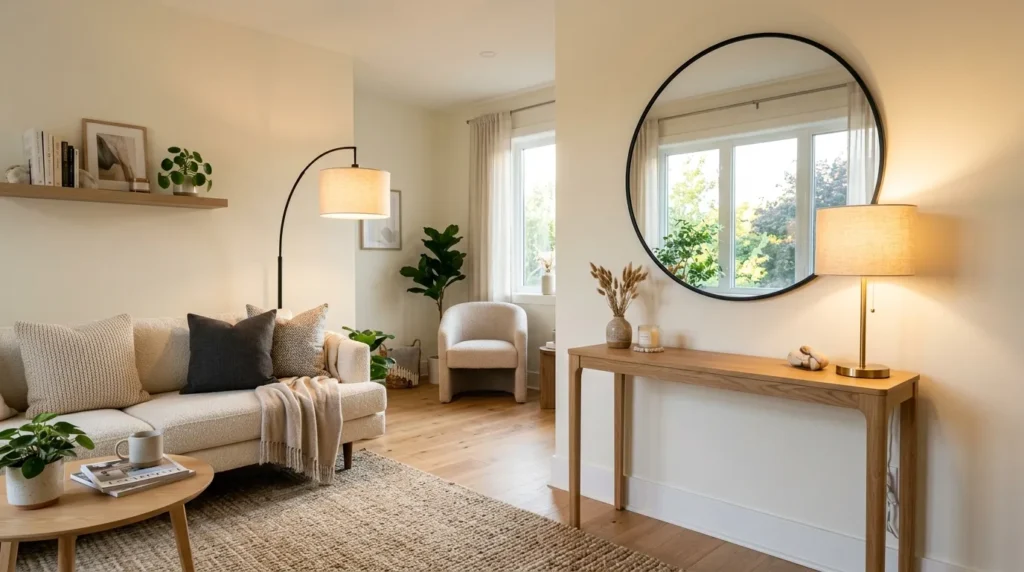
Mirrors are useful in compact interiors because they can reflect both light and surrounding visual space. A mirror placed thoughtfully across from or near a window can bounce daylight around the room, while one positioned opposite an attractive architectural feature can extend the visual composition.
Lighting is equally important. A single ceiling fixture often leaves corners dim, which can make a small room feel smaller after dark. Layered lighting creates a more balanced atmosphere.
Combining these two elements can transform the perception of the room. Instead of treating the mirror as a purely decorative object, consider what it will reflect before deciding where it belongs.
How To Style It
A large round mirror above a console can soften a room filled with rectangular furniture. A tall mirror can emphasize ceiling height and work especially well beside a narrow cabinet or near an entryway.
Use multiple light sources at different heights. A floor lamp beside the sofa, a small table lamp on a console, and soft overhead lighting can create a warm evening environment.
Choose warm, comfortable lighting rather than harsh, cool illumination for living spaces. If the room has a particularly dark corner, a slim floor lamp can turn that neglected area into a useful reading or accent zone.
Keep the mirror frame consistent with the room’s style. Light wood creates warmth, black metal adds contrast, and frameless designs suit a clean contemporary interior.
8. Warm Wood Accents
Quick Benefits
- Adds natural warmth
- Balances cool modern finishes
- Introduces organic texture
- Creates a welcoming atmosphere
- Works beautifully with neutral colors
Why It Works
Modern doesn’t have to mean cold. Natural wood is one of the easiest ways to bring warmth into a compact living room while keeping the overall aesthetic clean and contemporary.
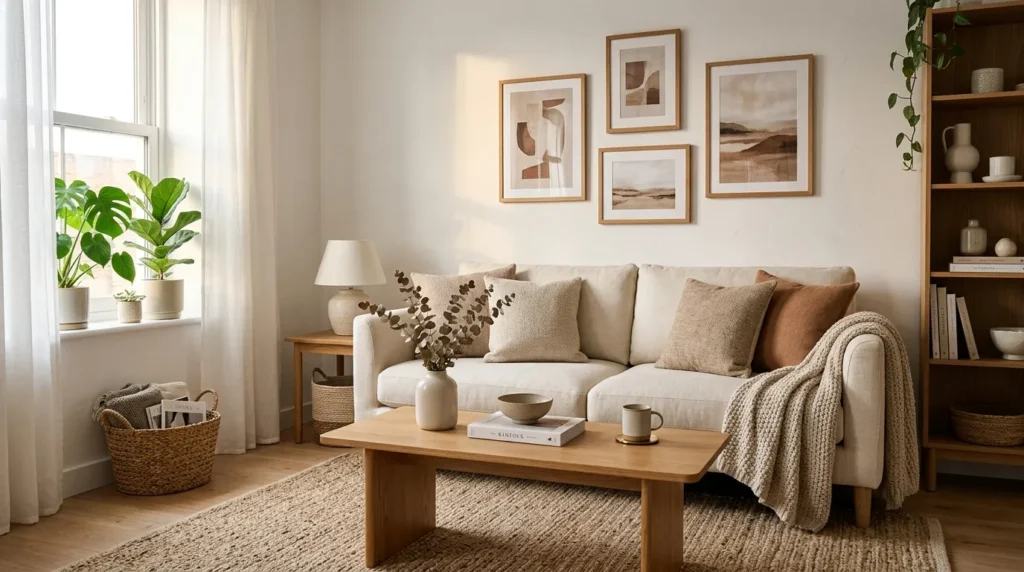
Wood also provides a visual break from upholstery, painted walls, glass, and metal. A light oak coffee table, walnut-toned console, wooden picture frames, or woven accessories can give the room character without requiring a lot of additional decoration.
The trick is restraint. A small room doesn’t need several competing wood tones. One primary finish with one complementary accent usually creates a more cohesive result.
Warm wood is particularly effective with neutral upholstery because the combination feels relaxed rather than overly coordinated.
How To Style It
Start with one significant wood element, such as a coffee table, media console, or side table. Then repeat the finish in smaller details such as frames, a tray, or a lamp base.
Light oak works beautifully with cream, beige, soft white, and muted green. Medium walnut tones pair well with warm gray, ivory, and black accents.
Add other organic materials to reinforce the feeling: linen cushions, woven baskets, ceramic vases, cotton throws, or a textured rug.
Avoid placing too many large wooden pieces in the same small area. Let the wood act as a supporting layer rather than becoming the only visual story.
9. Built-In Storage
Quick Benefits
- Makes awkward walls useful
- Provides concealed organization
- Creates a custom appearance
- Reduces loose furniture
- Can improve long-term functionality
Why It Works
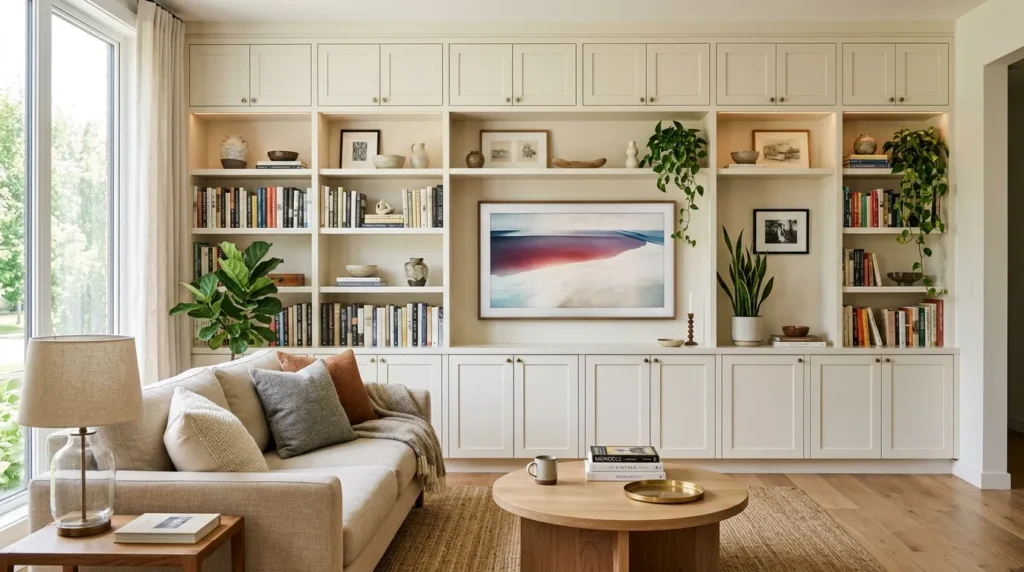
Built-in storage is particularly valuable when a living room has an awkward wall, unused alcove, chimney breast, or difficult corner. Instead of trying to disguise the architecture, custom storage can turn that space into a useful feature.
The biggest advantage is visual continuity. Cabinets and shelves designed around the room’s dimensions can look less bulky than several unrelated storage pieces.
Even when true custom cabinetry isn’t practical, the same principle can be achieved with modular units. The goal is to create a storage solution that feels integrated with the room rather than added afterward.
For homeowners, built-ins can be a long-term investment in organization. For renters, freestanding modular pieces can provide a similar visual effect without permanent alterations.
How To Style It
Use closed cabinets for items that tend to create visual clutter and open shelves for books and a carefully edited selection of decor.
If you’re designing custom cabinetry, consider including a combination of drawers, doors, and open niches. This gives you flexibility for different storage needs.
Painted cabinetry can blend into the wall, creating a streamlined appearance. Natural wood can turn the storage wall into a warm architectural feature.
Keep the styling simple. A few books, framed prints, ceramics, and plants are usually enough. The storage should remain useful first and decorative second.
If the room contains a television, integrating it into the storage wall can eliminate the need for a separate media unit and make the entire arrangement feel more cohesive.
10. Minimalist Gallery
Quick Benefits
- Adds personality without bulky furniture
- Creates a focal point
- Makes blank walls useful
- Allows easy seasonal updates
- Works with modern and transitional decor
Why It Works
Minimalism doesn’t mean having empty walls. It means being selective about what earns a place in the room.
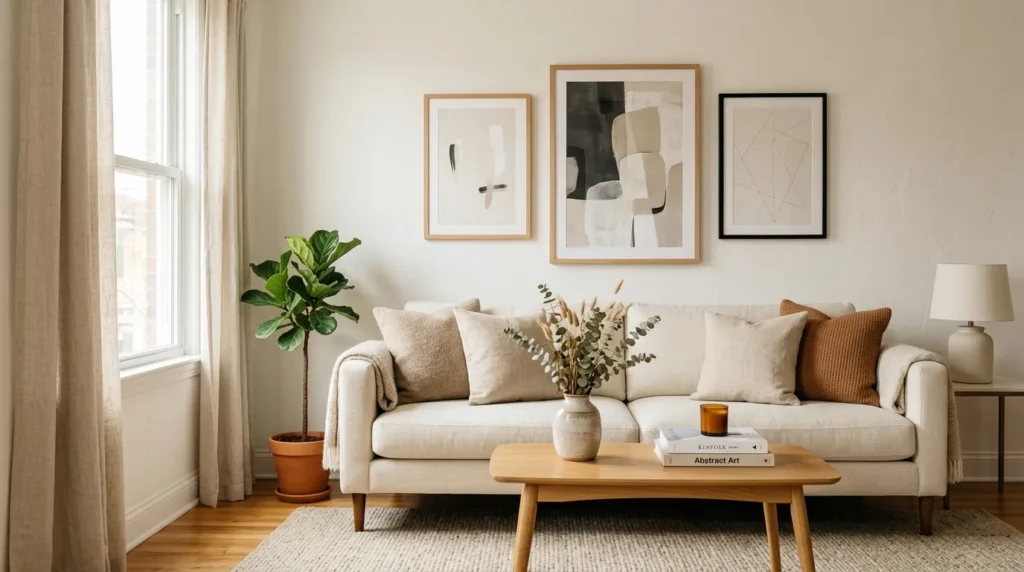
A small gallery arrangement can make a compact living room feel personal without consuming floor space. Instead of filling the walls with dozens of small frames, choose a limited collection that shares a visual connection through color, subject, frame finish, or composition.
Large-scale artwork can also be surprisingly effective. One substantial piece may create more visual impact with less clutter than a collection of tiny decorations.
The key is to give the artwork room to breathe. When every wall is covered, the eye has nowhere to rest.
How To Style It
Choose artwork that complements the room’s existing palette. Abstract prints, architectural photography, botanical illustrations, minimalist line art, and landscape photography can all work beautifully in modern interiors.
For a compact room, try three coordinated frames above a sofa or one oversized piece centered on the main wall.
Keep the frame finish consistent if you want a polished appearance. Black, natural wood, white, or thin metallic frames can all work depending on the furniture.
Before hanging multiple pieces, lay them on the floor and experiment with spacing. The arrangement should feel balanced without necessarily being perfectly symmetrical.
If you frequently change your decor, use a picture ledge. It allows artwork to be layered and rearranged without repeatedly drilling into the wall.
11. Flexible Layout
Quick Benefits
- Supports everyday movement
- Makes entertaining easier
- Adapts to different activities
- Prevents unnecessary furniture
- Keeps the room practical long term
Why It Works
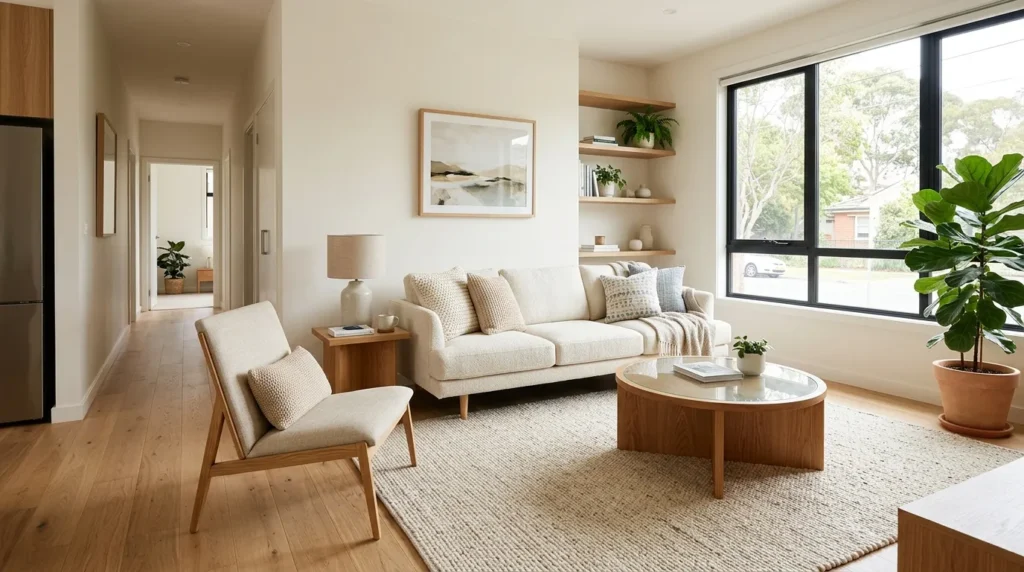
The most beautiful living room arrangement won’t work if people constantly have to squeeze around furniture. In a compact space, circulation should be considered before decorative details.
Think about the room at different times of day. Where do people enter? Where do they sit? Is the television visible from the sofa? Can someone reach the window without moving furniture? Is there enough room to carry a drink from the kitchen?
A flexible layout answers these questions before they become daily annoyances.
This is especially important for multipurpose living rooms. Furniture that can move, nest, fold, or serve several purposes gives you the freedom to adapt the room when guests arrive or when the household’s needs change.
How To Style It
Start by identifying the room’s main activity. In most homes, that will be conversation, television viewing, or relaxing. Position the primary seating around that function first.
Then establish a clear walking path. Avoid placing the coffee table so close to the sofa that knees constantly bump it, but don’t push it so far away that it becomes impractical.
Choose lightweight accent chairs or occasional tables if you regularly need to rearrange the room. Pieces that can be moved easily are more useful than oversized furniture that must remain in one position.
Finally, test the arrangement for a few days before deciding it is permanent. Live with the room. Notice where you naturally walk and where clutter accumulates. Those observations can tell you more than a floor plan alone.
Frequently Asked Questions
What furniture is best for a compact living room?
Furniture with a streamlined profile, appropriate scale, and more than one function tends to work well in compact spaces. Look for sofas with narrow arms, raised legs, compact accent chairs, nesting tables, storage ottomans, and slim consoles. The most important factor isn’t choosing the smallest furniture possible; it’s selecting pieces that provide enough comfort without blocking circulation.
What colors make a small living room look bigger?
Light neutrals such as warm white, cream, pale beige, soft taupe, and light greige can make a small living room feel brighter and more open. The effect is strongest when similar tones continue across walls, upholstery, curtains, and larger accessories. Adding texture prevents the palette from feeling flat.
Should a small living room have a large rug?
Usually, yes. A properly sized area rug can visually connect the sofa, chairs, and coffee table, making the arrangement feel more cohesive. A rug that is too small can make the furniture appear disconnected. Whenever possible, place at least the front legs of the main seating pieces on the rug.
How can I add storage without making my living room feel crowded?
Use vertical and concealed storage whenever possible. Tall shelving, wall-mounted cabinets, built-in units, storage ottomans, and benches can add capacity without requiring numerous small storage pieces. Keep open shelves selectively styled and use baskets or closed cabinets to hide everyday clutter.
Are sectional sofas good for small living rooms?
A sectional can work well when its dimensions and configuration match the room. A compact apartment-size sectional can provide generous seating while using fewer separate pieces. However, an oversized chaise or deep sectional can quickly restrict circulation, so measure the room carefully before purchasing.
How do I make a compact living room feel cozy but not cluttered?
Focus on texture rather than quantity. Layer a soft rug, a few cushions, a throw, warm lighting, natural wood, and one or two meaningful decorative pieces. Keeping the color palette relatively cohesive allows you to create warmth and personality without making every surface visually busy.
Where should I put a mirror in a small living room?
Place a mirror where it can reflect natural or attractive light whenever possible. Across from or adjacent to a window can work well, but the exact location depends on what the mirror reflects. Avoid positioning it where it simply reflects a cluttered corner, because that can amplify the visual mess rather than the sense of openness.
Conclusion
A compact living room doesn’t have to feel like a compromise. With the right proportions, colors, storage solutions, and layout, even a modest space can feel comfortable, sophisticated, and genuinely inviting.
The biggest lesson is to design around how you live rather than trying to copy a room from a magazine or Pinterest board exactly. A slim sofa may be the right answer in one home, while a multifunctional ottoman or vertical storage system may make the biggest difference in another.
Start with the room’s biggest problem. If it feels crowded, edit the furniture. If it feels dark, work on lighting and reflective surfaces. If clutter is taking over, look upward and add concealed storage. If everything feels a little cold, introduce natural wood and layered textiles.
You don’t need to change everything at once. Choose one or two ideas that fit your space and budget, then build from there. The most successful modern interiors usually develop gradually, with practical decisions guiding the decorating process.
A small living room can still have personality, comfort, and plenty of style. The secret is simply making every piece earn its place.
Related Articles
- 15 Small Living Room Layout Ideas That Maximize Space
- 21 Cozy Neutral Living Room Ideas for a Warm Home
- 17 Modern Apartment Living Room Ideas
- 15 Modern Farmhouse Living Room Ideas
- 20 Small Space Storage Ideas for a Clutter-Free Home