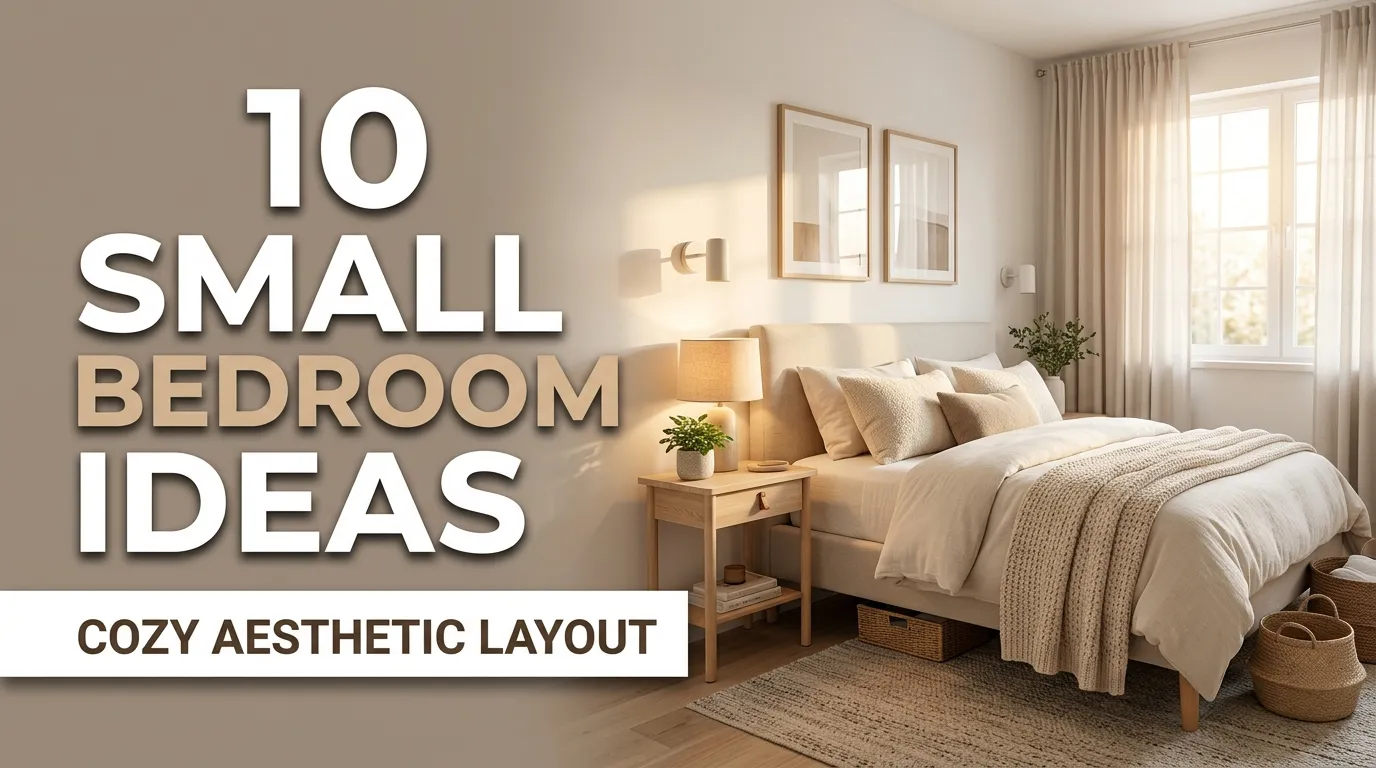
10 Small Bedroom Ideas for a Cozy Aesthetic Layout
A small bedroom can feel incredibly cozy when the layout, colors, lighting, and furniture work together. The challenge is creating enough space for everything you actually use without making the room feel crowded.
When square footage is limited, every piece has a visual and practical role. A bulky dresser can interrupt the walking path. An oversized bed can dominate the room. Too many decorative pieces can make surfaces feel cluttered. But with a thoughtful arrangement, even a compact bedroom can feel warm, stylish, and surprisingly spacious.
The good news is that a cozy bedroom doesn’t require a large floor plan. Soft bedding, layered lighting, warm colors, natural textures, and a few personal details can create the atmosphere you want without taking up much room.
I’ve noticed that one of the most effective small-bedroom strategies is to think vertically. Wall-mounted shelves, sconces, tall curtains, and vertical artwork can draw the eye upward while keeping valuable floor space open.
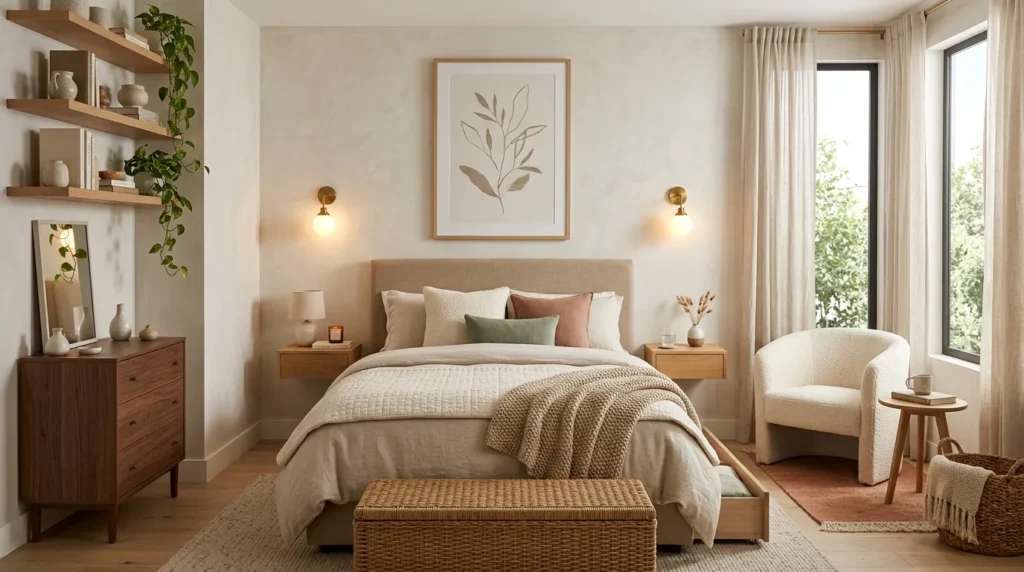
Another useful approach is to choose furniture that performs more than one job. A storage bed, floating nightstand, bench with hidden storage, or narrow dresser can help the room stay organized without sacrificing style.
Whether you’re decorating a tiny apartment bedroom, guest room, rental, or compact primary bedroom, these ideas focus on practical layouts that still look beautiful enough to save to your Pinterest boards.
Table of Contents
1. Warm Neutral Layers
Soft neutral colors create a cozy atmosphere while helping a compact room feel visually calm.
2. Under-Bed Storage
Use the space beneath the bed to reduce clutter and free up valuable floor area.
3. Floating Nightstands
Wall-mounted bedside storage creates useful surface space without adding bulky furniture.
4. Vertical Storage
Use the walls to organize belongings while keeping the floor open and easy to navigate.
5. Cozy Window Nook
Turn unused space near a window into a comfortable reading or relaxation corner.
6. Layered Bedding
Combine soft fabrics and neutral colors to make the bed the inviting focal point.
7. Soft Accent Wall
A simple wall treatment adds personality without requiring additional floor space.
8. Compact Furniture
Choose appropriately scaled pieces that make the room functional without overwhelming it.
9. Warm Lighting
Multiple small light sources create a relaxing atmosphere while adding visual depth.
10. Open Floor Layout
Thoughtful furniture placement keeps pathways clear and makes the room feel more spacious.
1. Warm Neutral Layers
Quick Benefits
- Creates a calming atmosphere
- Makes the room feel cohesive
- Works with many decorating styles
- Helps reduce visual clutter
- Easy to update over time
Why It Works
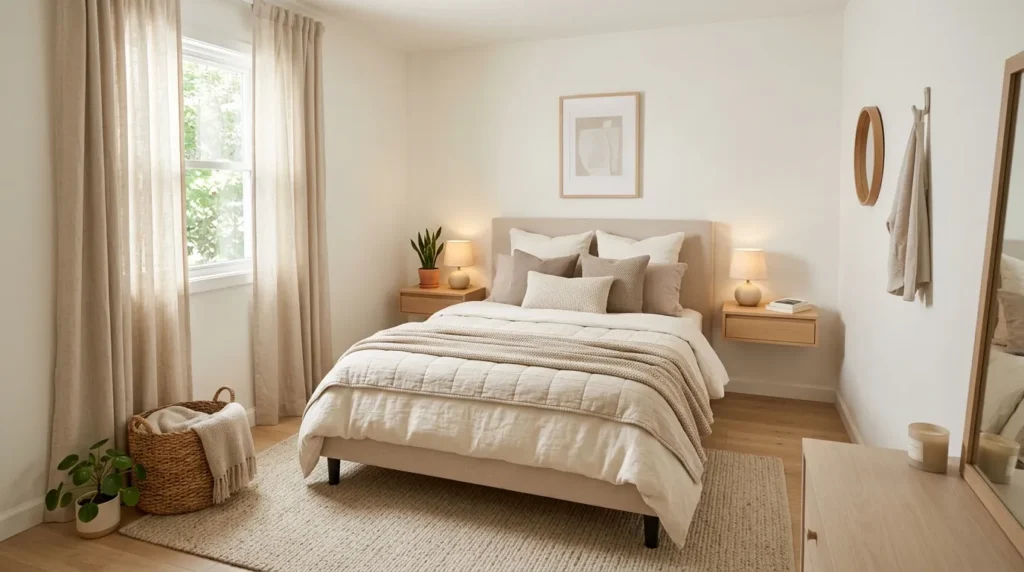
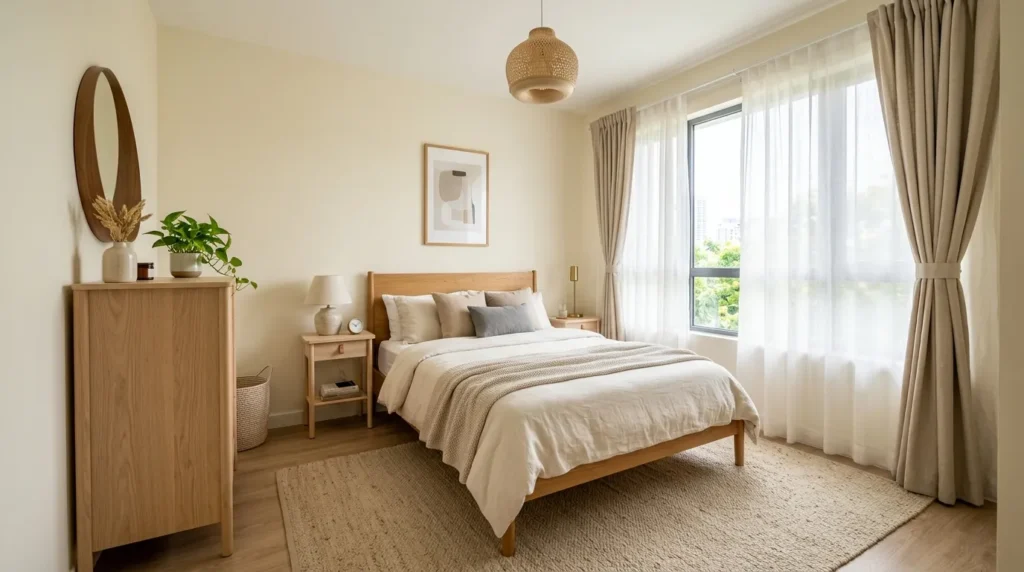
Color has a major influence on how a small bedroom feels. A palette of cream, beige, warm white, oatmeal, soft taupe, and muted brown can create a peaceful backdrop without visually breaking the room into too many sections.
This doesn’t mean everything has to match perfectly. Slight variations in tone create depth while maintaining a unified appearance.
Warm neutrals are particularly effective when combined with natural textures. Linen bedding, woven baskets, wood furniture, and a soft rug can keep the room from feeling flat.
A common mistake in small rooms is using too many contrasting colors. Strong color changes can visually divide the space, while a related palette allows the eye to move more easily around the room.
How To Style It
Start with warm white or light beige walls.
Choose cream or oatmeal bedding and add one slightly darker throw.
Use natural wood or light-colored furniture.
Add a textured rug in beige or soft gray.
Keep decorative objects within the same general palette.
For a small pop of color, introduce muted sage, dusty blue, or terracotta through one or two accessories.
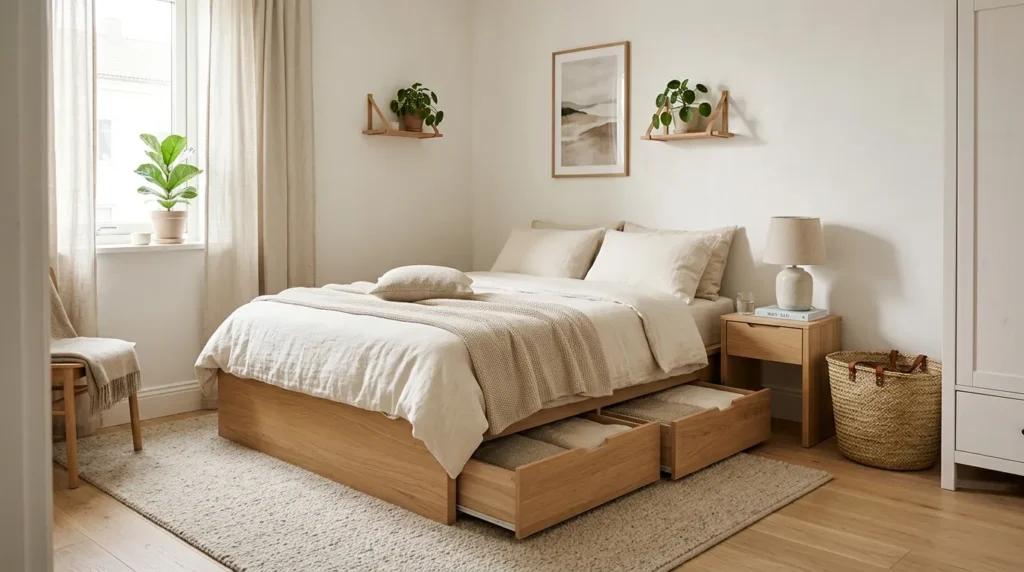
2. Under-Bed Storage
Quick Benefits
- Uses overlooked space
- Reduces visible clutter
- Keeps seasonal items organized
- Works well in compact rooms
- Eliminates the need for some bulky furniture
Why It Works
The space underneath the bed is often one of the largest unused storage areas in a small bedroom.
Using it effectively can reduce the amount of furniture required elsewhere. This is particularly useful when the room doesn’t have a large closet.
Under-bed storage can hold seasonal clothing, extra bedding, shoes, luggage, or less frequently used belongings.
The goal is to keep everything contained rather than turning the area beneath the bed into an uncontrolled storage zone.
How To Style It
Use shallow storage boxes that slide easily underneath the frame.
Choose containers with lids to protect belongings from dust.
For a cleaner aesthetic, use matching fabric bins or baskets.
If you’re replacing your bed anyway, consider a platform or storage bed with integrated drawers.
Keep everyday items somewhere more accessible and reserve under-bed storage for seasonal or occasional belongings.
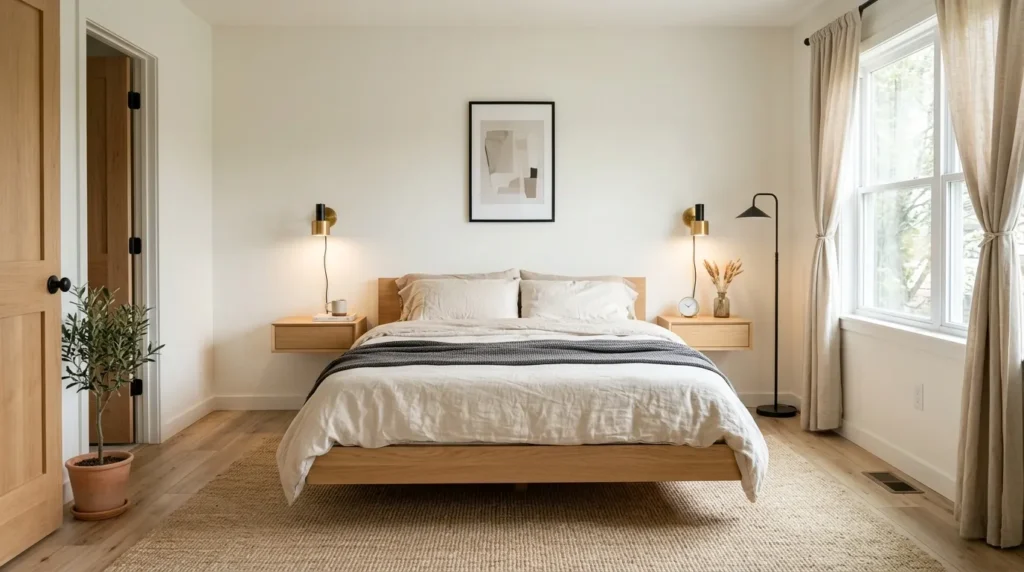
3. Floating Nightstands
Quick Benefits
- Saves floor space
- Creates a lighter appearance
- Provides bedside storage
- Makes cleaning easier
- Works especially well in narrow rooms
Why It Works
Traditional nightstands can take up more floor space than a small bedroom can comfortably spare. Floating shelves and wall-mounted drawers provide the same basic function while keeping the floor underneath open.
That open space can make the room feel less crowded.
Floating furniture also works well with modern and minimalist decorating styles because the clean lines create a visually streamlined appearance.
You don’t need a large bedside surface. A small shelf can hold a lamp, phone, book, and a few essentials.
How To Style It
Install a narrow floating shelf on one or both sides of the bed.
If you need storage, choose a wall-mounted drawer instead.
Use a compact lamp or wall sconce to preserve surface space.
Keep only everyday essentials on the nightstand.
Choose wood for warmth or white for a seamless look against pale walls.
Make sure the mounting system is suitable for your wall type and the weight of the items you plan to store.
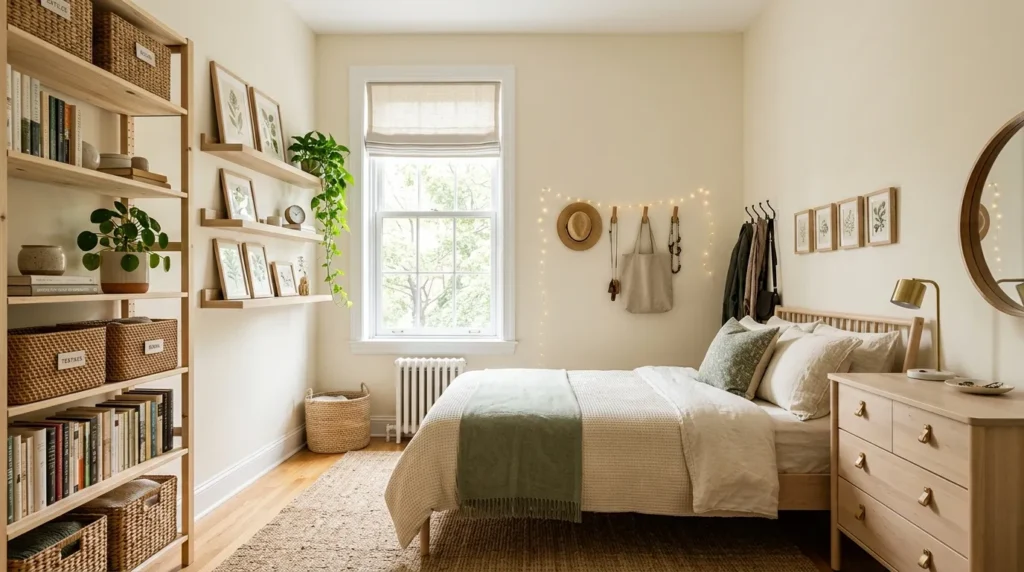
4. Vertical Storage
Quick Benefits
- Maximizes wall space
- Keeps floors open
- Adds practical organization
- Works well in tiny bedrooms
- Can become a decorative feature
Why It Works
When floor space is limited, look upward.
Vertical storage takes advantage of wall space that might otherwise remain unused. Tall bookcases, floating shelves, peg rails, wall-mounted cabinets, and hooks can all provide additional organization without expanding the furniture footprint.
This approach is particularly helpful in rooms with small closets.
Vertical elements can also make the ceiling feel taller because they draw attention upward.
How To Style It
Install floating shelves above a dresser or desk.
Use a tall, narrow bookcase instead of a wide one.
Add hooks near the door for bags, robes, or accessories.
Use attractive baskets on upper shelves to hide smaller items.
Avoid filling every shelf. Leave some open space so the storage wall doesn’t feel visually heavy.
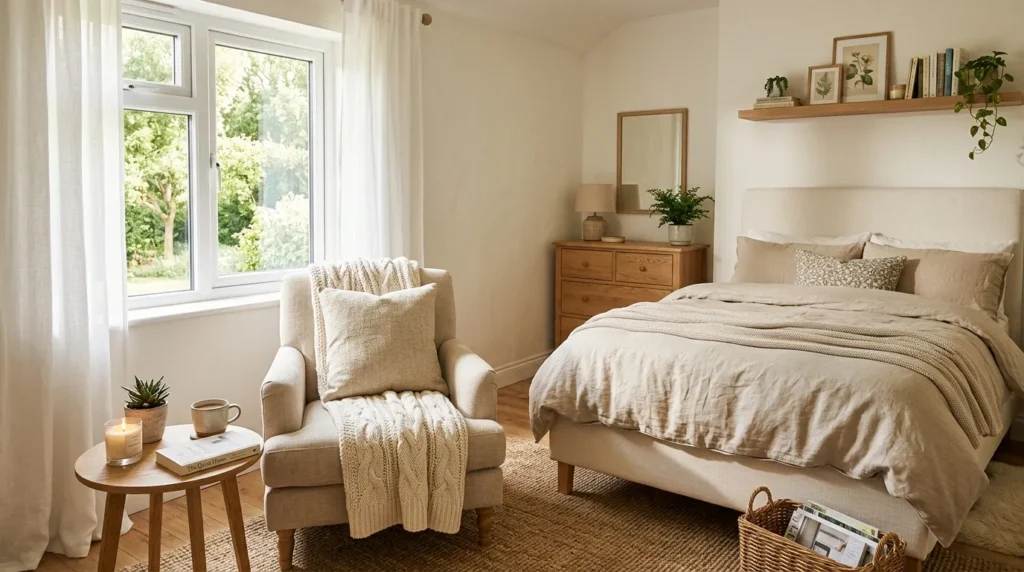
5. Cozy Window Nook
Quick Benefits
- Makes use of unused space
- Creates a relaxing corner
- Adds personality
- Works well for reading
- Makes natural light part of the design
Why It Works
A window can become a valuable feature in a small bedroom rather than simply being an obstacle for furniture placement.
If there is enough space, a narrow bench or compact chair can create a cozy reading nook.
Even a very small area can become useful with a cushion, small side table, and soft throw.
Natural daylight also makes the corner feel more inviting during the day.
How To Style It
Choose a slim chair or narrow upholstered bench that doesn’t interfere with the window.
Add one cushion and a soft throw.
Place a small round side table nearby if space allows.
Use lightweight curtains that frame the window without making it feel heavy.
Keep the area relatively simple so it remains a comfortable retreat rather than another clutter zone.
6. Layered Bedding
Quick Benefits
- Makes the bed feel inviting
- Adds texture without taking floor space
- Creates a cozy focal point
- Easy to change seasonally
- Works with simple furniture
Why It Works
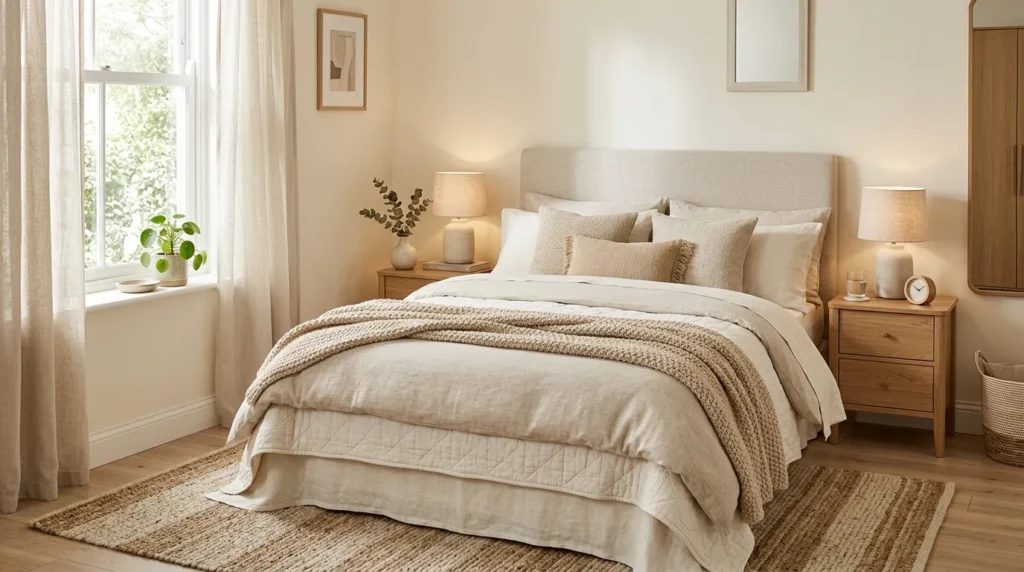
In a small bedroom, the bed naturally becomes the visual centerpiece. That makes bedding one of the easiest ways to establish the room’s aesthetic.
Instead of adding more furniture or wall decor, use layers of fabric to create visual interest.
A simple combination of cotton, linen, quilted fabric, and a knitted or woven throw can make a compact bedroom feel significantly more comfortable.
The trick is keeping the palette restrained.
How To Style It
Start with neutral sheets and a duvet or comforter.
Add a quilt or coverlet for another layer.
Use two or three decorative pillows rather than a large collection.
Fold a textured blanket across the foot of the bed.
Coordinate the bedding with the rug and curtains so the room feels cohesive.
7. Soft Accent Wall
Quick Benefits
- Adds character without using floor space
- Creates a focal point
- Makes the bed area feel intentional
- Can be inexpensive
- Works with different styles
Why It Works
A small bedroom doesn’t have much room for decorative furniture, so walls become important.
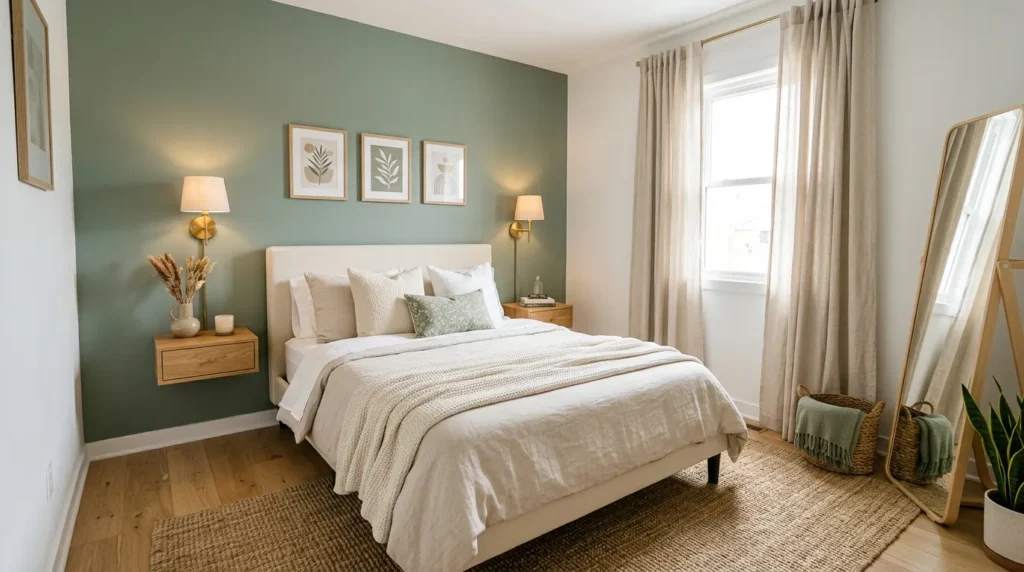
A subtle accent wall behind the bed can create the visual interest that might otherwise require several accessories.
Warm beige paint, muted sage, soft blue, removable wallpaper, or simple vertical paneling can all work.
The best accent treatment supports the rest of the room rather than overpowering it.
How To Style It
Use the wall behind the bed as the focal point.
Choose a color that is slightly deeper than the surrounding walls.
For renters, consider removable wallpaper or temporary wall treatments.
If you prefer texture, use narrow vertical molding or wood-look panels.
Keep the bedding relatively simple so the wall remains visually balanced.
8. Compact Furniture
Quick Benefits
- Improves circulation
- Prevents visual overcrowding
- Makes better use of limited space
- Creates a more comfortable layout
- Allows room for essential pieces
Why It Works
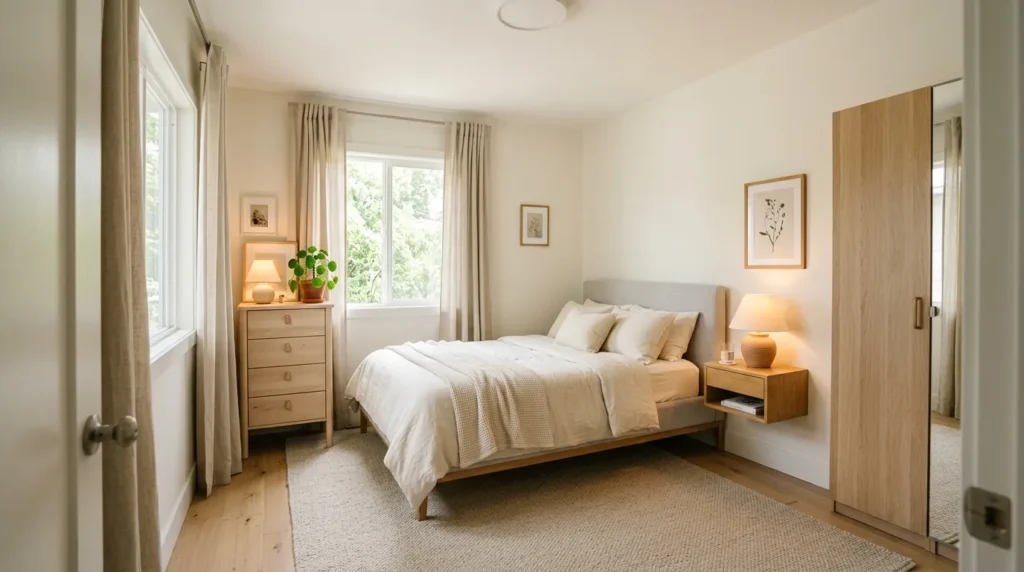
Furniture scale matters enormously in a small bedroom.
A king-size dresser or oversized bedside table can consume valuable floor space and make the room feel much smaller.
Choosing appropriately scaled pieces doesn’t mean sacrificing comfort. It means prioritizing furniture that performs the necessary function without excessive bulk.
Slim dressers, narrow wardrobes, compact desks, and platform beds can all work beautifully in smaller rooms.
How To Style It
Measure the room before buying furniture.
Choose a bed that leaves comfortable walking space around it.
Look for narrow nightstands or wall-mounted alternatives.
Use a tall dresser when vertical storage is more useful than width.
Choose furniture with simple silhouettes and visible legs when appropriate.
Before adding another piece, make sure you actually need it.
9. Warm Lighting
Quick Benefits
- Creates a cozy atmosphere
- Makes the room feel more inviting
- Adds depth
- Improves nighttime functionality
- Works with any aesthetic
Why It Works
Good lighting can make a small bedroom feel dramatically more comfortable.
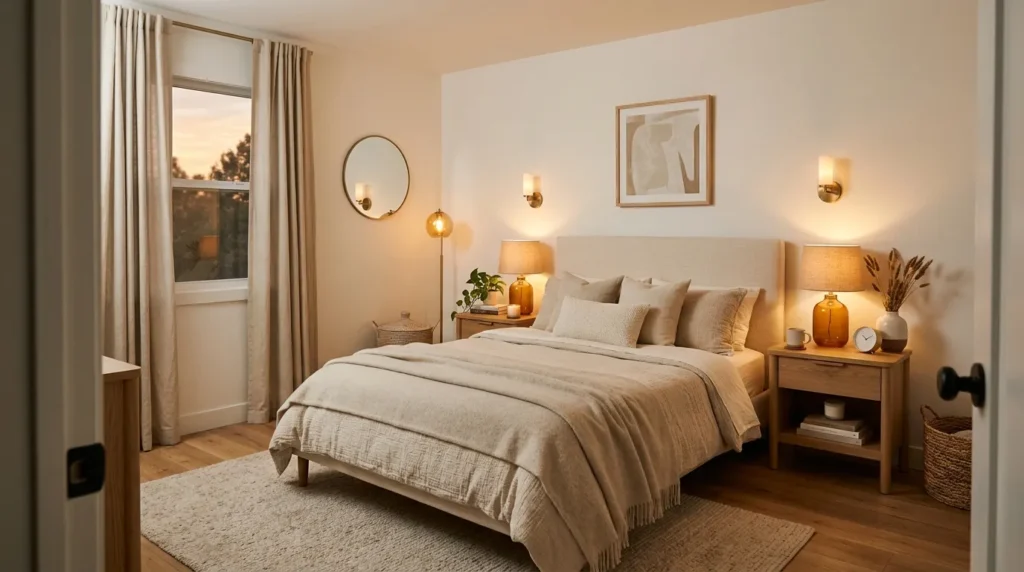
Instead of relying only on a ceiling light, use several smaller sources. A bedside lamp, wall sconce, floor lamp, or soft accent light can create a layered atmosphere.
Warm lighting is particularly effective in cozy bedrooms because it emphasizes soft textiles and warm neutral colors.
Lighting also helps create zones. A reading corner can have its own lamp, while bedside lighting provides focused illumination.
How To Style It
Use a warm bedside lamp on each side of the bed when space permits.
Consider wall-mounted sconces if nightstands are small.
Add a slim floor lamp in an empty corner.
Use a simple ceiling fixture for general lighting.
Choose warm bulbs for evening use and avoid overly cool light if you want a softer atmosphere.
10. Open Floor Layout
Quick Benefits
- Makes the room feel larger
- Improves movement
- Reduces visual clutter
- Creates a calmer atmosphere
- Doesn’t require additional spending
Why It Works
Sometimes the best small-bedroom improvement costs nothing.
Rearranging the furniture can reveal more usable space and make the room easier to navigate.
The bed usually determines the entire layout, so begin there. Once it is positioned, place storage and seating around the available pathways.
Try to avoid blocking doors, windows, wardrobes, or drawers.
A little open floor space can have a major visual effect. The room doesn’t need to be empty; it simply needs enough breathing room around the important pieces.
How To Style It
Measure the room and furniture before moving heavy pieces.
Start with the bed and establish clear pathways.
Keep the largest storage piece against a wall where it doesn’t interrupt circulation.
Use furniture with multiple functions when possible.
Remove pieces that don’t serve a practical or aesthetic purpose.
Leave some empty floor space intentionally rather than feeling pressured to fill every corner.
Frequently Asked Questions
How do I make a small bedroom feel cozy?
Use soft lighting, layered bedding, warm colors, textured rugs, curtains, and natural materials. Keep the furniture appropriately scaled and reduce visual clutter. A small bedroom feels cozy when it has comfortable layers without becoming overcrowded, so focus on a few tactile elements instead of adding many decorations.
What is the best layout for a small bedroom?
The best layout depends on the room’s shape, doors, windows, and furniture size. Generally, place the bed where it doesn’t block the main pathway or closet access, then position storage along the least disruptive wall. Floating nightstands and vertical storage can preserve floor space and improve circulation.
How can I make a tiny bedroom look bigger?
Use a restrained color palette, keep walking paths open, and choose furniture that fits the scale of the room. Light walls, mirrors, vertical storage, and curtains hung close to the ceiling can enhance the feeling of space. Keeping surfaces organized also prevents the room from appearing visually crowded.
What colors are best for a cozy small bedroom?
Warm white, cream, beige, oatmeal, soft taupe, muted sage, dusty blue, and gentle terracotta can all create a cozy atmosphere. You don’t have to use only pale colors. A deeper accent wall can add warmth and personality as long as the overall palette remains balanced.
How do I add storage without making a small bedroom feel crowded?
Use storage that takes advantage of unused areas. Under-bed containers, floating shelves, tall narrow cabinets, wall-mounted hooks, and storage beds can provide useful capacity without taking much floor space. Choose coordinated containers and keep frequently visible surfaces relatively clear.
Can I have a cozy aesthetic in a very small bedroom?
Yes. Cozy design is more about atmosphere than square footage. Focus on comfortable bedding, warm lighting, soft textures, natural materials, and a consistent color palette. Choose fewer decorative pieces and make each one meaningful. This creates warmth without overwhelming the limited space.
Should a small bedroom have a rug?
A rug can add warmth and help define the sleeping area, but the size matters. A large rug that extends beyond the bed can create a unified look when space allows. In very small rooms, two narrow runners on either side of the bed may provide similar comfort while preserving more visible floor space.
Final Thoughts
A small bedroom doesn’t have to feel cramped to be comfortable. The right combination of layout, storage, color, lighting, and texture can turn limited square footage into a warm and inviting retreat.
Start with the layout before buying anything. Make sure the bed, storage, and major furniture pieces leave enough room to move comfortably. Then look for opportunities to use vertical space and hidden storage.
Once the practical side is working, add the cozy details. Layer the bed with soft fabrics, bring in warm lighting, choose a comfortable rug, and introduce a few natural materials.
You don’t need to decorate every wall or fill every corner. In a small room, empty space is useful. It gives the eye somewhere to rest and allows the important pieces to stand out.
If you’re working with a tight budget, begin with changes that cost little or nothing. Rearrange the furniture, declutter surfaces, change the bedding arrangement, and improve the lighting before investing in new pieces.
Then build slowly.
A cozy bedroom is ultimately a space that feels good to return to. Whether your room is part of a small apartment or simply a compact bedroom in a larger home, thoughtful choices can make every inch feel purposeful.
Related Articles
- 10 Minimalist Bedroom Ideas for Modern Design
- 10 Bedroom Ideas for Every Style
- 10 Bedroom Renovation Ideas That Are Budget Friendly
- How to Decorate a Bedroom That Feels Like Home
- How to Make a Small Bedroom Feel Bigger Without Renovating