10 Boys Bedroom Ideas Colorful Style
A colorful boys’ bedroom can feel energetic, creative, and personal without becoming visually overwhelming. The secret is finding the right balance between playful color and practical design.
A bedroom is more than a place to sleep. It can become a reading corner, homework space, gaming area, creative zone, and place for displaying favorite collections. That makes color particularly useful because different shades can help define individual areas while giving the entire room a cohesive look.
The easiest approach is to start with a simple foundation and introduce brighter colors through bedding, wall art, rugs, curtains, storage, and small furniture pieces. This makes the room easier to update as interests change.
I’ve noticed that colorful bedrooms often look more polished when they use a limited palette instead of every bright color at once. Blue with orange, green with yellow, red with navy, or teal with warm neutrals can create a lively combination while still feeling intentional.
Wall color also matters. A bold blue or green wall can create an instant focal point, while white, cream, or soft gray walls provide a calmer background for colorful accessories.
The ideas below explore different ways to create a cheerful boys’ bedroom with personality, comfort, storage, and visual balance. Whether you’re decorating a toddler’s room, a school-age child’s space, or a tween bedroom, these colorful ideas can be adapted as the room evolves.
Table of Contents
1. Colorful Adventure Wall
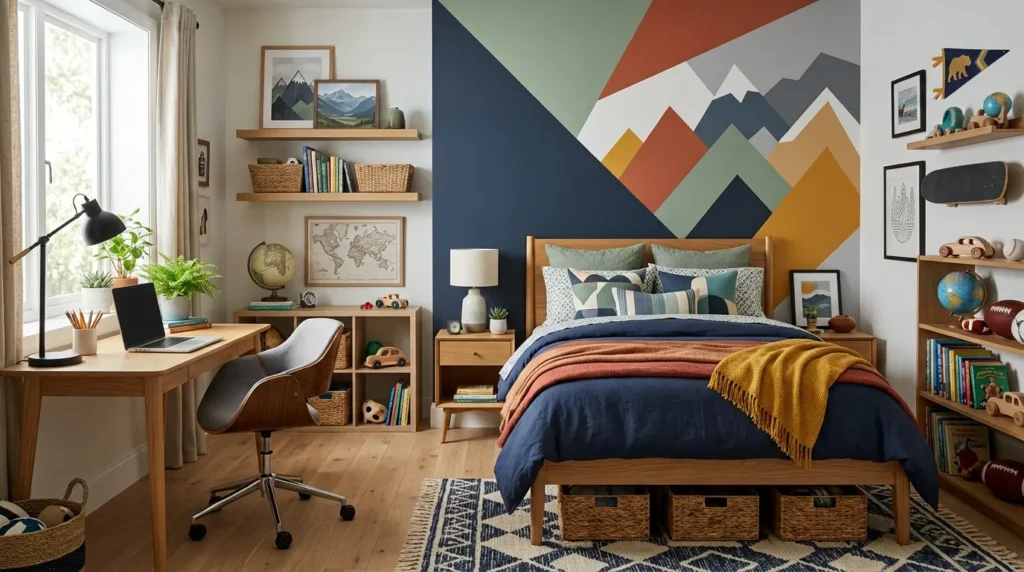
A playful feature wall turns the bedroom into an imaginative space filled with personality.
2. Blue And Orange
A balanced combination of blue and orange creates energy without overwhelming the room.
3. Rainbow Bedding
Colorful bedding adds personality while keeping the walls relatively simple.
4. Green And Yellow
Fresh green and cheerful yellow create a bright nature-inspired bedroom.
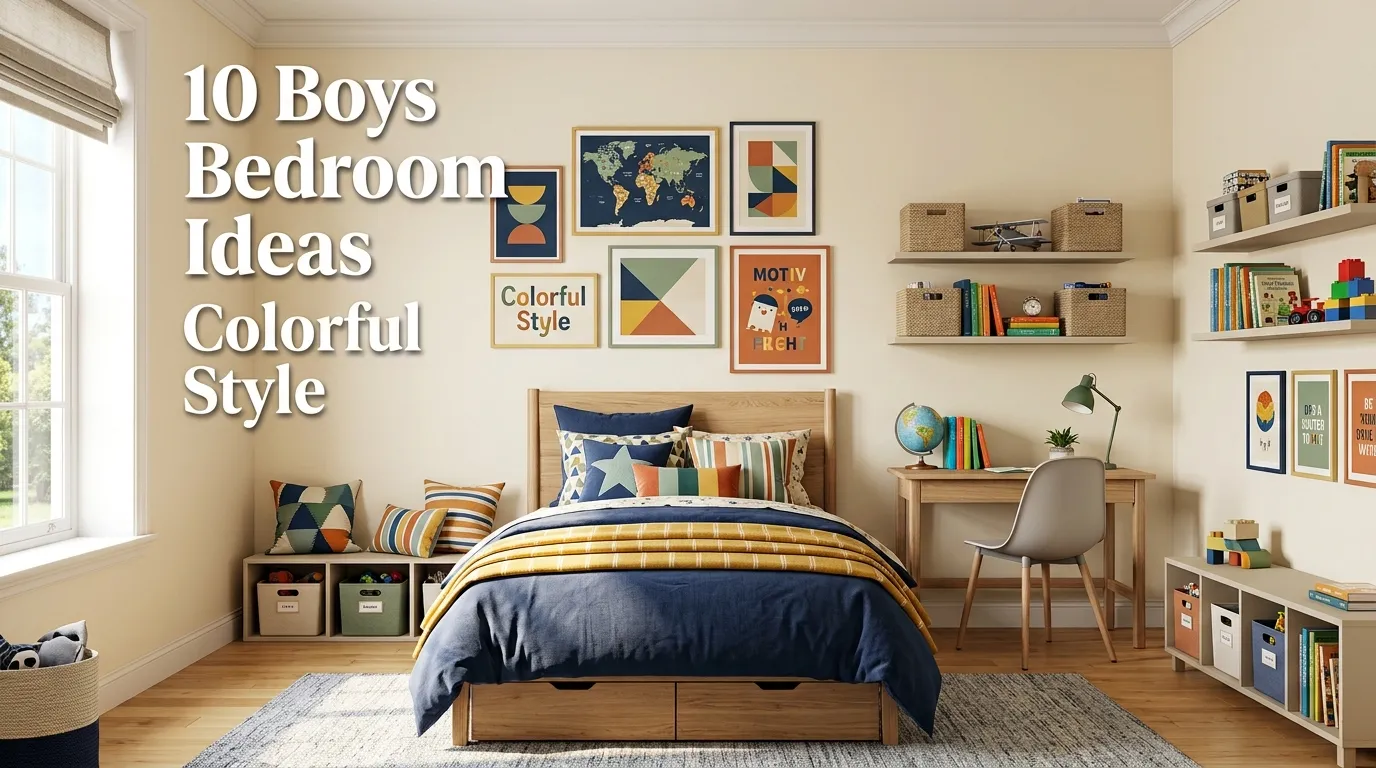
5. Colorful Gallery Wall
A collection of artwork adds personality without requiring dramatic wall paint.
6. Sports-Inspired Colors
Team-style colors create an energetic bedroom for young sports enthusiasts.
7. Teal And Red
Deep teal paired with red creates a bold, modern color combination.
8. Colorful Reading Corner
Bright furniture and accessories turn an unused corner into a creative retreat.
9. Playful Geometric Walls
Geometric shapes create a modern feature wall using multiple cheerful colors.
10. Colorful Storage Zone
Bright storage pieces combine organization with decorative personality.
1. Colorful Adventure Wall
Quick Benefits
- Creates an imaginative focal point
- Adds personality to the bedroom
- Works with simple furniture
- Encourages creative expression
- Makes a blank wall more interesting
Why It Works
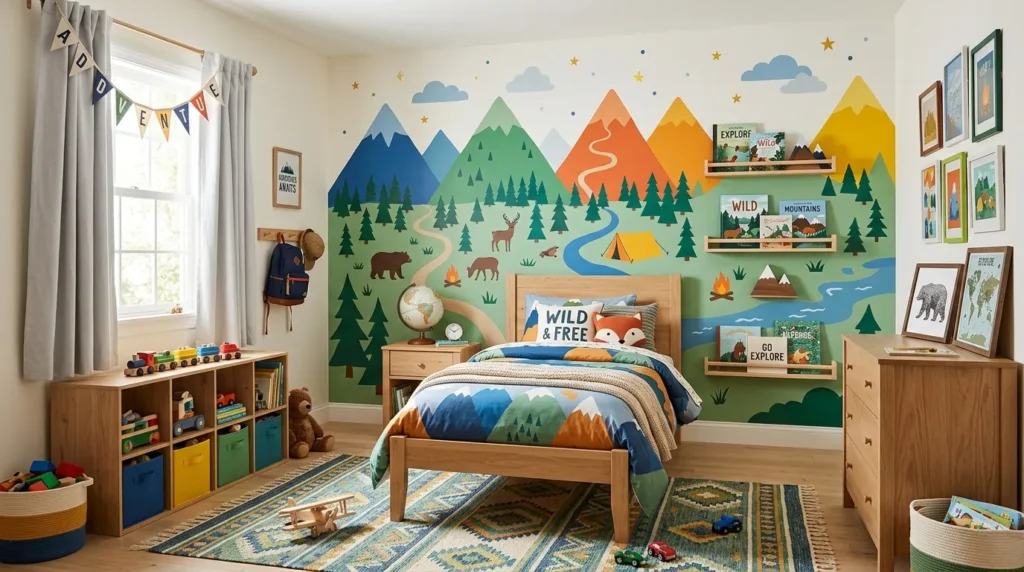
A colorful adventure wall can transform an ordinary bedroom into a space that feels designed specifically for a child. Instead of covering every surface with bright colors, concentrate the visual energy on one main wall.
A mural featuring mountains, trees, clouds, vehicles, stars, or abstract shapes can create an imaginative backdrop without requiring complicated furniture.
The rest of the room can remain relatively simple. This balance allows the feature wall to become the star while keeping the bedroom comfortable and easy to organize.
For younger children, playful illustrations can make the room feel adventurous. Older boys may prefer a more graphic mountain scene, colorful geometric pattern, or abstract landscape.
How To Style It
Choose two or three dominant colors from the mural and repeat them through bedding, cushions, rugs, or artwork.
Keep the bed frame simple so it does not compete with the wall.
Natural wood furniture works particularly well because it adds warmth without introducing another strong color.
A small shelf can display books, models, or favorite objects while leaving most of the mural visible.
2. Blue And Orange
Quick Benefits
- Creates strong visual contrast
- Feels energetic and cheerful
- Works with neutral furniture
- Easy to update
- Creates a sporty modern appearance
Why It Works
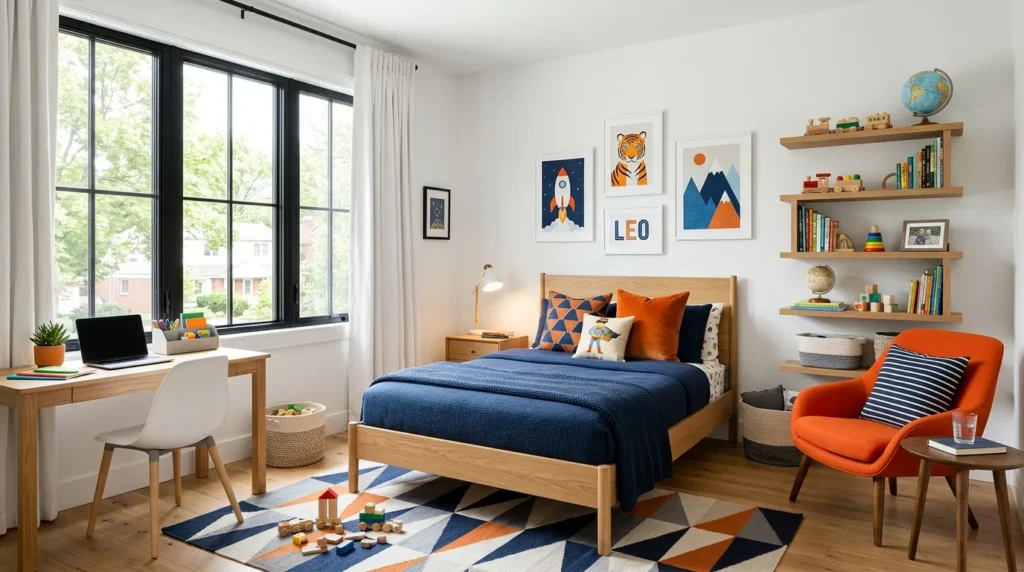
Blue and orange create a naturally energetic pairing because the colors contrast strongly while remaining easy to recognize and repeat throughout the room.
Blue can serve as the dominant color, while orange becomes the accent. This keeps the bedroom lively without making every surface equally bright.
The combination works especially well with white, light gray, natural wood, or charcoal furniture.
How To Style It
Use navy, medium blue, or muted blue for the larger elements such as bedding or an accent wall.
Introduce orange through cushions, a rug, artwork, storage bins, or a desk chair.
White walls can keep the room feeling bright if the furniture already contains strong colors.
For a more sophisticated look, choose burnt orange rather than a highly saturated orange.
Add simple geometric artwork to reinforce the contemporary character.
3. Rainbow Bedding
Quick Benefits
- Adds color without repainting
- Easy to change later
- Works with neutral walls
- Creates a cheerful focal point
- Allows flexible decorating
Why It Works
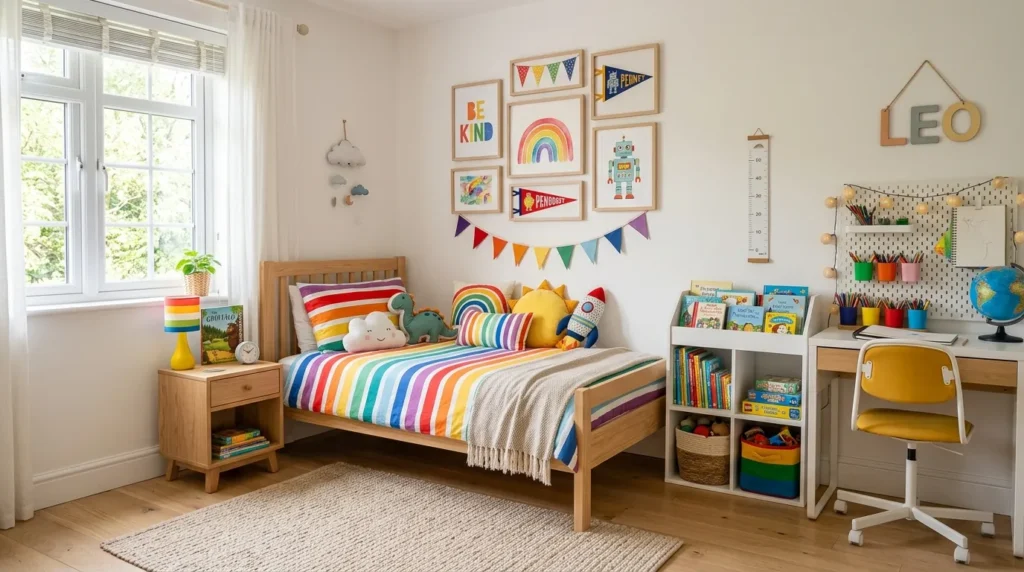
Colorful bedding is one of the easiest ways to create a vibrant bedroom because it introduces several shades in one controlled area.
This approach works particularly well when you want the room to feel colorful but don’t want to commit to bold wall paint.
A rainbow-inspired comforter, striped quilt, or multicolored duvet can become the foundation for the room’s palette.
The rest of the decor can borrow small amounts of color from the bedding, creating a cohesive look.
How To Style It
Start with white, cream, or pale gray walls.
Choose bedding containing three to five colors and repeat those shades through cushions, artwork, curtains, or storage.
Keep larger furniture neutral so the bed remains the colorful focal point.
A simple wood bed frame can provide warmth and prevent the room from feeling too busy.
Use a colorful rug near the bed if additional pattern is needed.
4. Green And Yellow

Quick Benefits
- Creates a fresh atmosphere
- Feels cheerful and playful
- Works with natural materials
- Adds youthful energy
- Creates a nature-inspired palette
Why It Works
Green and yellow create a bright combination inspired by nature. Green provides a grounding base, while yellow adds energy and warmth.
The palette can be adjusted according to age. Softer sage and muted yellow create a calmer room, while emerald or grass green paired with brighter yellow creates a more playful appearance.
Natural wood is an excellent supporting material because it reinforces the connection to the outdoors.
How To Style It
Use green bedding or a green accent wall as the main color.
Add yellow through cushions, artwork, a desk chair, or a small rug.
Include plants if appropriate for the room, or use botanical artwork instead.
Light wood furniture keeps the room feeling natural.
White curtains and neutral flooring can provide visual breathing space between the brighter colors.
5. Colorful Gallery Wall
Quick Benefits
- Personalizes the bedroom
- Works with neutral walls
- Easy to change
- Displays favorite interests
- Adds visual variety
Why It Works
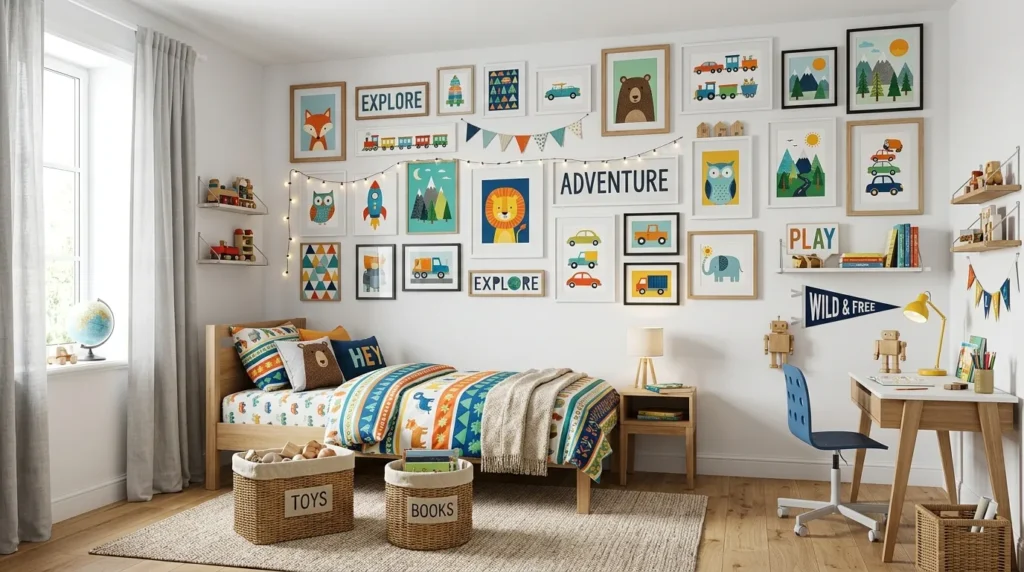
A gallery wall offers a flexible way to introduce color without making permanent changes to the entire room.
The artwork can reflect hobbies, animals, sports, vehicles, nature, maps, typography, or abstract patterns.
The most cohesive gallery walls usually have something in common. That might be a shared frame color, consistent spacing, or a repeating palette.
How To Style It
Start with a white, cream, or pale blue wall.
Choose artwork that shares three or four colors. Mix larger prints with smaller pieces to create visual rhythm.
Use black or natural wood frames for structure.
Position the gallery above the bed, desk, or dresser, depending on the room layout.
Keep the surrounding furniture relatively simple so the artwork remains the focus.
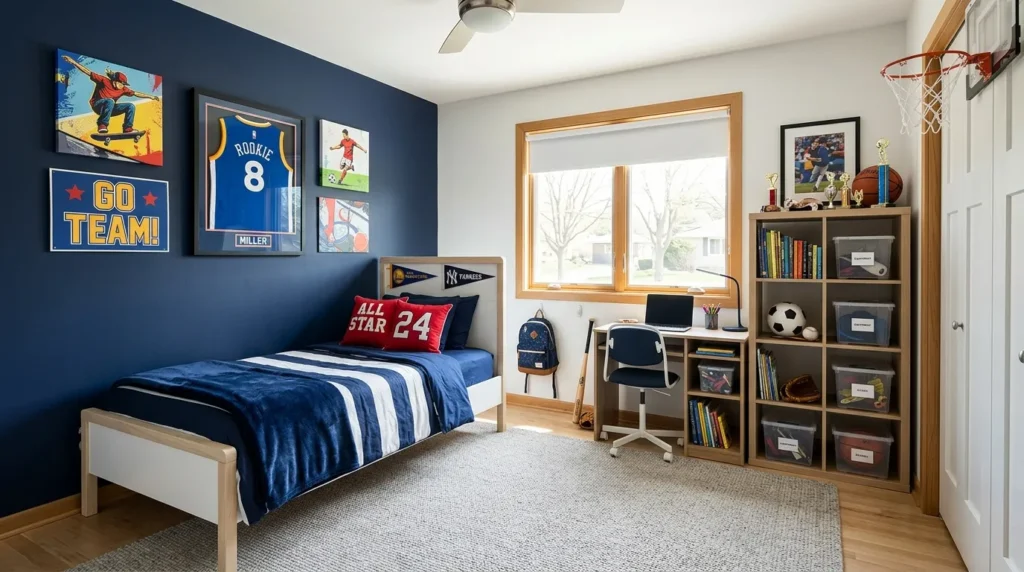
6. Sports-Inspired Colors
Quick Benefits
- Creates an energetic atmosphere
- Reflects personal interests
- Works with simple furniture
- Easy to personalize
- Provides strong color direction
Why It Works
Sports-inspired decorating gives you an immediate color palette. Navy and white, red and black, green and white, or blue and gray can create a room that feels energetic without requiring excessive decoration.
The key is avoiding a room that feels like a merchandise display. A few carefully selected references often look more sophisticated than dozens of themed accessories.
How To Style It
Choose two main colors and one neutral.
Use the strongest color in bedding or an accent wall, then repeat it in smaller accessories.
Add a framed jersey, sports-inspired artwork, or a few display shelves for equipment.
A simple desk and comfortable chair can provide a homework zone without disrupting the theme.
Natural wood flooring and neutral curtains can keep the room grounded.
7. Teal And Red
Quick Benefits
- Creates bold contrast
- Feels modern and youthful
- Works with neutral furniture
- Creates strong visual personality
- Easy to customize
Why It Works
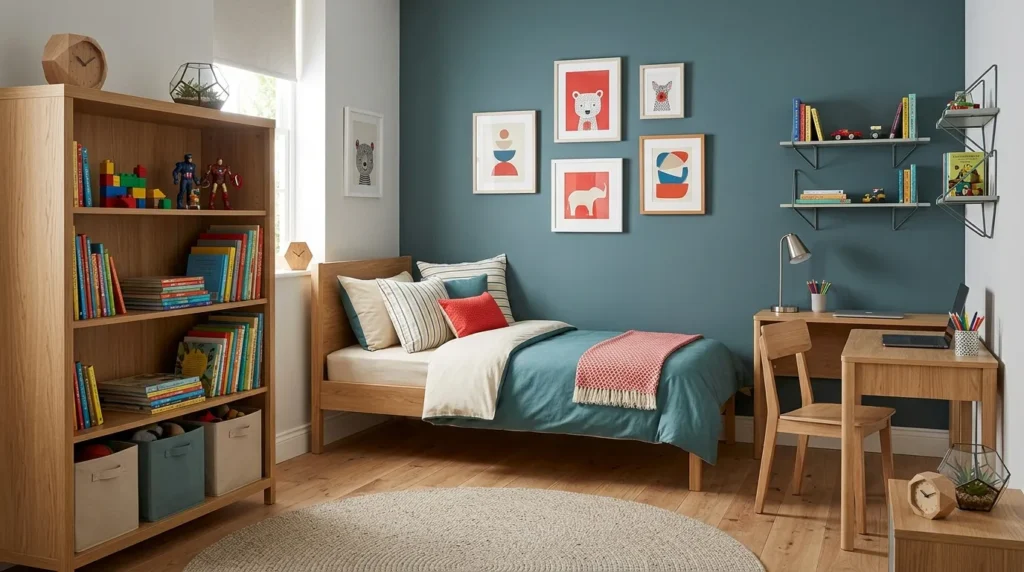
Teal and red create a dramatic color combination, but using one as the dominant shade keeps the room balanced.
Teal works particularly well as a wall or bedding color because it has enough depth to feel sophisticated. Red can then provide small bursts of energy.
The combination can suit older children and tweens because it feels playful without looking overly childish.
How To Style It
Use muted teal on the main wall or through bedding.
Add red with cushions, artwork, a desk chair, or a small rug.
Keep furniture white, black, or natural wood.
Use geometric patterns rather than multiple unrelated prints.
For a softer appearance, choose brick red instead of bright red.
8. Colorful Reading Corner
Quick Benefits
- Creates a dedicated activity area
- Uses unused space
- Encourages reading
- Adds a colorful focal point
- Supports multiple bedroom functions
Why It Works
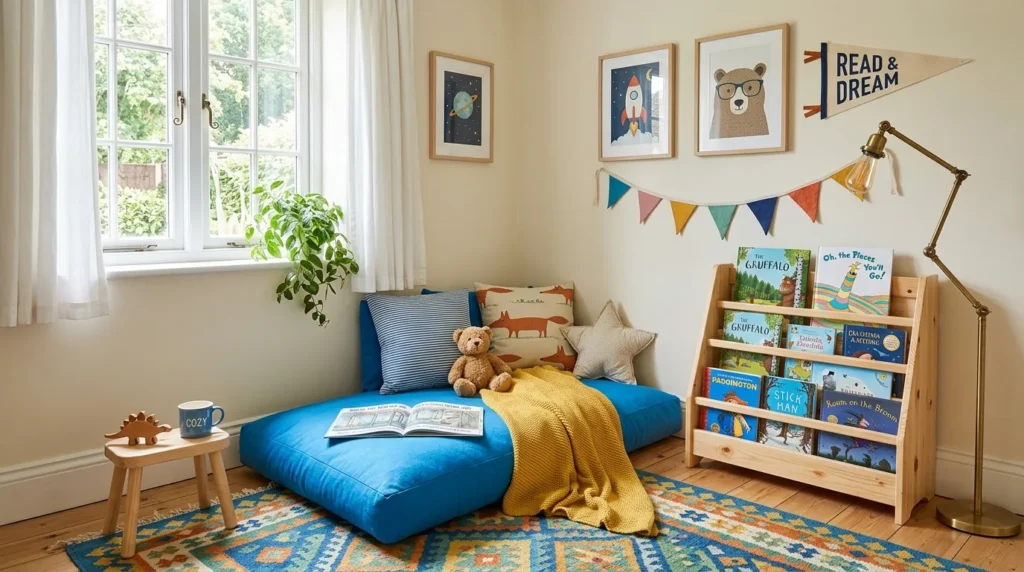
A colorful reading corner can make a bedroom feel more complete while giving an otherwise unused corner a clear purpose.
The color can come from a comfortable chair, floor cushion, rug, wall art, or bookshelf rather than from paint.
This approach is particularly useful when the bedroom already contains colorful bedding or wall decor. A dedicated corner allows the colors to be concentrated in one area.
How To Style It
Place a comfortable chair or floor cushion beside a small bookshelf.
Add a colorful rug underneath to visually define the zone.
Use wall-mounted shelves to save floor space.
Introduce a bright cushion or throw that repeats one color from the rest of the room.
A small reading lamp provides practical illumination for evening reading.
9. Playful Geometric Walls
Quick Benefits
- Creates a contemporary feature
- Adds multiple colors
- Works with simple furniture
- Creates strong visual interest
- Can suit different ages
Why It Works
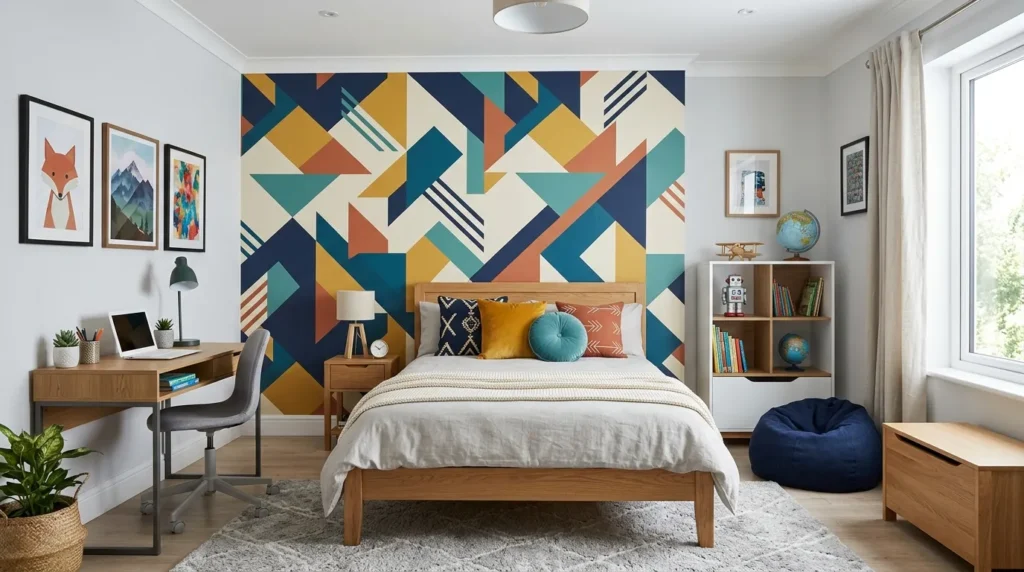
Geometric wall designs offer a colorful alternative to traditional murals. Triangles, rectangles, arches, stripes, and abstract blocks can create a graphic focal point.
The biggest advantage is flexibility. The design can feel playful for younger children or sophisticated for older boys depending on the colors and shapes.
A limited palette helps the wall look intentional.
How To Style It
Choose three or four colors that work together.
Use the geometric design behind the bed or desk.
Keep furniture simple and neutral so the wall remains visually dominant.
Repeat one or two wall colors through bedding and accessories.
For an older child’s room, muted teal, navy, mustard, terracotta, and cream create a more mature combination.
10. Colorful Storage Zone

Quick Benefits
- Combines organization with decor
- Adds useful color
- Keeps belongings accessible
- Makes a functional area attractive
- Works in smaller bedrooms
Why It Works
Storage does not need to disappear. Colorful shelves, baskets, drawers, and bins can become part of the bedroom design while helping keep toys, books, clothing, and hobby supplies organized.
This is particularly useful for children because accessible storage makes it easier to create designated places for everyday items.
Using the same color palette throughout the storage area keeps the room cohesive.
How To Style It
Choose colorful storage bins in two or three shades.
Use open shelving for books and favorite objects.
Keep the larger furniture pieces neutral and let storage provide the brighter accents.
Add labels to bins where practical.
A small desk can sit next to the storage zone to create a combined homework and organization area.
How To Choose Colors for a Boys’ Bedroom
Start with the feeling you want the bedroom to create. Bright primary colors can feel energetic and playful, while muted shades create a calmer atmosphere.
Then choose one dominant color, one supporting color, and one or two neutrals.
For example:
- Navy + orange + white
- Sage + yellow + cream
- Teal + red + light gray
- Green + mustard + natural wood
- Blue + terracotta + beige
This simple approach prevents the room from becoming visually chaotic.
Consider the room’s natural light too. Darker colors can feel much deeper in rooms with limited daylight, while bright colors may appear more intense in rooms with large windows.
How To Add Color Without Painting
Paint is not the only way to create a colorful bedroom.
Bedding is often the easiest place to begin because it occupies a large visual area. Rugs, curtains, artwork, cushions, storage bins, desk chairs, and lamps can add additional color.
A colorful gallery wall can also create personality without permanently changing the walls.
This approach is particularly useful for renters or families who expect the child’s interests to change over time.
How To Make a Colorful Bedroom Look Organized
Colorful rooms can quickly feel cluttered when every object has a different shade and pattern.
Choose a consistent palette and repeat it throughout the room.
Use neutral furniture as a visual anchor. White, natural wood, light gray, and beige work particularly well.
Storage is also essential. Closed baskets and drawers can hide smaller items while colorful open shelves display books, artwork, and favorite objects.
Leave some areas visually quiet. Empty wall space and simple bedding can give brighter elements room to stand out.
Common Colorful Bedroom Mistakes
One common mistake is using too many intense colors at equal strength. This can make the room feel chaotic.
Another is choosing wall paint before considering the furniture and bedding. Start with the larger elements and build the palette around them.
Too many competing patterns can also overwhelm a small bedroom. If the bedding is highly patterned, choose simpler curtains and rugs.
Finally, avoid making every detail match perfectly. A colorful bedroom can feel more natural when the palette is coordinated rather than identical.
Frequently Asked Questions
What are good colors for a boys’ bedroom?
Blue, green, teal, navy, yellow, orange, red, and terracotta can all work well. The best combination depends on the desired mood. Pairing one strong color with a softer supporting shade and a neutral creates a balanced result.
How can I make a boys’ bedroom colorful without painting?
Use colorful bedding, rugs, curtains, artwork, storage bins, cushions, lamps, and desk accessories. A gallery wall or colorful furniture can also create a strong visual impact while keeping the walls neutral.
What colors make a boys’ bedroom feel cheerful?
Yellow, orange, green, teal, and brighter blue can create a cheerful atmosphere. These colors do not all need to appear together. Choosing one or two bright shades and balancing them with white, cream, gray, or natural wood often creates a more comfortable result.
What is a good color combination for a modern boys’ bedroom?
Navy and orange, teal and red, sage and mustard, or blue and warm gray can create modern combinations. Natural wood and white are useful supporting neutrals that keep stronger colors balanced.
How do I decorate a colorful boys’ bedroom without making it look messy?
Limit the main palette to three or four colors and repeat those shades throughout the room. Use neutral furniture and practical storage to create visual balance. Keeping some walls and surfaces simple also gives colorful elements room to stand out.
How can I create a colorful bedroom that grows with my child?
Use neutral furniture and walls as the foundation, then add color through bedding, artwork, rugs, and accessories. These elements are easier to replace as interests change than permanent themed furniture or highly specific wall designs.
Related Articles
- 10 Kids Bedroom Ideas with Creative Storage
- 10 Small Bedroom Ideas for Boys
- 10 Colorful Bedroom Ideas for Kids
- 10 Modern Bedroom Ideas with Fun Wall Decor
- 10 Kids Room Organization Ideas for Everyday Life
Conclusion
A colorful boys’ bedroom can be playful while still feeling organized, comfortable, and stylish. The strongest designs usually begin with a simple foundation and introduce personality through carefully selected colors.
Start with one dominant shade, add a supporting color, and use neutral tones to create breathing room. From there, bedding, artwork, rugs, storage, and furniture can bring the palette to life.
A colorful adventure wall can create imagination, while blue and orange bring energy. Green and yellow create a fresh nature-inspired feeling, and geometric walls offer a modern graphic approach. For a more flexible room, colorful bedding and artwork provide personality without making permanent changes.
Remember that a child’s room needs to work in everyday life. Storage, comfortable lighting, a practical study area, and space for hobbies matter just as much as the color palette.
Choose colors that reflect the child’s personality while leaving enough flexibility for the room to evolve. The result can be a bedroom that feels cheerful today and remains useful for years.