
11 Neutral Bedroom Ideas 2026
A neutral bedroom can feel warm, layered, and full of personality without relying on bold colors. In 2026, the most inviting neutral bedrooms are moving beyond plain white walls and matching beige furniture. Instead, designers and homeowners are embracing tonal color, natural materials, sculptural furniture, soft lighting, and plenty of texture.
The beauty of a neutral palette is its flexibility. Cream, ivory, taupe, oatmeal, mushroom, warm gray, sand, and soft brown can work together without making a bedroom feel visually busy. These shades also provide a versatile foundation for changing artwork, bedding, and accessories over time.
I’ve noticed that the most successful neutral bedrooms usually have one thing in common: texture does the work that color normally does. Linen bedding, boucle upholstery, wool rugs, natural wood, woven baskets, plaster-inspired walls, and ceramic accents create visual interest while keeping the palette restrained.
Neutral does not mean boring or empty. A carefully layered bedroom can feel sophisticated, cozy, modern, and personal at the same time.
Whether you’re refreshing a master bedroom, decorating a guest room, or creating a peaceful retreat in a smaller space, the following 11 neutral bedroom ideas 2026 offer practical ways to build a beautiful room around soft, timeless tones.
Table of Contents
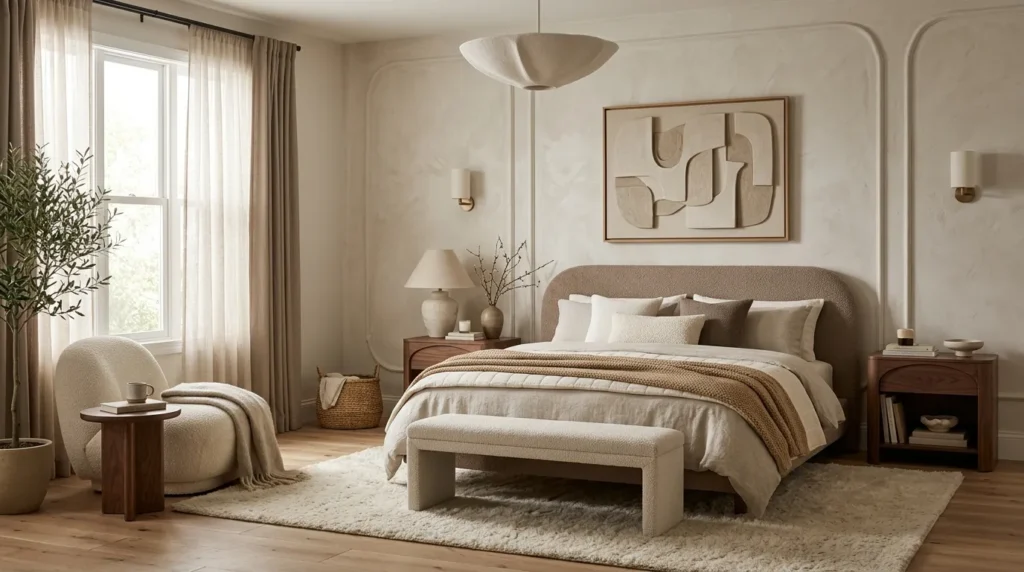
1. Warm Cream Layers
Create a soft tonal bedroom with cream bedding, walls, and complementary textures.
2. Taupe And Beige
Combine warm taupe and beige for a sophisticated neutral foundation.
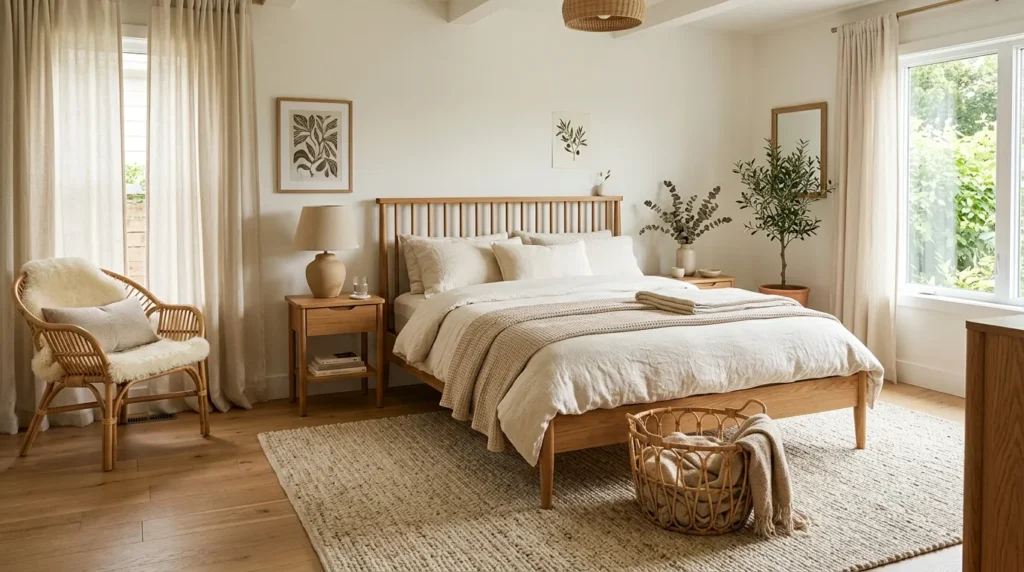
3. Natural Wood Accents
Introduce organic warmth with oak, walnut, rattan, and other natural materials.
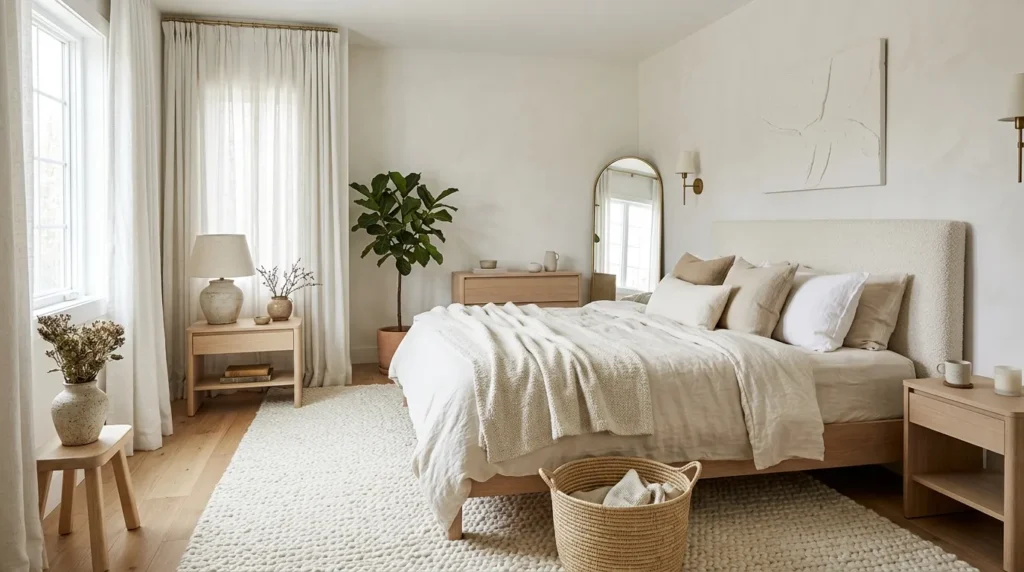
4. Textured White Bedroom
Layer different white textures to create depth without adding strong colors.
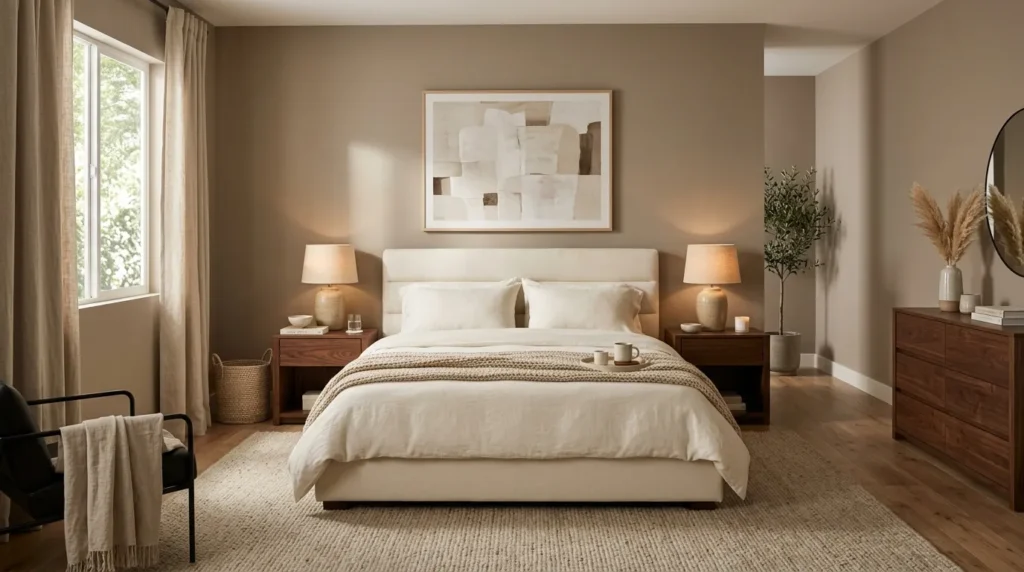
5. Mushroom Tones
Use muted mushroom shades for a contemporary neutral bedroom with subtle depth.
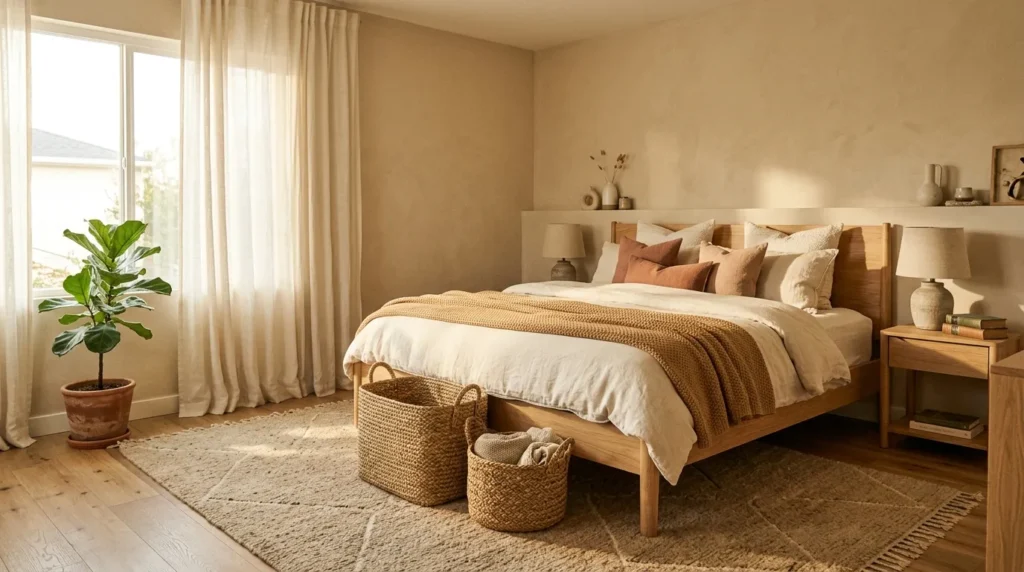
6. Neutral Earth Palette
Combine sand, clay, beige, and soft brown for an organic atmosphere.
7. Sculptural Furniture
Use curved and rounded furniture to give a neutral room visual character.
8. Layered Linen Bedding
Create relaxed comfort with breathable linen and softly coordinated bedding.
9. Soft Greige Walls
Use greige walls to balance warm and cool influences in a neutral bedroom.
10. Minimal Neutral Styling
Keep furniture and accessories selective for a clean, peaceful appearance.
11. Dark Wood Contrast
Add walnut or espresso wood to create depth within a lighter neutral palette.
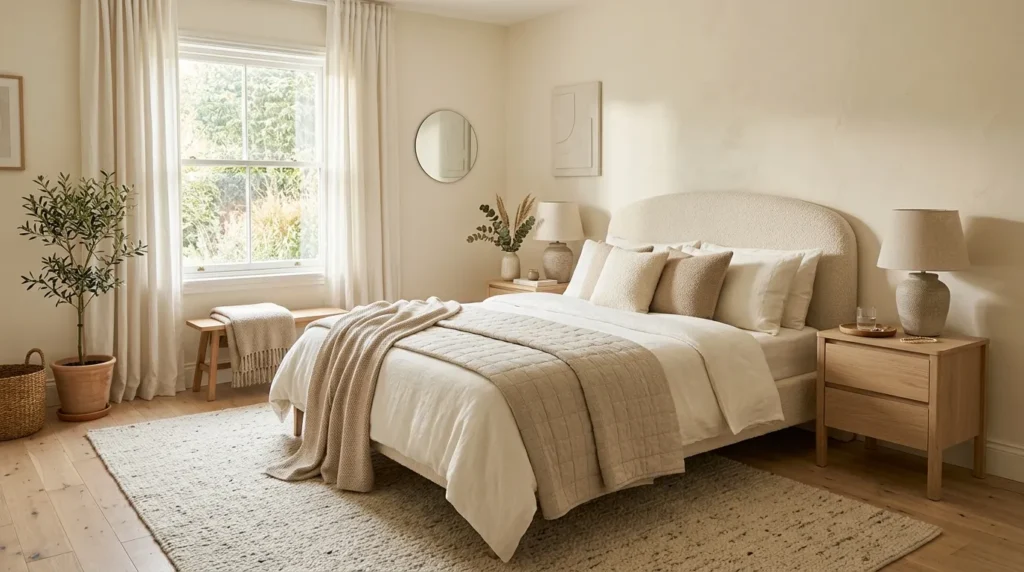
1. Warm Cream Layers
Quick Benefits
- Creates a soft atmosphere
- Makes the room feel cohesive
- Works with many decorating styles
- Provides a timeless foundation
- Allows texture to become the focus
Why It Works
Cream is one of the easiest neutral shades to build around because it feels softer than bright white while remaining light and versatile.
A room decorated in several related cream tones can feel sophisticated without looking overly coordinated. The secret is introducing different textures and subtle variations in tone.
For example, creamy walls can sit beautifully beside ivory bedding, oatmeal upholstery, pale wood, and warm ceramic accessories.
Rather than choosing every item in exactly the same shade, use a tonal range. Small differences between surfaces create depth and prevent the bedroom from appearing flat.
How To Style It
Start with warm cream walls or a light ivory backdrop.
Choose bedding in ivory, oatmeal, and soft beige.
Add a natural oak bed frame or nightstand.
Use a textured wool or cotton rug beneath the bed.
Finish with ceramic lamps, linen curtains, and one or two pieces of neutral artwork.
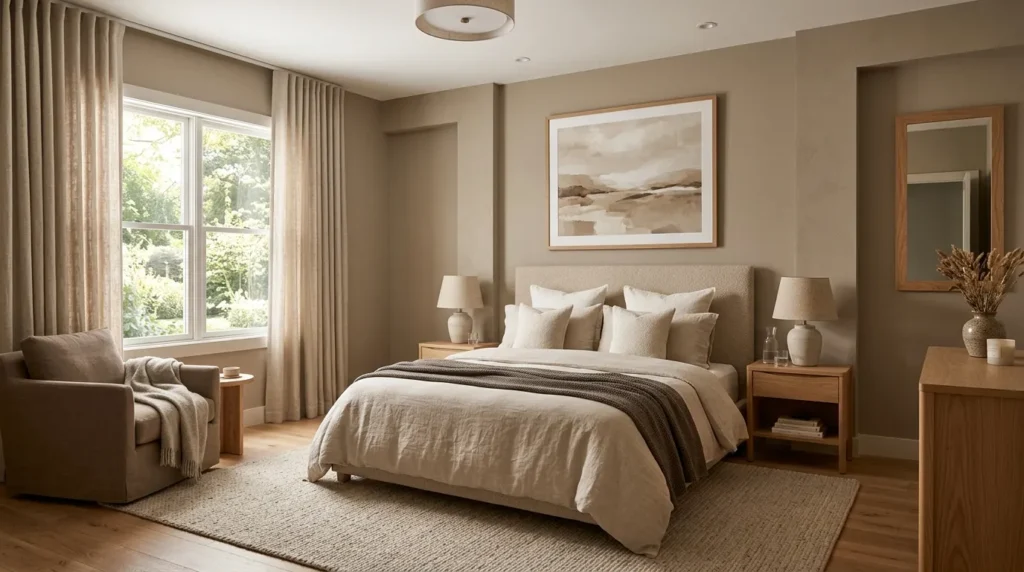
2. Taupe And Beige
Quick Benefits
- Adds subtle contrast
- Feels sophisticated
- Works in traditional and modern rooms
- Creates a warm foundation
- Pairs easily with wood
Why It Works
Taupe and beige create a richer neutral palette than using one color throughout the bedroom.
Taupe can provide slightly deeper contrast on walls or upholstery, while beige and cream keep the bedding and accessories lighter.
This combination is particularly useful when you want a neutral bedroom with some visual definition.
The colors work beautifully with natural wood, brushed metal, stone, and woven materials.
How To Style It
Paint the walls a warm taupe or soft greige.
Use beige linen bedding with ivory sheets.
Add a darker taupe throw across the bed.
Choose warm wood furniture for additional depth.
Use simple artwork with cream, brown, and muted gray tones.
Keep the ceiling lighter to maintain an airy feeling.
3. Natural Wood Accents
Quick Benefits
- Adds organic warmth
- Breaks up neutral surfaces
- Creates texture
- Works with modern interiors
- Gives the room a natural character
Why It Works
A neutral bedroom can sometimes feel too soft if every surface is fabric or painted.
Natural wood introduces variation through grain, tone, and texture.
Oak creates a light Scandinavian-inspired feeling, while walnut adds richness. Rattan and cane provide a more relaxed, organic appearance.
The key is repetition. Using the same wood tone in several areas helps the room feel cohesive without requiring a matching furniture set.
How To Style It
Choose one primary wood tone.
Use it on the bed frame, nightstands, or dresser.
Add a woven basket for additional natural texture.
Pair the wood with cream bedding and warm beige walls.
Introduce small wooden accessories rather than covering every surface with wood.
4. Textured White Bedroom
Quick Benefits
- Keeps the room bright
- Creates a clean appearance
- Makes texture more noticeable
- Works in small bedrooms
- Feels timeless
Why It Works
White becomes much more interesting when different textures are layered throughout the room.
Instead of using identical white surfaces, combine linen, boucle, cotton, wool, plaster, ceramic, and natural wood.
The resulting bedroom can feel bright without becoming sterile.
This approach is particularly useful in rooms with limited natural light because lighter surfaces can help maintain an airy visual quality.
How To Style It
Use warm white rather than an extremely cool white.
Choose linen bedding with a relaxed finish.
Add a boucle bench or upholstered headboard.
Place a thick wool rug beneath the bed.
Use textured white curtains and ceramic accessories.
Add pale oak furniture to introduce warmth.
5. Mushroom Tones
Quick Benefits
- Adds contemporary character
- Works with warm neutrals
- Creates subtle depth
- Feels sophisticated
- Pairs beautifully with wood
Why It Works
Mushroom is a muted neutral that sits between beige, gray, and brown.
It can create a more grounded appearance than pale beige while remaining relatively understated.
A mushroom wall can become an excellent backdrop for cream bedding and walnut furniture.
Because the shade is relatively subdued, it also works well with minimalist interiors where texture and shape are important.
How To Style It
Use mushroom paint on the walls.
Choose cream or ivory bedding for contrast.
Add walnut nightstands for deeper visual weight.
Use a soft beige rug to connect the colors.
Add artwork featuring muted brown, cream, and charcoal details.
Keep accessories minimal.
6. Neutral Earth Palette
Quick Benefits
- Creates an organic atmosphere
- Adds subtle warmth
- Works with natural materials
- Feels relaxed
- Provides more color variation
Why It Works
Earth-inspired neutrals can make a bedroom feel connected to nature without using bright colors.
Sand, clay, warm beige, camel, soft brown, and muted terracotta create a layered palette while remaining relatively restrained.
This style works particularly well with wood, linen, stone, woven fibers, and handmade ceramics.
How To Style It
Use warm beige as the dominant color.
Add clay or terracotta through a cushion or artwork.
Introduce camel-colored textiles.
Use medium-tone wood furniture.
Add woven baskets and natural-fiber accessories.
Keep the walls lighter than the furniture to maintain balance.
7. Sculptural Furniture
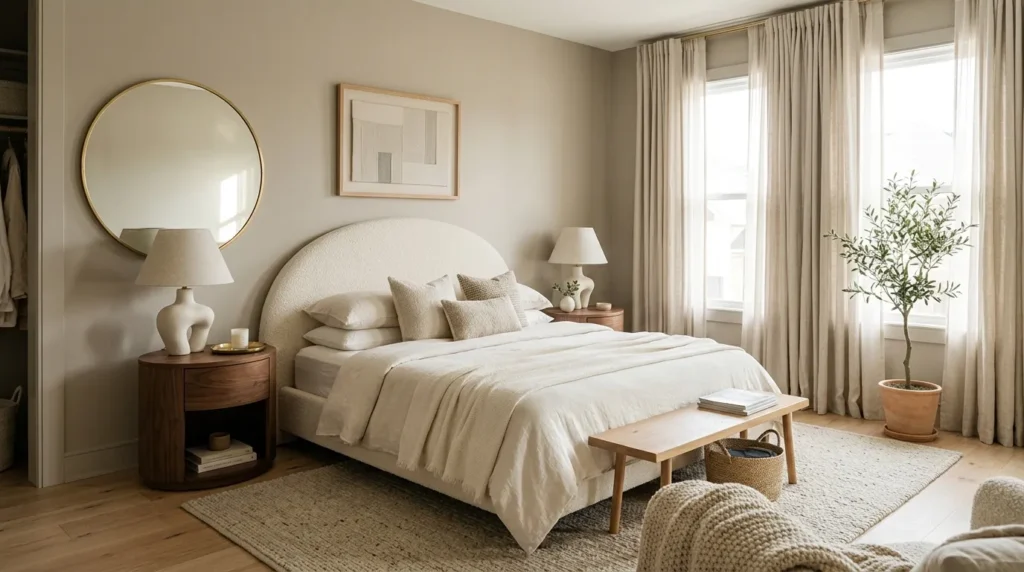
Quick Benefits
- Adds visual interest
- Makes neutral rooms feel modern
- Softens straight lines
- Creates a strong focal point
- Works without bold colors
Why It Works
When color is restrained, furniture shape becomes more important.
A curved headboard, rounded nightstand, sculptural chair, or arched mirror can give a neutral bedroom a distinctive personality.
Curved forms also soften the many rectangular shapes naturally found in bedrooms, including beds, wardrobes, windows, and artwork.
How To Style It
Choose one or two sculptural pieces.
Try a curved upholstered headboard.
Add a rounded bedside table.
Use an oversized circular mirror above a dresser.
Keep the surrounding furniture simple.
Allow negative space around sculptural pieces so their shape remains visually important.
8. Layered Linen Bedding
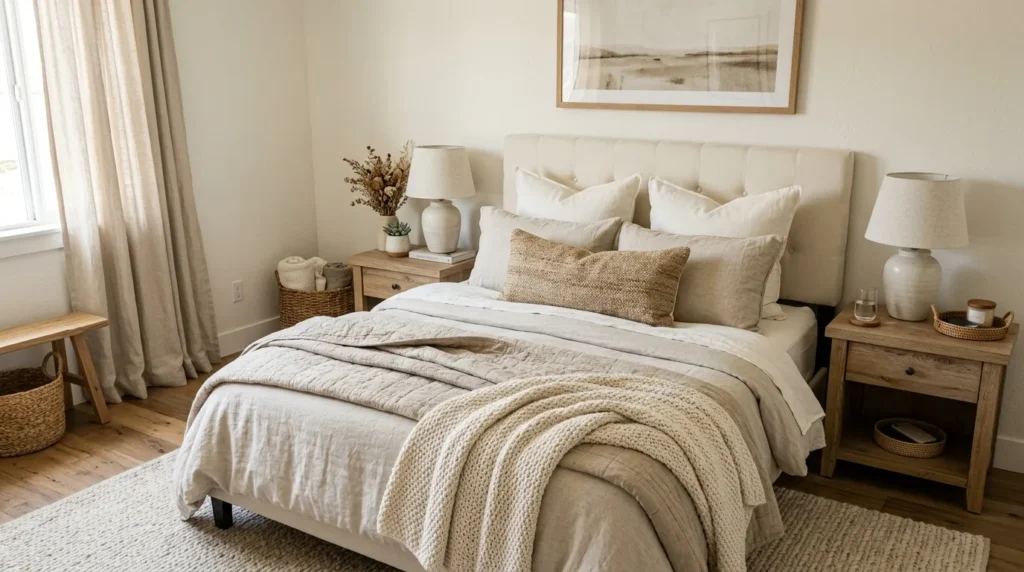
Quick Benefits
- Creates relaxed texture
- Works beautifully with neutrals
- Adds visual depth
- Feels casual and refined
- Easy to update seasonally
Why It Works
Linen naturally creates variation through its relaxed texture and subtle folds.
That makes it particularly useful in neutral bedrooms where texture replaces strong color contrast.
A linen duvet can be combined with cotton sheets, a quilted coverlet, knitted throw, and simple pillows.
The result feels comfortable rather than overly formal.
How To Style It
Choose ivory, oatmeal, beige, or soft taupe linen.
Layer different weights rather than using one heavy textile.
Add a quilt at the foot of the bed.
Use one textured lumbar pillow for contrast.
Finish with a knitted or woven throw.
Keep the arrangement slightly relaxed rather than perfectly symmetrical.
9. Soft Greige Walls
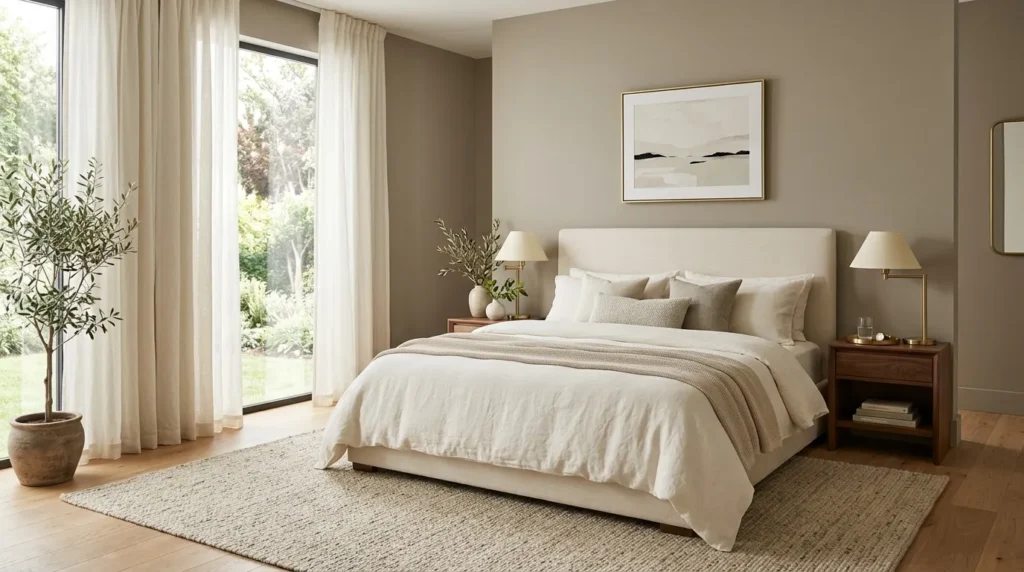
Quick Benefits
- Balances warm and cool tones
- Adds subtle contrast
- Works with many furniture finishes
- Creates a sophisticated backdrop
- Complements neutral bedding
Why It Works
Greige combines characteristics of gray and beige.
A warm greige can provide more definition than cream while remaining neutral enough to work with a wide range of furniture.
It is especially useful when the bedroom contains both warm wood and cooler elements such as gray upholstery or metal accents.
How To Style It
Choose a warm greige rather than a blue-gray shade.
Pair it with cream bedding.
Add medium or dark wood furniture.
Use warm white curtains to soften the windows.
Introduce brass, bronze, or matte black sparingly through lighting or hardware.
10. Minimal Neutral Styling
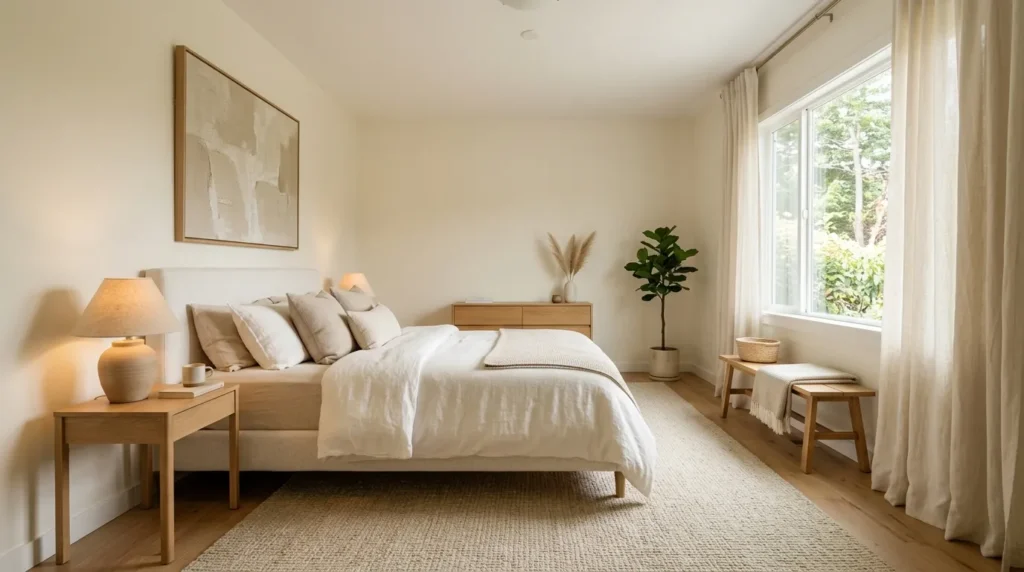
Quick Benefits
- Keeps the room visually calm
- Makes cleaning easier
- Highlights quality textures
- Creates a spacious appearance
- Works well in smaller bedrooms
Why It Works
A neutral palette does not automatically create a minimalist room.
Too many accessories, patterns, and small decorative pieces can still make a neutral bedroom feel cluttered.
Minimal styling focuses on selecting fewer objects and giving each one enough visual space.
This approach is particularly useful for bedrooms because the room’s primary purpose is rest.
How To Style It
Choose essential furniture first.
Keep nightstands relatively clear.
Display one large piece of artwork instead of many small pieces.
Use one decorative vase or ceramic object on a dresser.
Hide everyday clutter inside drawers and cabinets.
Let the bedding and architectural features provide most of the visual interest.
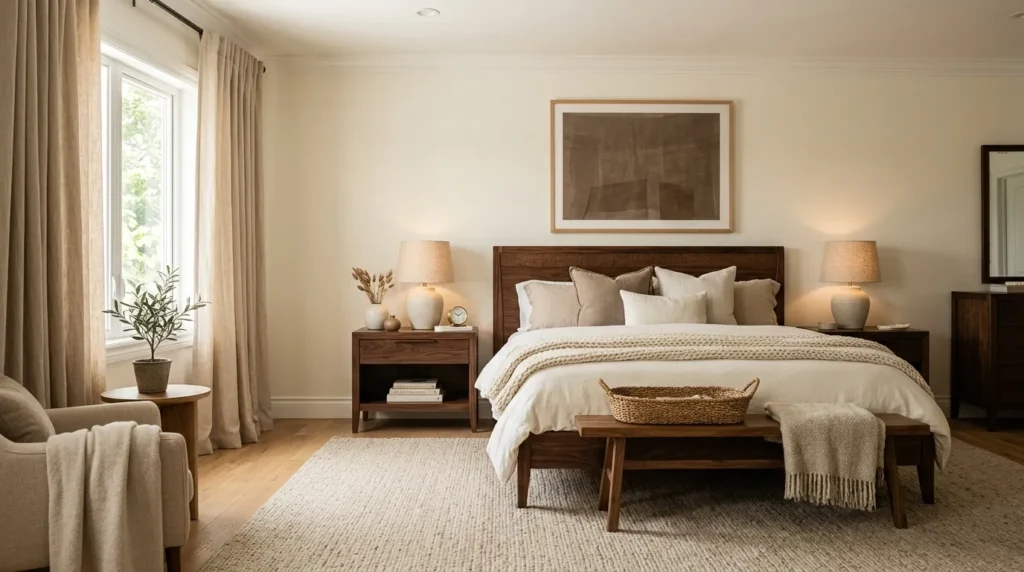
11. Dark Wood Contrast
Quick Benefits
- Adds depth
- Creates contrast
- Prevents pale neutrals from feeling flat
- Adds sophistication
- Works with warm and cool neutrals
Why It Works
Dark wood can anchor a light neutral bedroom.
Walnut, espresso, and deep brown finishes create visual weight against cream, ivory, beige, and soft white.
This contrast works especially well in modern bedrooms where the furniture itself becomes part of the design.
The key is using dark wood selectively rather than allowing it to dominate the room.
How To Style It
Use walnut on the bed or nightstands.
Keep the walls light and warm.
Choose cream bedding with beige layers.
Add a soft neutral rug to balance the darker furniture.
Repeat the dark wood in one or two smaller elements.
Avoid combining too many unrelated wood finishes.
How to Decorate a Neutral Bedroom
Start with the largest surfaces.
Choose the wall color, flooring, and primary furniture first. Then build the palette through bedding, curtains, rugs, and accessories.
A simple neutral formula is:
60% dominant neutral + 30% supporting neutral + 10% accent tone.
For example, warm cream can cover the walls and larger textiles. Taupe can appear through the rug and upholstery. Walnut or muted terracotta can provide the smaller accent.
Texture matters just as much as color. Combine smooth, rough, woven, soft, and natural surfaces to create dimension.
Best Neutral Bedroom Colors for 2026
Popular neutral combinations can include:
- Warm white + cream + oak
- Beige + taupe + walnut
- Mushroom + ivory + dark wood
- Greige + cream + natural oak
- Oatmeal + camel + warm white
- Sand + clay + medium wood
- Ivory + chocolate brown + beige
- Soft gray + cream + walnut
The best palette depends on the natural light in the room and the existing finishes.
A bedroom with northern-facing windows can benefit from warmer undertones, while a bright, sun-filled room can accommodate slightly cooler neutrals.
How to Make a Neutral Bedroom Cozy
Texture is the easiest way to prevent a neutral bedroom from feeling flat.
Layer linen bedding with a quilt and knitted throw. Add a wool or woven rug. Use fabric curtains instead of hard blinds where practical. Introduce natural wood through nightstands or a bed frame.
Lighting also matters.
Use bedside lamps, sconces, and accent lighting rather than relying only on a ceiling fixture. Warm illumination can emphasize the texture of bedding and furniture after sunset.
Finally, add a few personal details. Books, artwork, photographs, ceramics, and collected objects can keep the room from feeling like a showroom.
Neutral Bedroom Ideas for Small Rooms
Light neutrals can be especially effective in compact bedrooms.
Cream, warm white, pale beige, and soft greige can create a visually continuous backdrop.
Use furniture with simple silhouettes and avoid filling every corner.
A floating nightstand can preserve floor space. A tall wardrobe can use vertical space. Mirrors can reflect daylight, while floor-to-ceiling curtains can draw attention upward.
For additional warmth, use wood and textured fabrics instead of adding many decorative objects.
Neutral Bedroom Ideas With Dark Furniture
Dark furniture can look beautiful against neutral walls.
A walnut bed or dresser creates contrast against cream or beige walls. Add ivory bedding and a lighter rug to prevent the furniture from dominating the room.
Keep the darker finish repeated in only a few locations.
For example, walnut nightstands, a walnut bed frame, and a small dark wood accessory can create continuity.
Add warm lighting to soften the contrast.
Common Neutral Bedroom Decorating Mistakes
One common mistake is using only one neutral shade.
A room filled entirely with identical beige surfaces can feel flat. Layer different tones and textures instead.
Another mistake is choosing cool white lighting with warm neutral colors. The contrast can make the room feel less cohesive.
Too many decorative objects can also undermine the calm quality of a neutral palette.
Finally, avoid choosing paint colors without considering natural light. A neutral shade can appear significantly different depending on the room’s orientation and surrounding finishes.
Frequently Asked Questions
What are the best neutral colors for a bedroom in 2026?
Warm white, cream, beige, taupe, mushroom, oatmeal, greige, sand, and soft brown are versatile choices. These shades work particularly well when combined rather than used alone. Natural wood and textured fabrics can add depth without introducing strong color.
How do you make a neutral bedroom look expensive?
Focus on layering and proportion rather than adding many decorations. Use a cohesive palette, substantial curtains, quality-looking textiles, natural materials, and carefully selected lighting. A few larger, well-placed pieces can create a more refined appearance than numerous small accessories.
Are beige bedrooms still popular?
Beige remains a versatile bedroom color because it works with natural wood, cream, white, brown, green, and many other muted shades. Modern beige bedrooms often use several tones and textures instead of relying on a single flat beige color.
What color goes best with a neutral bedroom?
Cream, warm white, soft brown, muted green, dusty blue, terracotta, and natural wood can complement a neutral bedroom. Choose one supporting color and repeat it subtly through bedding, artwork, curtains, or accessories.
How do you add color to a neutral bedroom without losing the neutral look?
Use muted accent colors rather than highly saturated shades. A dusty blue cushion, muted olive throw, terracotta artwork, or soft brown bench can introduce color while keeping the overall palette calm.
How do you make a neutral bedroom less boring?
Use texture, contrast, and shape. Combine linen, wool, wood, ceramic, woven materials, and upholstered surfaces. Add one sculptural piece of furniture or artwork and vary the neutral tones slightly throughout the room.
What wood looks best with neutral bedroom colors?
Oak, walnut, ash, and other natural wood finishes can all work well. Light oak creates an airy appearance, while walnut and darker brown woods provide stronger contrast against cream, ivory, and beige.
Related Articles
- 11 Cozy Bedroom Ideas for 2026
- 10 Modern Bedroom Ideas With Elegant Wood Accents
- 10 Bedroom Wall Decor Ideas That Feel Warm and Stylish
- 10 Master Bedroom Ideas With Beautiful Wardrobe Designs
- 10 Minimalist Bedroom Ideas for a Calm Home
Conclusion
A neutral bedroom can be one of the most versatile rooms in the home. Its restrained palette creates a flexible foundation, while texture, furniture shape, natural materials, and lighting bring the personality.
The most successful approach is not simply choosing beige or white. It is layering related tones so the room has depth. Cream bedding can sit against taupe walls, natural oak can warm the space, and a darker walnut accent can provide contrast.
Texture is equally important. Linen, wool, boucle, woven fibers, ceramics, and wood can make a simple color palette feel rich and inviting.
If you’re updating your bedroom, start with the elements that have the greatest visual impact. Choose the wall color, bed, bedding, and rug first. Then add lighting, storage, artwork, and personal accessories.
You do not need to redesign everything at once. A new textured duvet, warmer lamp, natural wood nightstand, or carefully chosen rug can change the atmosphere without requiring a complete makeover.
A neutral bedroom works best when it feels like your own space rather than a perfectly staged room. Keep the palette calm, add meaningful details, and allow enough empty space for the room to breathe.