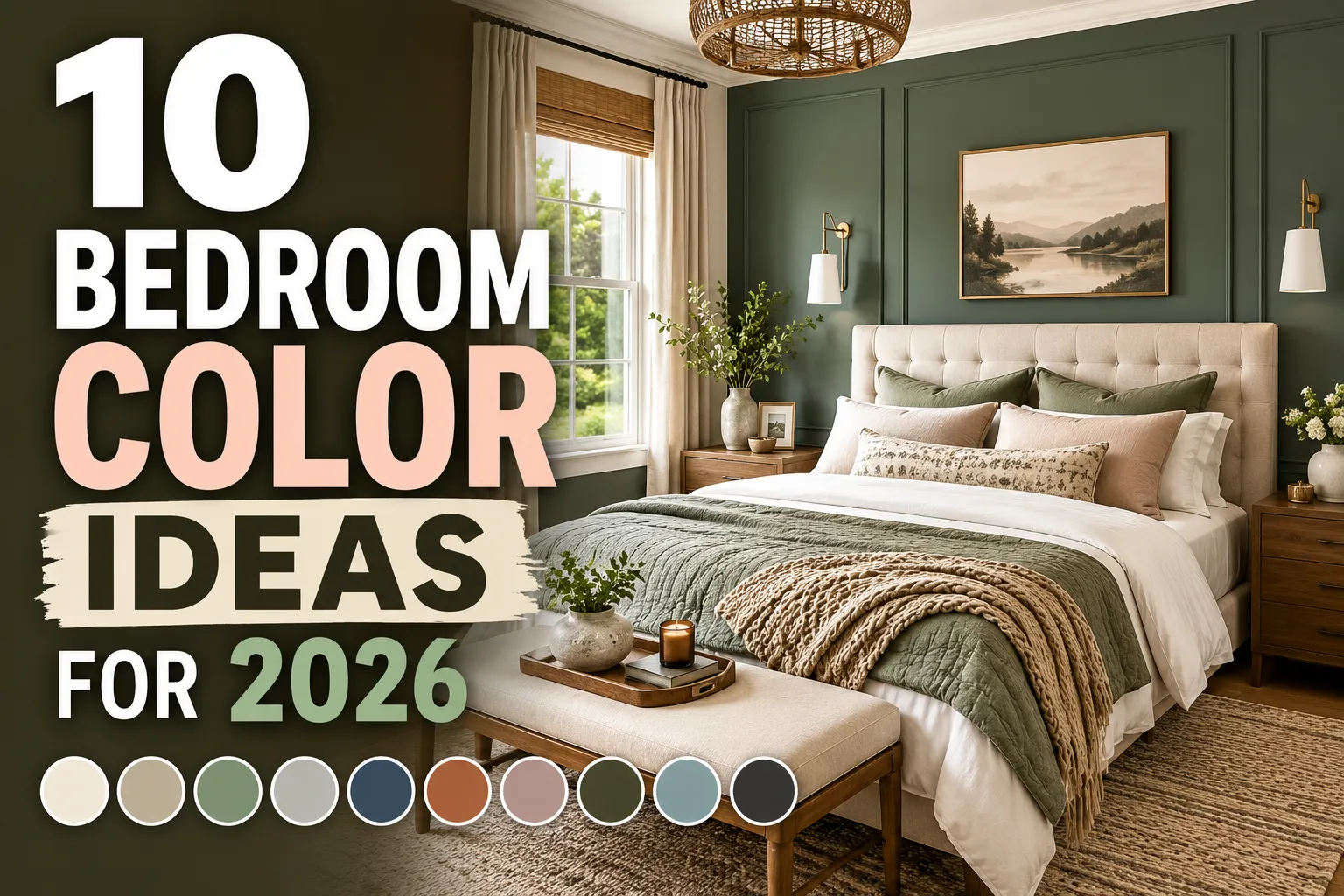
10 Bedroom Color Ideas for 2026
Bedroom color is doing more than setting the mood in 2026. It is becoming one of the easiest ways to make a bedroom feel personal, layered, and inviting without completely changing the furniture.
Current bedroom design coverage points toward warmer neutrals, muted greens, soft blues, earthy mauves, burgundy, and deeper smoky shades. The overall direction is moving beyond stark, one-note neutrals toward colors that create a more enveloping and expressive atmosphere.
That doesn’t mean every bedroom needs a dramatic wall color. A trending shade can appear through bedding, curtains, an accent wall, upholstered furniture, artwork, or even a painted dresser. This makes it easier to experiment without committing to a full renovation.
One thing worth remembering when choosing a bedroom color is that the same paint can look completely different depending on natural light, room orientation, flooring, and surrounding finishes. Designers recommend testing colors in the actual room and observing them throughout the day before committing.
For 2026, nature-inspired colors are particularly useful because they can feel current while remaining comfortable for everyday living. Soft greens, blue-gray tones, warm neutrals, and earthy shades can all create restful combinations. More expressive choices such as burgundy, mauve, and lilac offer a way to introduce personality without making the room feel chaotic.
Below are ten bedroom color ideas that combine current 2026 inspiration with practical decorating advice.
Table of Contents
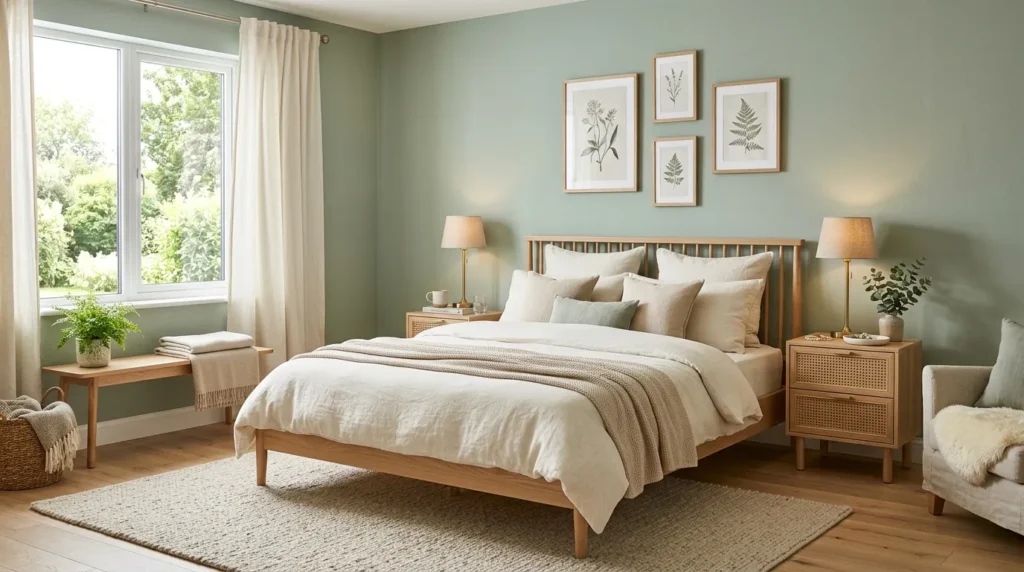
1. Soft Sage Green
A gentle green creates a nature-inspired bedroom with a calm, fresh appearance.
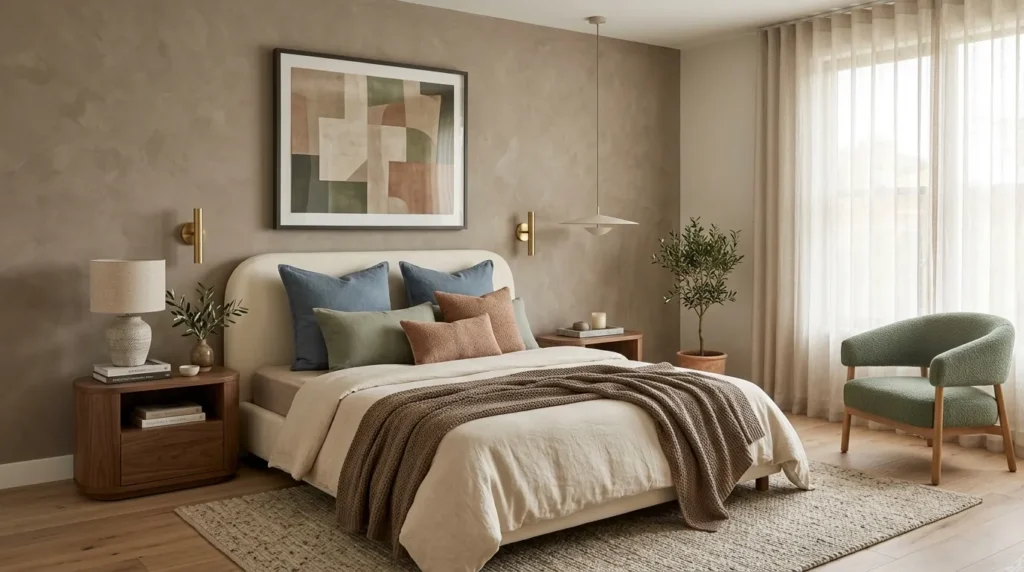
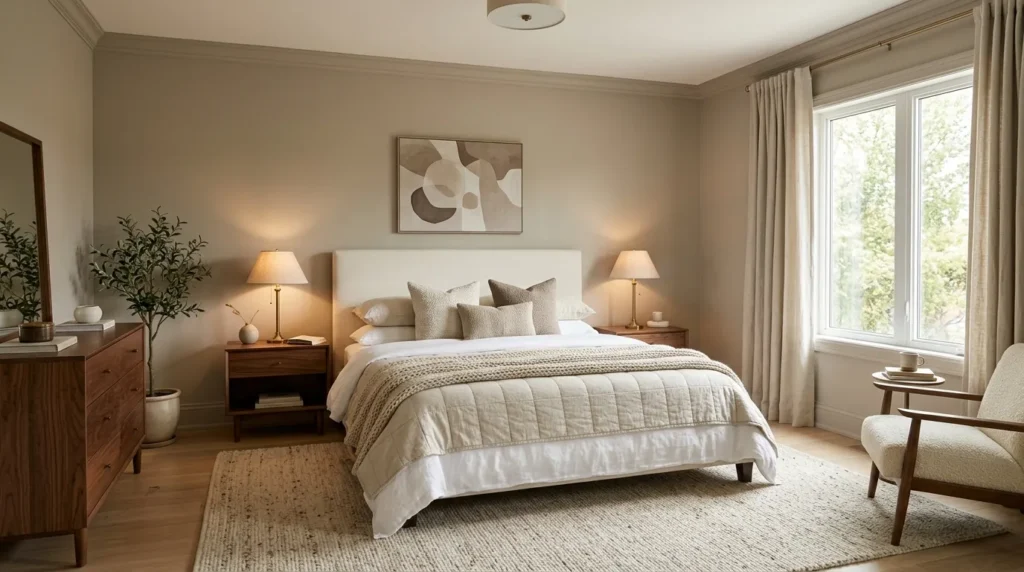
2. Warm Taupe
A sophisticated neutral gives the bedroom warmth while remaining versatile.
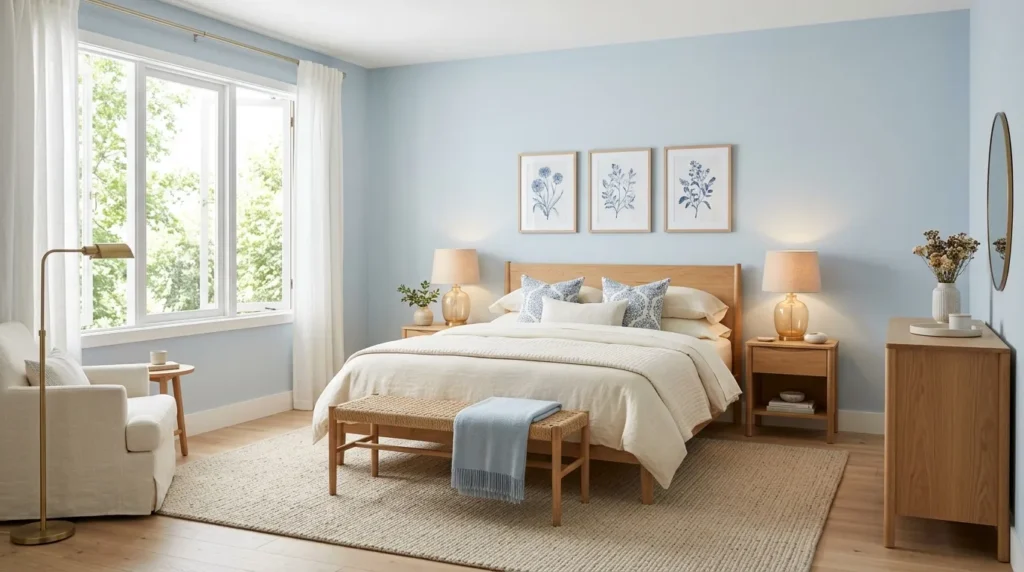
3. Powder Blue
A soft blue creates an airy bedroom with a light and peaceful atmosphere.
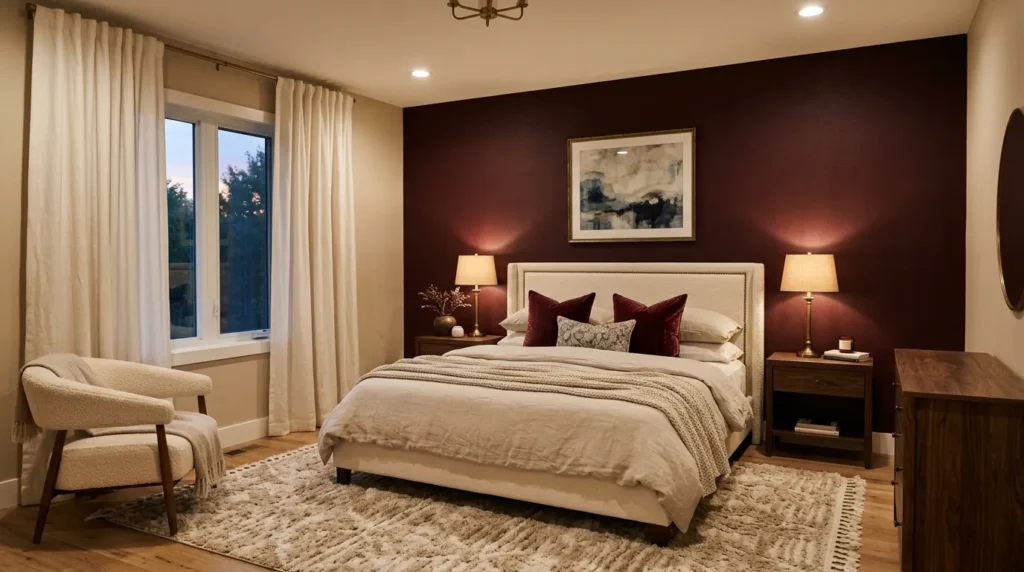
4. Deep Burgundy
A rich burgundy adds depth and drama while working beautifully with warm neutrals.
5. Smoky Blue
A muted blue creates a cocooning bedroom that feels sophisticated and restful.
6. Earthy Mauve
A dusty mauve introduces warmth and personality without becoming overly bright.
7. Creamy White
A warm white creates a timeless foundation that works with layered textures.
8. Soft Gray-Green
A subtle gray-green combines modern sophistication with an organic feeling.
9. Muted Lilac
A soft lilac adds gentle color and an elegant contemporary touch.
10. Earthy Terracotta
A muted terracotta brings warmth and natural character to the bedroom.
1. Soft Sage Green
Quick Benefits
- Creates a nature-inspired atmosphere
- Works well with natural wood
- Feels calm without being bland
- Complements warm neutrals
- Works in modern and traditional bedrooms
Why It Works
Soft sage remains one of the strongest directions for bedrooms because it connects the room with natural surroundings while maintaining a gentle appearance. Current 2026 bedroom color coverage highlights soft and gray-green shades as particularly soothing choices.
The beauty of sage is its flexibility. A pale version can make a small bedroom feel fresh, while a deeper muted green can create a more enveloping atmosphere.
Sage also works beautifully with natural materials. Light oak, rattan, linen, woven textures, and warm brass can all complement the color.
Instead of treating green as a bold accent, consider using it as the foundation of the room.
How To Style It
Paint the walls a soft sage green and pair them with cream bedding.
Add light or medium wood furniture to emphasize the natural connection.
Use ivory curtains and a beige rug to soften the palette.
For accents, try muted blue, warm brass, terracotta, or deeper green.
If painting all four walls feels too strong, use sage behind the bed as an accent.
2. Warm Taupe
Quick Benefits
- Creates a sophisticated neutral backdrop
- Works with many furniture finishes
- Adds warmth without strong color
- Suitable for modern and traditional spaces
- Easy to accessorize
Why It Works
Warm taupe offers more depth than plain beige while remaining easy to live with. It sits comfortably between beige, gray, and brown, making it particularly useful when you want a neutral bedroom with character.
Warm neutrals are an important part of the 2026 direction toward more comforting, nuanced interiors.
Taupe can make white furniture feel softer and help dark wood appear richer. It also works beautifully with cream bedding and natural textiles.
The most important consideration is undertone. Some taupes lean pink, gray, or brown, so testing a sample in your actual lighting is worthwhile.
How To Style It
Use warm taupe on the walls.
Pair it with cream or ivory bedding rather than bright white.
Add walnut, oak, or painted wood furniture.
Layer the room with beige, oatmeal, and soft brown textiles.
Use black or aged brass accents sparingly for contrast.
3. Powder Blue
Quick Benefits
- Creates an airy atmosphere
- Works well with natural daylight
- Feels refreshing
- Complements white and cream
- Suitable for classic and modern bedrooms
Why It Works
Soft blue is a timeless bedroom color, but 2026 design is giving lighter blue shades a fresh interpretation. Powder blue can create a relaxed atmosphere without the coolness associated with some stronger blue-gray paints.
Blue also works beautifully with white, cream, natural wood, and soft green.
For bedrooms that receive plenty of daylight, a pale blue can create a bright and breezy appearance. For darker rooms, choose a warmer or slightly grayer version so the walls don’t feel icy.
How To Style It
Paint the walls a soft powder blue.
Use cream bedding and warm white curtains.
Add natural wood nightstands to bring warmth into the palette.
Introduce blue through cushions and artwork if you prefer neutral walls.
For a classic look, add subtle floral or striped textiles.
For a modern bedroom, keep patterns minimal and focus on texture.
4. Deep Burgundy
Quick Benefits
- Adds dramatic depth
- Creates a sophisticated atmosphere
- Works beautifully with warm neutrals
- Can make a large bedroom feel more intimate
- Adds personality
Why It Works
Burgundy is one of the more expressive bedroom color directions appearing in 2026 design coverage. Rather than using it as an overly bright red, today’s approach favors rich, complex tones that feel sophisticated and cocooning.
This color works particularly well when balanced with lighter materials.
Cream bedding, natural wood, brass, warm white, and dusty blue can prevent burgundy from becoming visually heavy.
You don’t have to paint the entire bedroom burgundy. A headboard, accent wall, curtains, or bedding can introduce the shade more gently.
How To Style It
For a dramatic room, use burgundy on the wall behind the bed.
For a softer approach, choose a burgundy upholstered headboard.
Pair it with cream or oatmeal bedding.
Add warm wood furniture and brass lighting.
Use muted blue or dusty pink as a secondary accent when you want more color variation.
5. Smoky Blue
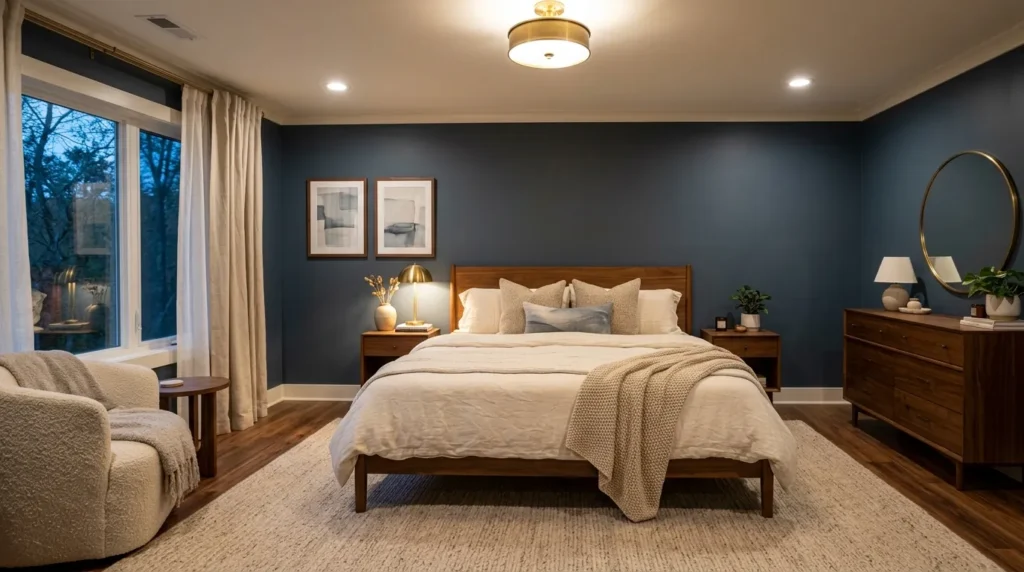
Quick Benefits
- Creates a restful atmosphere
- Adds depth without harsh contrast
- Works beautifully with wood
- Suits modern interiors
- Can create a cocooning effect
Why It Works
Smoky blue is a sophisticated alternative to both pale blue and navy. It has enough gray to feel restrained while retaining the calming character of blue.
Current bedroom design trends are embracing deeper, smoky blues as part of a broader movement toward more immersive bedroom color schemes.
This shade is particularly attractive in bedrooms with traditional molding, dark wood, or brass accents.
It can also work in contemporary spaces when paired with simple furniture and minimal artwork.
How To Style It
Use smoky blue on all four walls for a cocooning effect.
Pair it with warm white trim and cream bedding.
Add walnut or medium-toned wood furniture.
Use brass or aged bronze lighting for warmth.
Layer in pale blue and beige textiles to soften the darker walls.
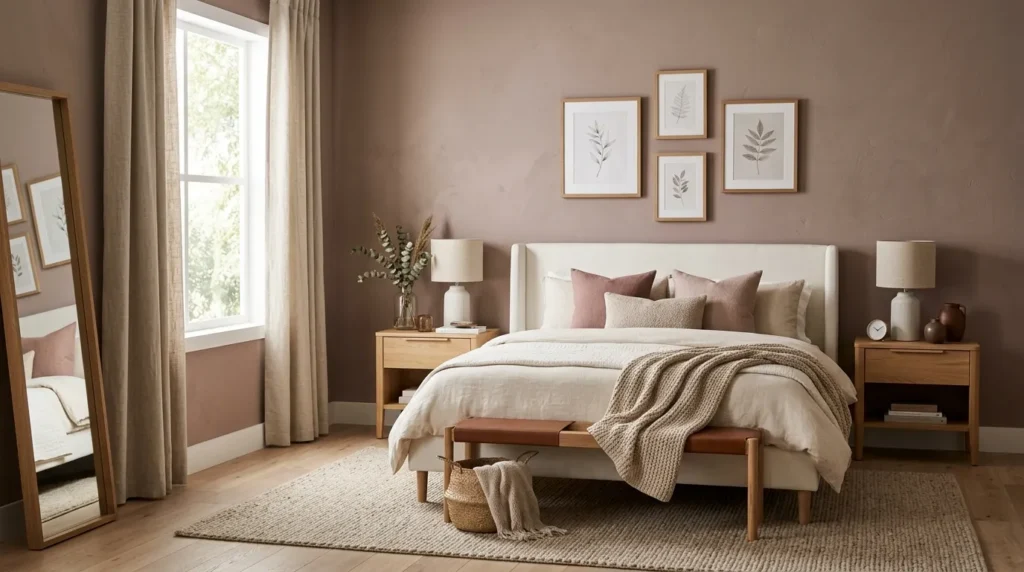
6. Earthy Mauve
Quick Benefits
- Adds subtle personality
- Feels warm and sophisticated
- Works well with cream
- Complements natural materials
- Offers an alternative to traditional pink
Why It Works
Earthy mauve is softer than burgundy but richer than blush. It can bring color into a bedroom while maintaining an understated appearance.
The shade works especially well when it contains enough brown or gray to prevent it from looking overly sugary.
Mauve also fits the 2026 preference for warmer, more nuanced bedroom colors.
It can work beautifully in bedrooms with vintage furniture, modern upholstery, or natural wood.
How To Style It
Choose a dusty mauve for the walls.
Pair it with warm white or cream bedding.
Add natural oak furniture and woven accessories.
Use muted rose, beige, or brown accents.
For a contemporary look, keep the rest of the room simple and let the wall color provide the personality.
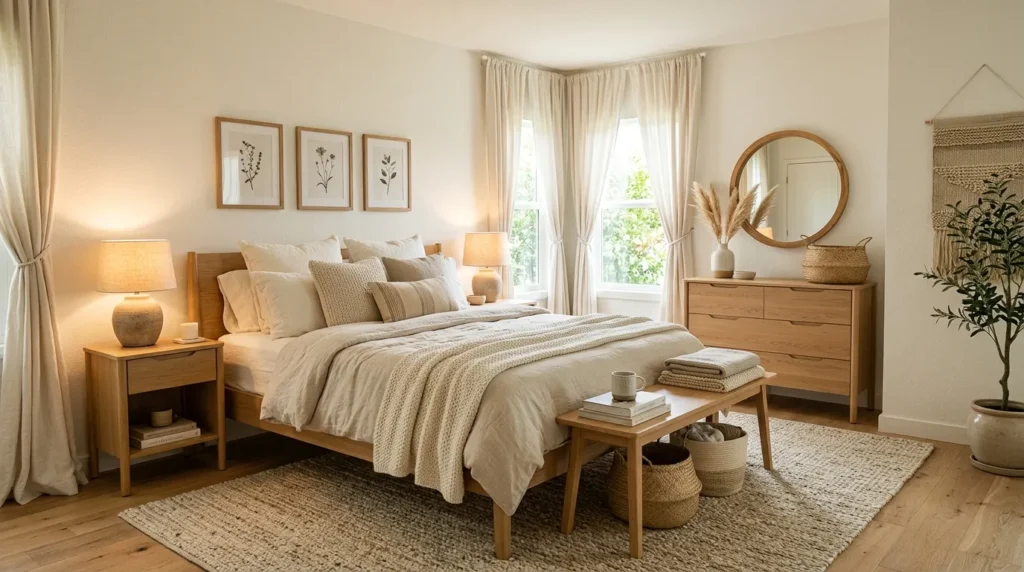
7. Creamy White
Quick Benefits
- Creates a timeless foundation
- Reflects natural light
- Works with almost every style
- Makes layering easy
- Suitable for small bedrooms
Why It Works
White isn’t disappearing from bedroom design. The shift is toward warmer whites rather than stark, clinical shades.
A creamy white can make a room feel clean while retaining warmth. It also gives you flexibility to experiment with stronger colors through furniture, bedding, and artwork.
This is particularly useful if you prefer changing your decor regularly.
Warm white also pairs naturally with the earthy greens, browns, mauves, and blues that are influencing current bedroom palettes.
How To Style It
Choose a warm white rather than an icy white.
Layer cream, beige, oatmeal, and soft brown textiles.
Add natural wood furniture.
Use artwork with muted green, blue, or terracotta accents.
For a minimalist look, keep the entire room tonal.
For more character, introduce patterned bedding or colorful artwork.
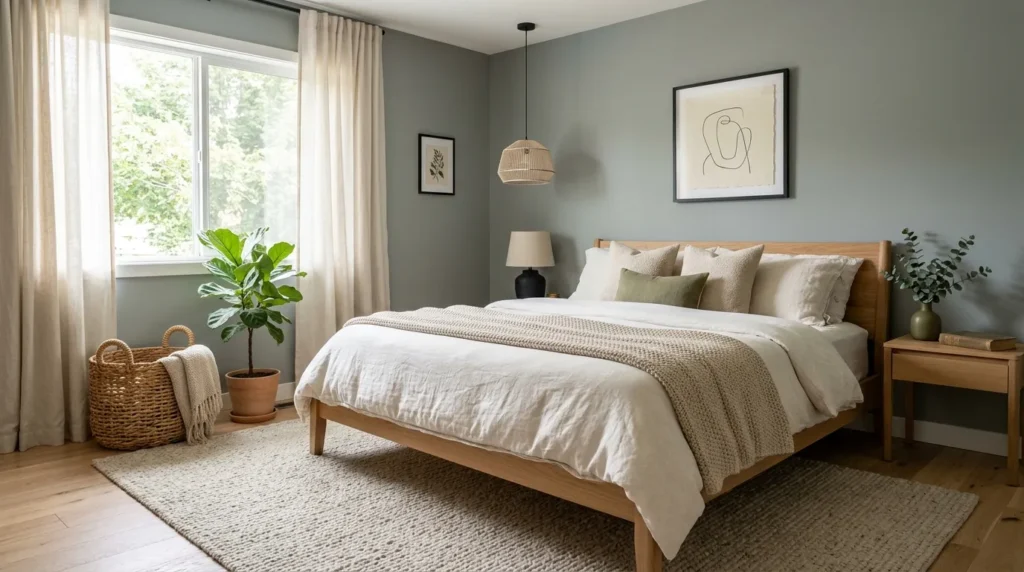
8. Soft Gray-Green
Quick Benefits
- Combines neutral and natural qualities
- Works well with modern furniture
- Creates subtle color
- Pairs beautifully with wood
- Feels sophisticated
Why It Works
Gray-green is useful when you want color without committing to a strong green. Its muted appearance gives it the versatility of a neutral while retaining a connection to nature.
This color family is particularly relevant to 2026 bedroom design, where soft green and nuanced neutral shades are being used to create calming spaces.
It works beautifully in rooms with white trim, natural wood, linen, and woven materials.
How To Style It
Paint the walls a muted gray-green.
Use ivory bedding with sage or olive accents.
Add light oak or walnut furniture depending on the desired contrast.
Choose linen curtains in cream or natural beige.
Bring in one or two plants to reinforce the organic palette.
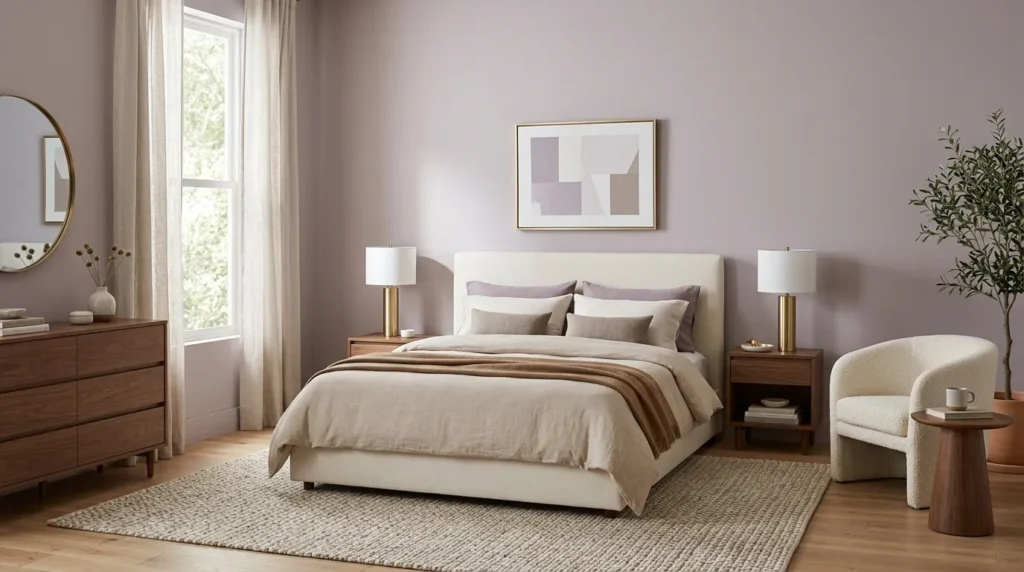
9. Muted Lilac
Quick Benefits
- Adds gentle color
- Feels contemporary
- Works with warm neutrals
- Creates a soft atmosphere
- Easy to introduce through accessories
Why It Works
Lilac is making a notable appearance in 2026 home decor, moving beyond its traditional spring associations. Current design coverage describes the shade as a softer, expressive alternative to the stark minimalism that has dominated interiors in recent years.
For bedrooms, the best approach is usually a muted version rather than a highly saturated purple.
Lilac can work surprisingly well with taupe, cream, chocolate brown, dusty rose, and warm wood.
How To Style It
Use a dusty lilac on the walls for a soft statement.
For a lower-commitment option, introduce lilac through bedding or curtains.
Pair it with cream and warm beige.
Add walnut furniture for contrast.
Use brushed brass or aged bronze lighting for an elegant finish.
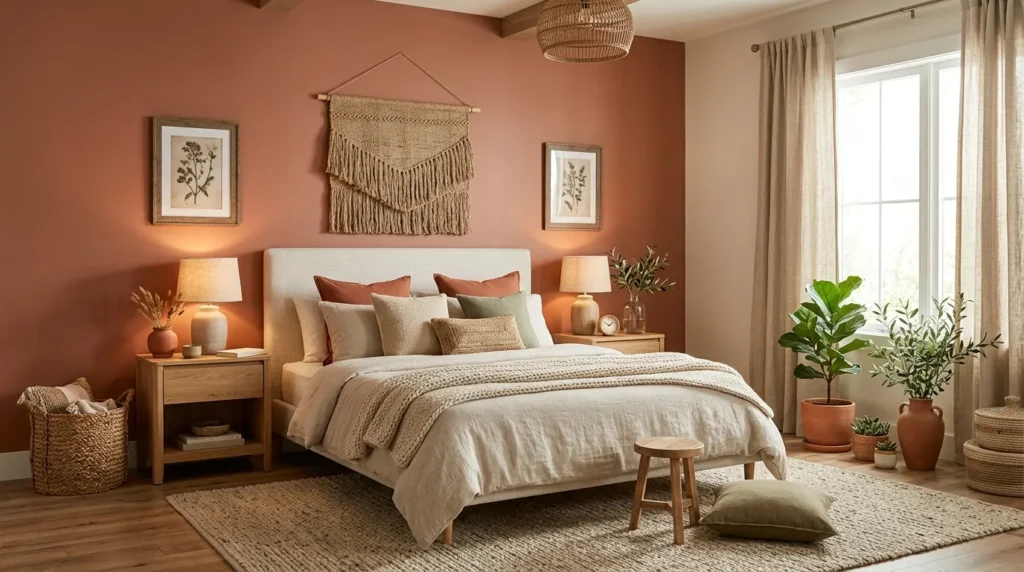
10. Earthy Terracotta
Quick Benefits
- Adds warmth
- Creates an inviting atmosphere
- Works with natural materials
- Complements cream and beige
- Adds character without bright color
Why It Works
Terracotta brings the warmth of clay and sun-baked earth into the bedroom. A muted version can feel surprisingly sophisticated and works especially well with natural wood, woven materials, and creamy neutrals.
Current interior color conversations continue to favor earthy, nature-connected shades and warmer palettes over stark cool tones
For bedrooms, look for dusty terracotta rather than highly saturated orange. The muted version feels more restful and easier to combine with existing furniture.
How To Style It
Use terracotta as an accent wall behind the bed.
Pair it with cream bedding and warm white walls.
Add natural wood furniture and woven baskets.
Use beige or oatmeal curtains.
For a more subtle look, introduce terracotta through cushions, artwork, a quilt, or a small upholstered chair.
Frequently Asked Questions
What bedroom colors are trending in 2026?
Current 2026 bedroom color coverage highlights warm neutrals, soft gray-greens, powder blue, earthy mauve, smoky blue, burgundy, and other nature-inspired shades. The broader direction favors warmer and more nuanced colors rather than relying exclusively on stark whites and cool neutrals. (Homes and Gardens)
What is the most relaxing bedroom color for 2026?
Soft green and blue-green shades are strong choices for a relaxing bedroom because they connect visually with nature and tend to work well with warm natural materials. Soft blue, warm taupe, and creamy white are also versatile options when you want a calmer atmosphere. (The Spruce)
Are gray bedrooms still popular in 2026?
Gray can still work beautifully, particularly when it has warm or green undertones. Instead of a flat cool gray, consider warm gray, gray-green, or a soft blue-gray. These nuanced shades fit better with the warmer, more layered bedroom palettes currently appearing in 2026 design. (The Spruce)
What colors make a small bedroom feel bigger?
Light and softly toned colors such as creamy white, pale beige, powder blue, and soft gray-green can help a small bedroom feel brighter and more open. Keeping the walls, ceiling, and major textiles within a related color family can also create visual continuity.
What color works best with natural wood bedroom furniture?
Many shades work with wood, but sage green, gray-green, warm white, taupe, powder blue, and earthy terracotta are particularly versatile. The best choice depends on the wood’s undertone. Warm woods generally pair well with warm neutrals and earthy colors, while lighter oak can work with both warm and cool-muted shades.
How do I choose the right bedroom paint color?
Start by considering the room’s natural light, existing furniture, flooring, and the mood you want. Paint large samples and observe them at different times of day before committing. Designers emphasize testing colors in the actual space because lighting and surrounding materials can significantly change how a shade appears.
Can I use a dark color in a bedroom?
Yes. Deep colors such as burgundy, smoky blue, and forest-inspired green can create an intimate, enveloping atmosphere. If you’re concerned about the room feeling too dark, balance the walls with lighter bedding, curtains, rugs, and furniture. Good layered lighting also becomes especially important.
Final Thoughts
The most exciting part of bedroom color trends for 2026 is the variety. You don’t have to choose between a completely neutral bedroom and an intensely colorful one.
Soft sage, gray-green, powder blue, warm taupe, and creamy white offer understated options for a peaceful retreat. Burgundy, smoky blue, earthy mauve, lilac, and terracotta provide more personality for anyone ready to experiment.
The best color isn’t necessarily the one receiving the most attention in design magazines. It is the shade that works with your room’s natural light, existing furniture, and the atmosphere you want to create.
If you’re unsure, start small. Introduce a new color through bedding, artwork, curtains, or an accent wall before painting the entire room.
And remember that color is only one part of the design. Texture, lighting, furniture, and layout all influence how the final palette feels.
For a bedroom that stays appealing beyond one season, choose a color you genuinely enjoy and then use current 2026 trends as inspiration rather than strict rules.
Related Articles
- 10 Minimalist Bedroom Ideas for Modern Design
- 10 Small Bedroom Ideas for a Cozy Aesthetic Layout
- 10 Bedroom Ideas for Every Style
- 10 Bedroom Renovation Ideas That Are Budget Friendly
- How to Make a Small Bedroom Feel Bigger Without Renovating