
11 Small Bedroom Ideas for a Smart Small Bedroom Layout
A small bedroom can feel comfortable, stylish, and surprisingly functional when every piece of furniture has a clear purpose. The challenge is rarely the lack of decorating options. It is usually deciding where everything goes without making the room feel crowded.
A bed, wardrobe, nightstand, dresser, desk, and chair can quickly consume most of the available floor space. Poor placement can also create awkward walking paths and make even attractive furniture feel oversized.
The good news is that a small room does not require a complicated solution. A thoughtful layout, appropriately scaled furniture, vertical storage, and a restrained color palette can create a bedroom that feels much more open.
One thing that works especially well is planning the walking path before buying or moving furniture. Start with the largest item—the bed—and determine how you move around it. Then add storage and smaller pieces around the remaining usable space.
The position of windows and doors also matters. Blocking either can reduce natural light or make the room difficult to use. Built-in wardrobes, wall-mounted shelves, under-bed storage, and multifunctional furniture can help preserve valuable floor space.
These 11 small bedroom ideas small bedroom layout solutions focus on practical arrangements that make compact bedrooms easier to live in while keeping them visually attractive. From corner beds and floating nightstands to vertical storage and cozy window seats, each idea can be adapted to different room shapes and decorating styles.
Table of Contents
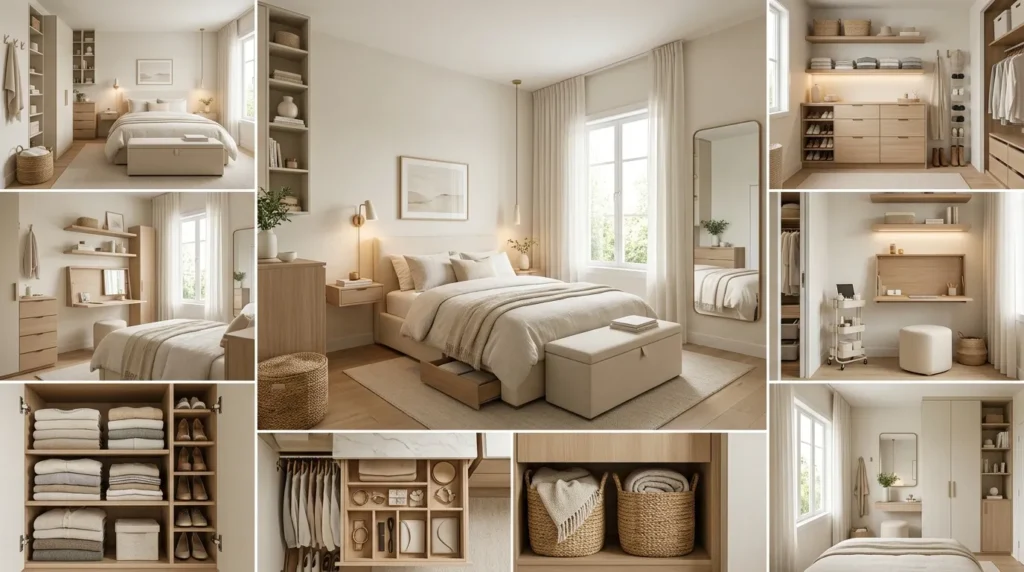
1. Corner Bed Layout
Place the bed against a wall or corner to preserve the center of the room for movement.
2. Floating Nightstands
Replace bulky bedside tables with wall-mounted surfaces that preserve floor space.
3. Floor-To-Ceiling Storage
Use the full height of the room to increase storage without expanding the furniture footprint.
4. Under-Bed Storage
Turn the unused space beneath the bed into practical hidden storage.
5. Wall-Mounted Desk
Create a compact workspace with a desk that occupies minimal floor area.
6. Mirror Wall Placement
Use carefully positioned mirrors to reflect light and create visual depth.
7. Multifunctional Furniture
Choose pieces that perform more than one job in a limited footprint.
8. Window-Side Bed
Use the window wall strategically when the room’s architecture allows it.
9. Vertical Decor
Draw the eye upward with tall shelves, artwork, curtains, and lighting.
10. Minimal Furniture Plan
Reduce unnecessary pieces to create clearer pathways and visual breathing room.
11. Cozy Built-In Nook
Use an awkward corner or recessed area as a customized sleeping or storage zone.
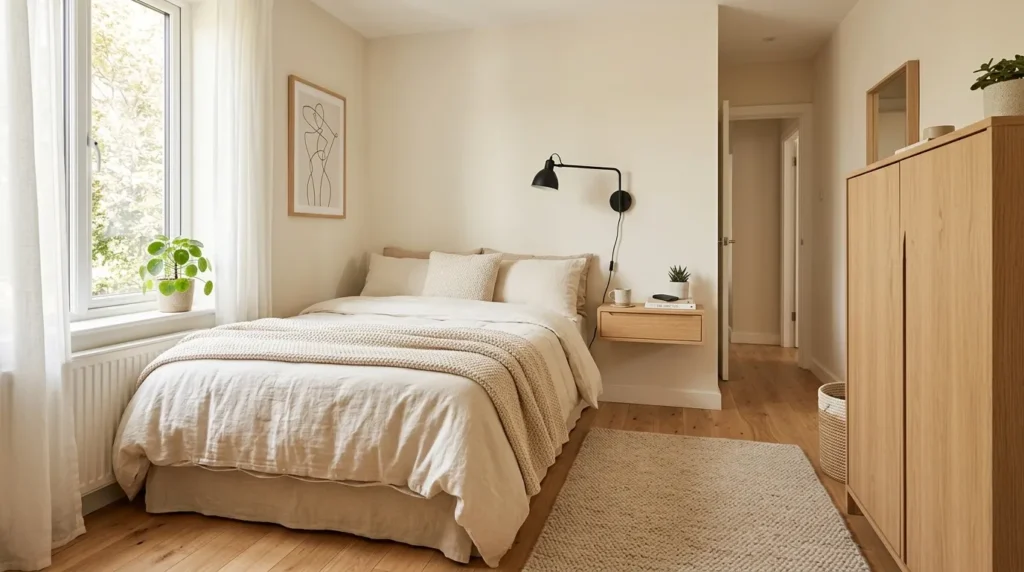
1. Corner Bed Layout
Quick Benefits
- Opens the center of the room
- Creates more usable floor space
- Works well in narrow bedrooms
- Makes furniture placement easier
- Can create a cozy atmosphere
Why It Works
Placing the bed against a wall can be an effective solution when a small bedroom does not have enough room for comfortable circulation around all four sides.
Instead of centering the bed, position one side against a wall and use the remaining space for a clear walking path.
This layout works especially well in bedrooms used by one person. It can also be useful when the room contains a desk or wardrobe that requires more open floor space.
The key is making sure the bed does not interfere with the door or block access to windows.
How To Style It
Use a simple bed frame with a low profile.
Place a slim nightstand or floating shelf on the accessible side.
Add a wall-mounted reading light to eliminate the need for a bulky lamp.
Use layered bedding to make the corner feel intentional and cozy.
A large piece of artwork above the bed can create a focal point without taking floor space.
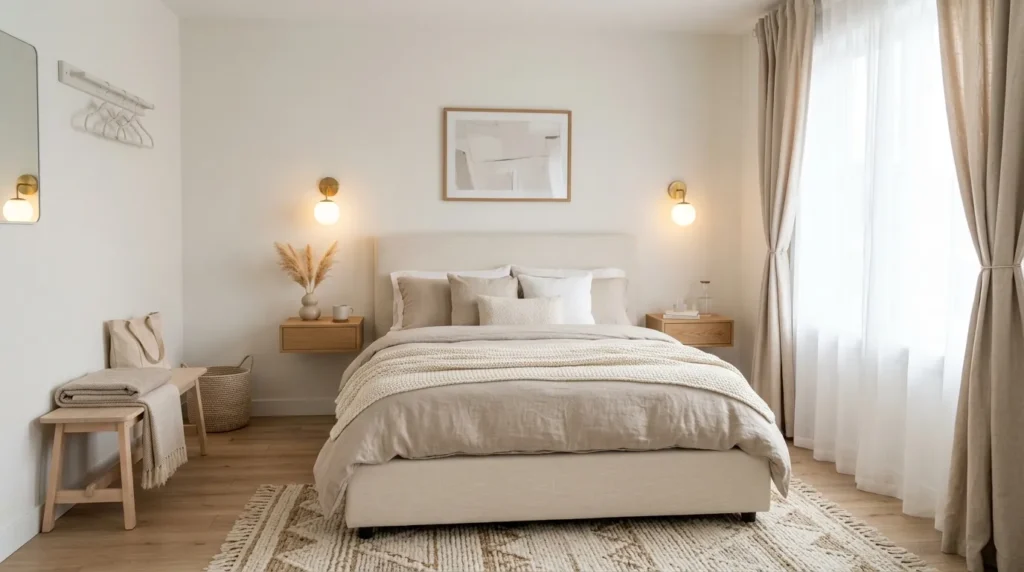
2. Floating Nightstands
Quick Benefits
- Frees floor space
- Creates a clean appearance
- Makes cleaning easier
- Works beside compact beds
- Adds modern character
Why It Works
Traditional nightstands can occupy valuable floor space in a compact bedroom.
A floating nightstand provides a useful surface for a lamp, phone, book, or glass of water while leaving the floor underneath open.
The open area creates a lighter visual appearance and makes the room easier to clean.
Floating furniture also works particularly well with modern and minimalist bedroom designs.
How To Style It
Choose a narrow wall-mounted shelf or compact floating drawer.
Install it at a comfortable height beside the mattress.
Pair it with a wall-mounted sconce instead of a table lamp.
Keep the surface simple with one lamp, a small book stack, or a decorative object.
Choose wood for warmth or white cabinetry for a seamless appearance.
3. Floor-To-Ceiling Storage
Quick Benefits
- Maximizes vertical space
- Reduces floor clutter
- Provides generous storage
- Creates a built-in appearance
- Works well in narrow rooms
Why It Works
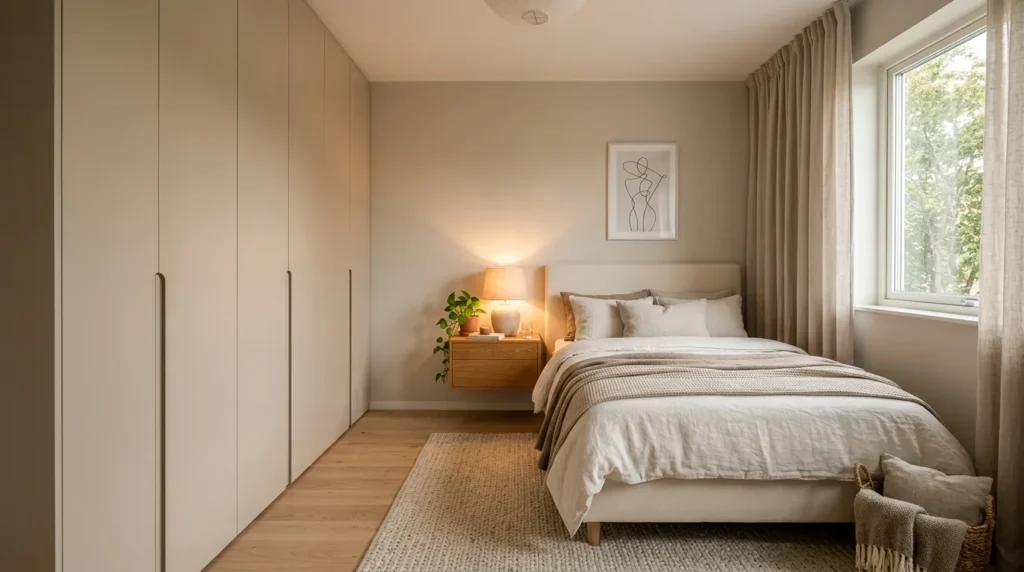
When floor space is limited, the walls become valuable storage territory.
A floor-to-ceiling wardrobe uses vertical space that would otherwise remain empty. This allows clothing, bedding, accessories, and seasonal items to remain organized without adding several separate pieces of furniture.
A tall storage wall can also look more streamlined than multiple cabinets and shelves.
How To Style It
Choose cabinetry that matches or closely relates to the wall color.
Use sliding doors when door clearance is limited.
Reserve upper compartments for less frequently used items.
Add drawers and shelves at convenient heights for everyday clothing.
Use simple handles or handleless doors to maintain a clean appearance.
4. Under-Bed Storage
Quick Benefits
- Uses otherwise wasted space
- Keeps belongings concealed
- Reduces the need for extra cabinets
- Works in many bedroom styles
- Helps organize seasonal items
Why It Works
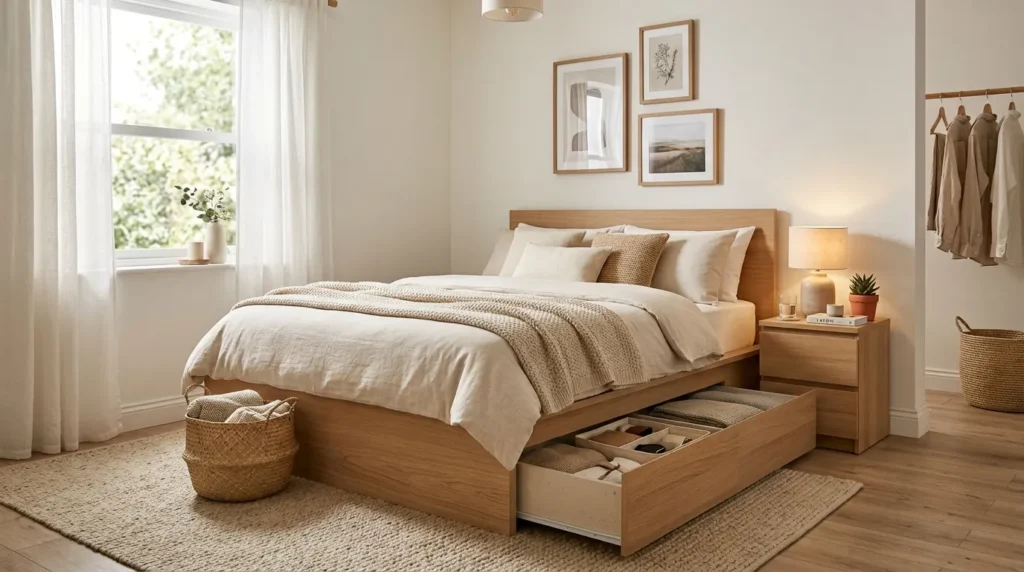
The space beneath the bed is often overlooked, yet it can provide valuable storage in a compact bedroom.
Storage beds with built-in drawers are particularly practical because the compartments are designed to integrate with the frame.
Rolling boxes, baskets, and low-profile containers can also work beneath beds with enough clearance.
The best items for under-bed storage are things that do not require daily access.
How To Style It
Store seasonal clothing, spare bedding, shoes, or luggage underneath.
Use matching containers if the storage remains partially visible.
Choose a bed with integrated drawers when possible for a more finished appearance.
Avoid overfilling the area because crowded storage can make cleaning difficult.
Keep frequently used items elsewhere so the bed remains easy to access.
5. Wall-Mounted Desk
Quick Benefits
- Creates a compact workspace
- Preserves floor area
- Works for bedrooms with limited space
- Can double as a vanity
- Creates a clean modern appearance
Why It Works
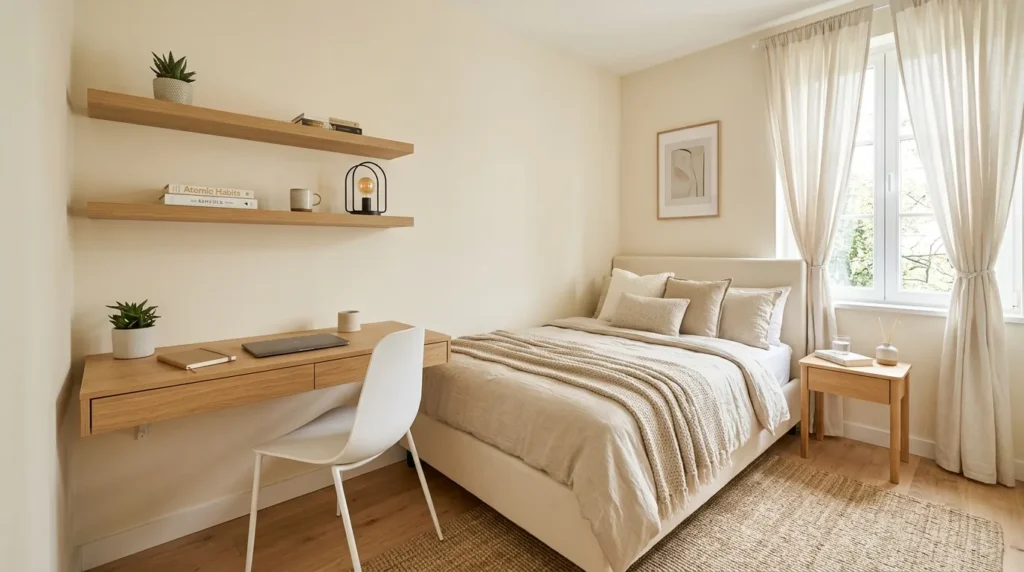
A traditional desk can take up substantial floor space. A wall-mounted version provides a useful work surface without requiring large legs or a deep cabinet underneath.
This can be particularly useful when a bedroom needs to serve as both a sleeping area and a study or work space.
A floating desk can also visually disappear when finished in the same color as the wall.
How To Style It
Choose a shallow desktop appropriate for the tasks performed there.
Mount shelves above it for books and supplies.
Use a compact chair that can slide completely underneath.
Add a wall-mounted lamp to preserve desk space.
Keep cables organized to maintain the clean appearance.
6. Mirror Wall Placement
Quick Benefits
- Reflects natural light
- Adds visual depth
- Creates a larger-feeling room
- Provides practical dressing functionality
- Works with neutral interiors
Why It Works
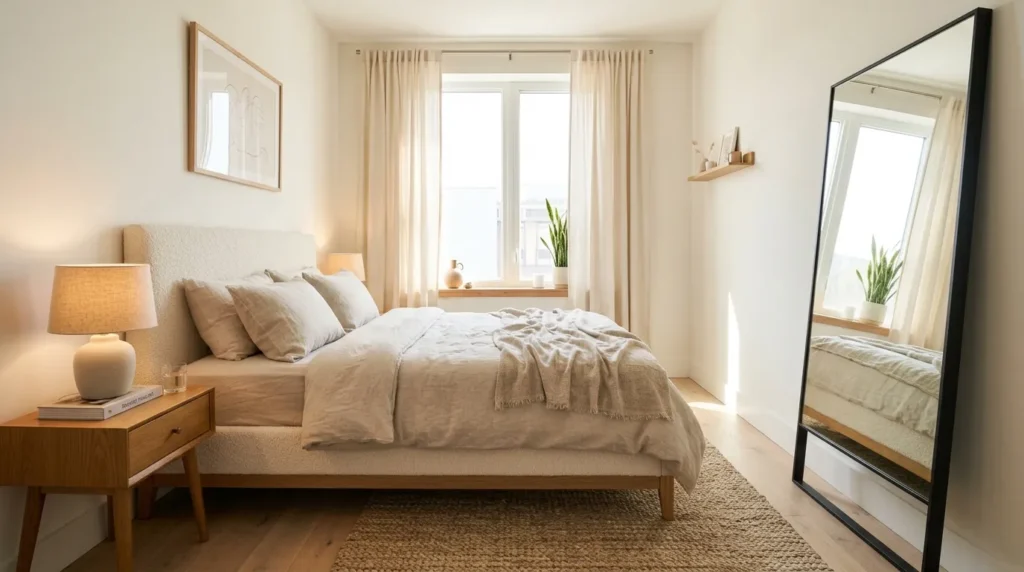
Mirrors can create the perception of additional space by reflecting light and parts of the room.
The placement matters more than simply adding a large mirror. A mirror opposite or near a window can reflect daylight, while a mirrored wardrobe can combine storage and visual expansion.
In small bedrooms, this approach can also eliminate the need for a separate full-length mirror.
How To Style It
Place a full-height mirror where it reflects natural light or an attractive part of the room.
Consider mirrored wardrobe doors if additional storage is required.
Use a simple frame to avoid visual clutter.
Avoid positioning mirrors where they reflect a messy storage area.
Combine reflective surfaces with soft textiles and natural wood to prevent the room from feeling too hard.
7. Multifunctional Furniture
Quick Benefits
- Saves floor space
- Reduces furniture quantity
- Improves flexibility
- Provides multiple functions
- Works especially well in compact rooms
Why It Works
Every piece of furniture matters more when space is limited.
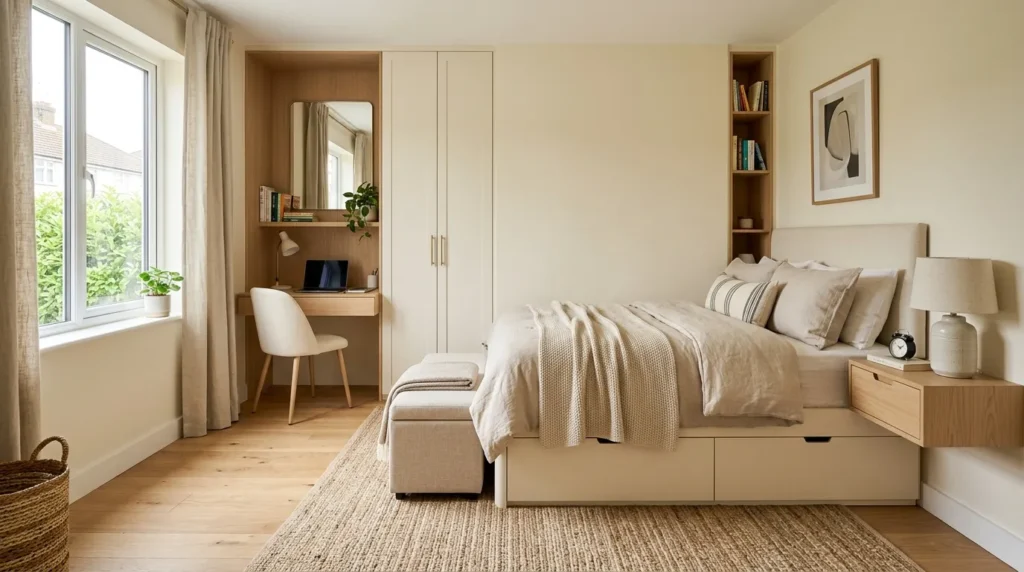
A storage bed can provide sleeping space and drawers. A small bench can offer seating and hidden storage. A wall-mounted desk can function as both a workspace and vanity.
Multifunctional furniture reduces the total number of objects competing for floor space.
How To Style It
Choose a bed with drawers or lift-up storage.
Use a storage ottoman at the foot of the bed.
Install a fold-down desk if the workspace is only needed occasionally.
Choose a dresser with a surface suitable for a mirror and grooming essentials.
Keep the furniture visually simple so the room does not feel overly functional.
8. Window-Side Bed
Quick Benefits
- Uses an otherwise difficult wall
- Can create a cozy sleeping position
- Leaves other walls available
- Works in certain narrow layouts
- Takes advantage of natural light
Why It Works
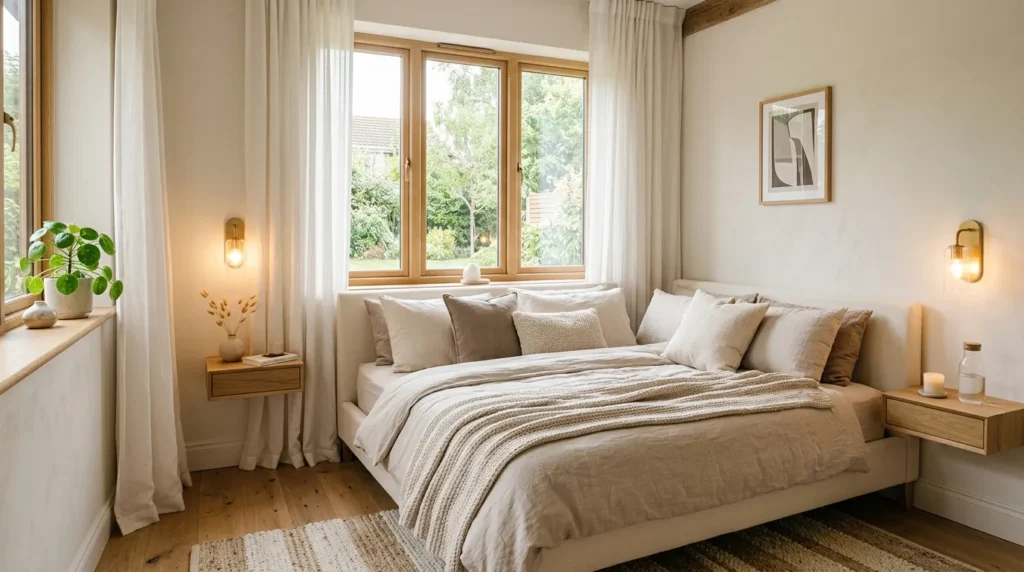
The window wall can sometimes provide the best location for a bed, especially when other walls are occupied by doors or wardrobes.
Instead of treating the window as an obstacle, integrate the bed into the architecture.
This can create a cozy sleeping area while leaving another wall available for storage or a desk.
The layout depends heavily on the location and height of the window, so clearance and ventilation access matter.
How To Style It
Use a low headboard when the window is positioned behind the bed.
Choose light curtains that can open fully.
Avoid blocking necessary window access.
Use a simple color palette to keep the window area visually calm.
Add slim nightstands or wall-mounted shelves on either side when space permits.
9. Vertical Decor
Quick Benefits
- Uses wall space
- Draws attention upward
- Keeps floors clear
- Creates visual height
- Adds personality without clutter
Why It Works
When floor space is limited, decorating vertically can provide visual interest without reducing usable walking area.
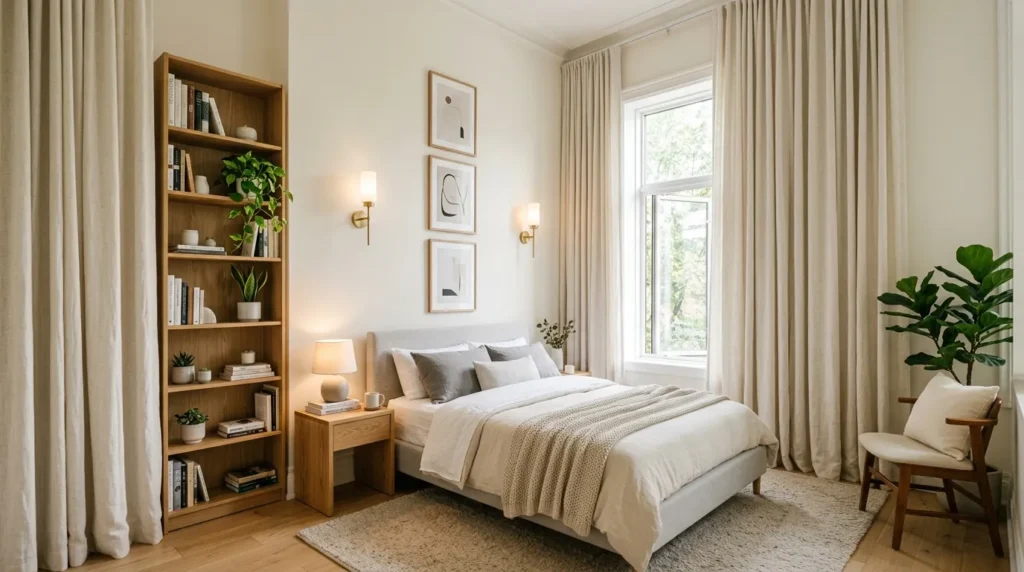
Tall bookshelves, vertically arranged artwork, floor-to-ceiling curtains, and wall-mounted lighting all encourage the eye to move upward.
This approach can make a compact room feel more intentional while providing practical storage or decoration.
How To Style It
Choose a tall narrow bookshelf instead of a wide low unit.
Hang artwork vertically rather than spreading many small pieces across the wall.
Install curtains close to the ceiling and allow them to fall to the floor.
Use wall sconces instead of floor lamps where appropriate.
Keep vertical displays relatively simple to avoid making the walls feel crowded.
10. Minimal Furniture Plan
Quick Benefits
- Creates clearer pathways
- Makes cleaning easier
- Reduces visual clutter
- Makes the room feel more open
- Emphasizes essential furniture
Why It Works
Sometimes the best small-bedroom layout is simply removing furniture that does not serve an important purpose.
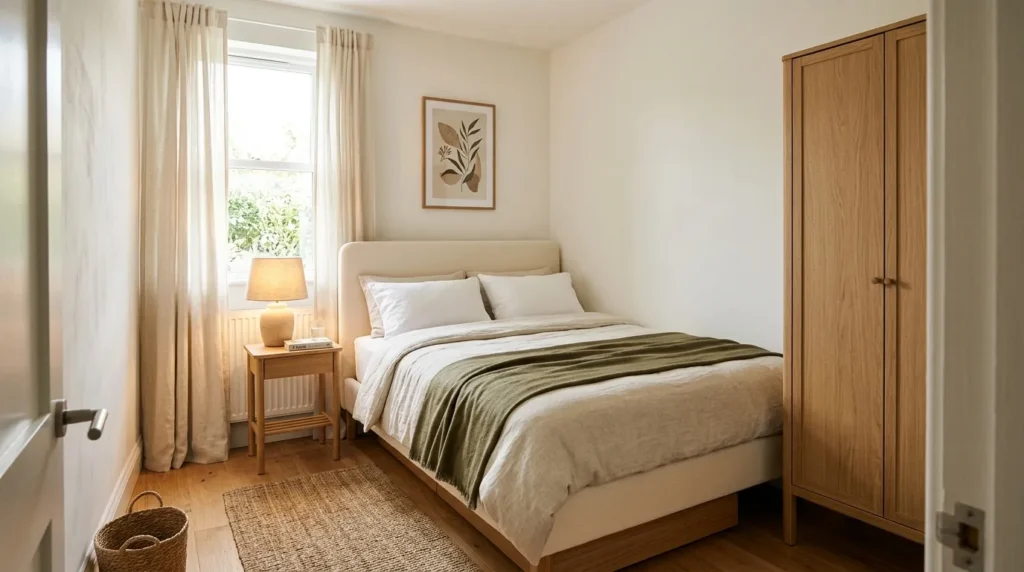
A compact bedroom does not need a bed, two nightstands, dresser, bench, chair, bookshelf, and desk if the room cannot accommodate them comfortably.
Prioritize sleeping, clothing storage, and any activity that genuinely takes place in the room.
Once those essentials are arranged, add only pieces that improve the room’s function.
How To Style It
Start with the bed and wardrobe.
Measure the walking paths around them.
Add one small nightstand if two do not fit comfortably.
Use wall-mounted storage rather than additional floor cabinets.
Choose a small rug instead of a large one if floor clearance is limited.
Keep decorative accessories selective.
11. Cozy Built-In Nook
Quick Benefits
- Uses awkward architecture
- Creates customized storage
- Adds personality
- Makes the room feel intentional
- Works well in unusual layouts
Why It Works
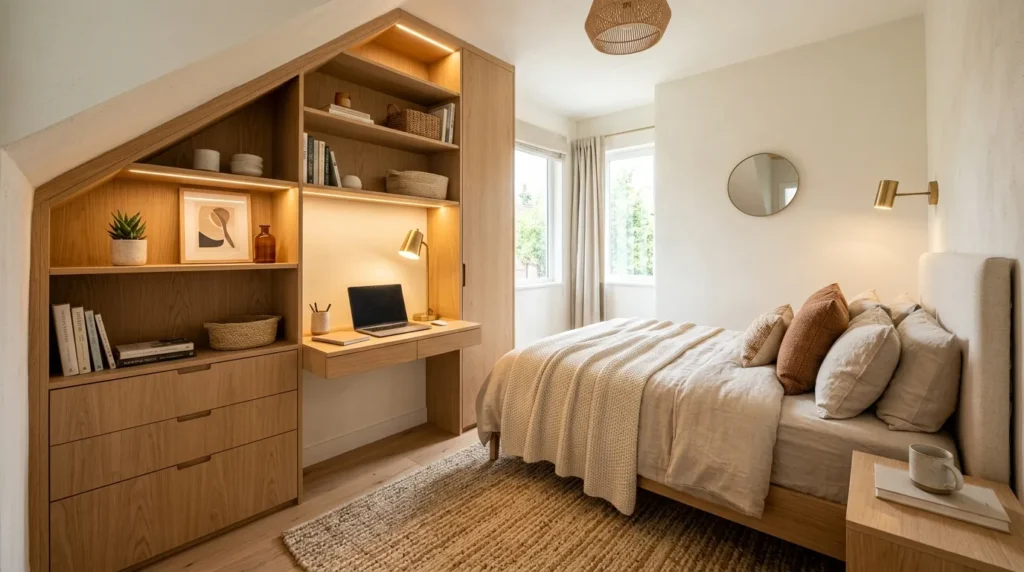
Recessed areas, alcoves, and awkward corners can become valuable features rather than problems.
A built-in nook can accommodate shelves, drawers, a desk, or even a compact bed depending on the room.
Custom storage is particularly useful in small bedrooms because it can follow the exact shape of the available space.
How To Style It
Use cabinetry that matches the walls for a seamless appearance.
Add open shelves for books and decorative pieces.
Use drawers below for hidden storage.
Install warm lighting inside the nook.
If the space becomes a reading or seating area, add a soft cushion and textured throw.
Keep the surrounding decor simple so the built-in feature becomes the room’s focal point.
How To Arrange Furniture in a Small Bedroom
Start by measuring the room, including doors, windows, radiators, closets, and other permanent features.
Then identify the largest piece of furniture: usually the bed.
Place the bed first and check the walking paths around it.
Next, position the wardrobe or main storage. Make sure doors and drawers can open without blocking the bed or doorway.
Add nightstands only if there is sufficient space.
If you require a desk, place it along a wall that receives useful daylight without blocking the window.
The goal is not to fill every available space. It is to create a comfortable path through the room.
Best Bed Placement for a Small Bedroom
The ideal bed position depends on the room’s shape.
A centered bed can create symmetry when there is enough space on both sides.
A corner placement can free the center of a narrow room.
A window-side position can work when other walls are occupied by doors or wardrobes.
A daybed can also be useful in a very compact room because it can function as both seating and sleeping furniture.
Before finalizing the position, make sure the bed does not obstruct doors, windows, heating elements, or necessary storage access.
Small Bedroom Storage Ideas
Storage is one of the biggest challenges in a compact bedroom.
Consider:
- Under-bed drawers
- Floor-to-ceiling wardrobes
- Floating nightstands
- Wall-mounted shelves
- Over-door organizers
- Built-in cabinets
- Storage benches
- Tall narrow bookcases
- Floating desks
- Hidden drawer systems
Use vertical space wherever possible.
Closed storage can also help maintain a calmer appearance because everyday clutter remains concealed.
How to Make a Small Bedroom Feel Bigger
A simple palette can reduce visual fragmentation.
Light walls, similar-colored curtains, and furniture that relates closely to the wall color can create a more continuous appearance.
Mirrors can add reflection, while floor-to-ceiling curtains can emphasize height.
Keep pathways clear and avoid placing too many small objects around the room.
Furniture with visible legs can also create more visible floor area compared with heavy pieces that sit directly on the floor.
Common Small Bedroom Layout Mistakes
One common mistake is choosing furniture based only on appearance rather than scale.
An oversized bed or deep wardrobe can consume space needed for comfortable movement.
Another mistake is placing furniture directly in front of windows without considering natural light or access.
Too many small pieces can also make a bedroom feel more cluttered than a few larger, purposeful pieces.
Finally, avoid filling every wall. Empty space can help a small bedroom feel calmer and more spacious.
Frequently Asked Questions
What is the best layout for a small bedroom?
The best layout depends on the room’s shape, but a common strategy is to place the bed first and arrange storage around the remaining space. Corner beds can work well in narrow rooms, while centered beds provide better symmetry when enough clearance exists.
Where should I put my bed in a small bedroom?
Place the bed where it leaves a comfortable walking path and does not block doors, windows, heating elements, or storage. Centering the bed works when there is sufficient side clearance. In very narrow rooms, placing one side against a wall can create more usable floor space.
How can I fit more storage into a small bedroom?
Use vertical and hidden storage. Floor-to-ceiling wardrobes, under-bed drawers, floating shelves, wall-mounted cabinets, and storage benches can increase capacity without adding large furniture footprints.
Is a corner bed a good idea for a small bedroom?
A corner bed can be useful when floor space is limited, particularly for a single occupant. It frees more central floor area and can make room for a desk or storage. The tradeoff is reduced access to one side of the bed.
How can I fit a desk into a small bedroom?
A floating or shallow wall-mounted desk can provide a workspace without consuming as much floor area as a traditional desk. A compact chair that slides underneath keeps the area clear when the desk is not being used.
What colors make a small bedroom look larger?
Light and warm colors such as cream, soft white, pale beige, light gray, and muted green can help create an airy appearance. Using similar tones across walls, curtains, and large furniture can reduce visual contrast and make the room feel more continuous.
How do I make a small bedroom look less cluttered?
Reduce unnecessary furniture, use concealed storage, keep surfaces mostly clear, and establish designated locations for everyday belongings. A limited color palette and consistent materials can also make the room feel more visually organized.
Related Articles
- 10 Small Bedroom Ideas for Better Storage
- 10 Cozy Bedroom Ideas for a Relaxing Space
- 10 Modern Bedroom Ideas with Smart Layouts
- 10 Bedroom Organization Ideas for a Calm Space
- 10 Small Apartment Bedroom Ideas That Maximize Space
Conclusion
A small bedroom does not require sacrificing comfort or style. The most effective approach is to make every part of the layout work harder while keeping enough open space for comfortable movement.
Start with the bed, establish clear pathways, and then add storage according to the room’s actual needs. Floating nightstands, floor-to-ceiling wardrobes, under-bed drawers, and wall-mounted desks can provide valuable functions without consuming unnecessary floor space.
Color and decoration also play an important role. A restrained palette, strategically placed mirror, vertical artwork, and floor-to-ceiling curtains can create a more open visual impression.
The best small bedroom is not necessarily the one with the most storage or the fewest pieces of furniture. It is the one where everything has a clear purpose and the layout supports everyday routines.
Try one change at a time. Moving the bed, replacing a bulky nightstand, adding vertical storage, or clearing an unnecessary piece of furniture can noticeably improve how the room functions.
With thoughtful planning, even a compact bedroom can feel organized, comfortable, and beautifully designed.