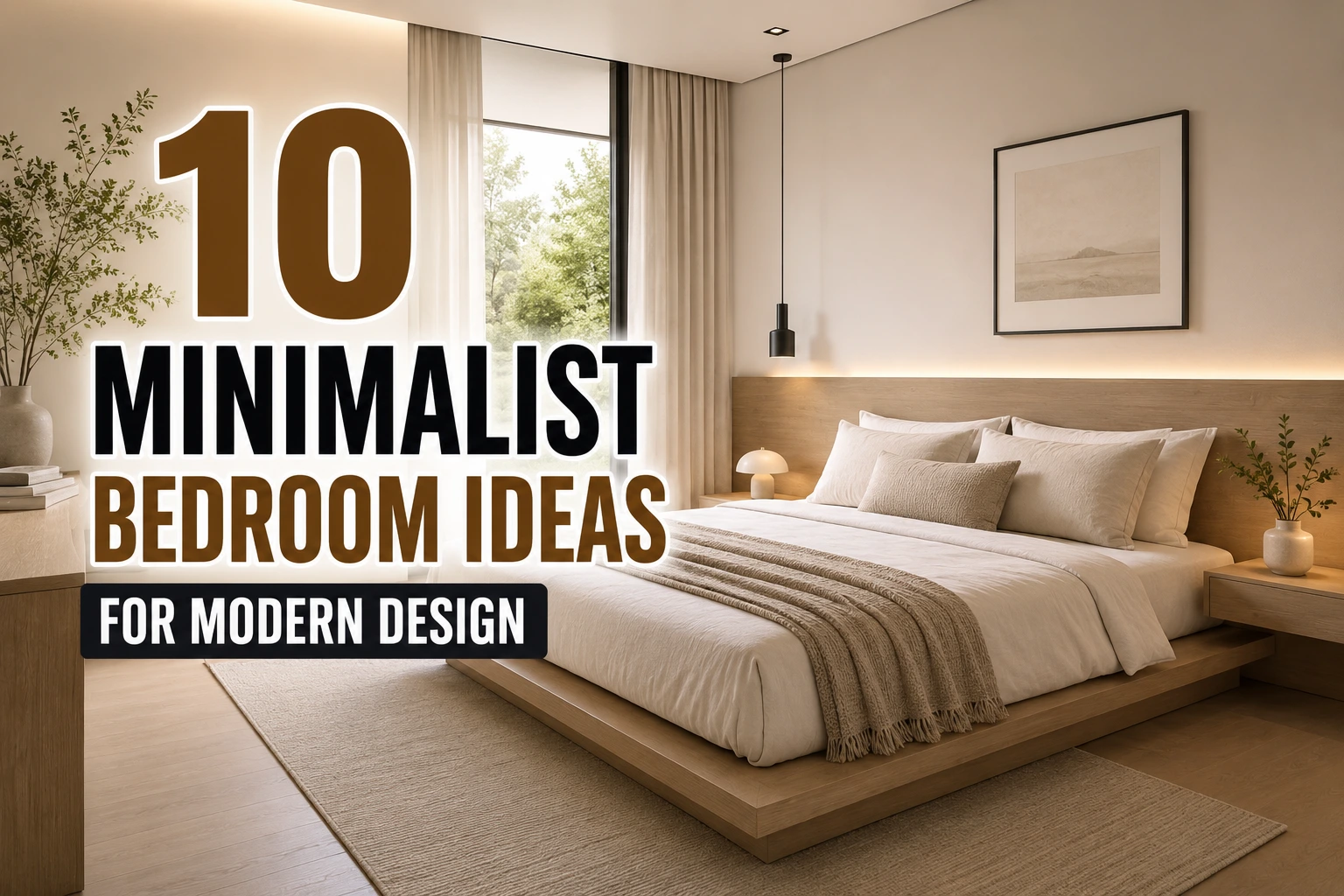
10 Minimalist Bedroom Ideas for Modern Design
A minimalist bedroom can feel calm, comfortable, and stylish without looking empty. The secret is choosing fewer elements and giving each one a clear purpose. Instead of filling the room with decorations, modern minimalist design focuses on clean lines, thoughtful furniture placement, soft textures, and a restrained color palette.
This approach works particularly well in bedrooms because the space already has a natural purpose: rest. Too much visual clutter can make the room feel busy, while a carefully edited design creates a quieter atmosphere.
Modern minimalism also doesn’t mean everything has to be white. Warm beige, soft gray, taupe, muted green, natural wood, charcoal, and cream can all create beautiful combinations. The key is consistency.
I’ve noticed that minimalist bedrooms often look best when texture replaces excessive decoration. A linen duvet, wool-style rug, wooden nightstand, upholstered headboard, or woven basket can add depth without making the room feel crowded.
Another advantage is flexibility. Once the larger pieces are simple and versatile, you can change smaller details as your taste develops. A new throw, artwork, or bedside lamp can refresh the room without requiring a complete redesign.
Whether you’re decorating a small apartment bedroom or a spacious primary suite, these modern minimalist ideas focus on creating a space that feels intentional, functional, and genuinely comfortable.
Table of Contents
1. Warm Neutral Palette
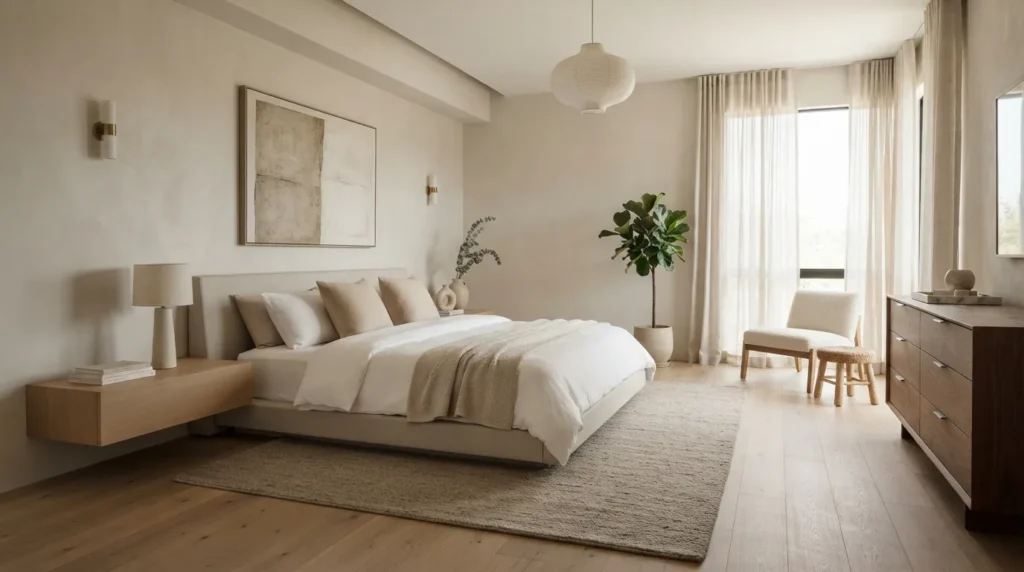
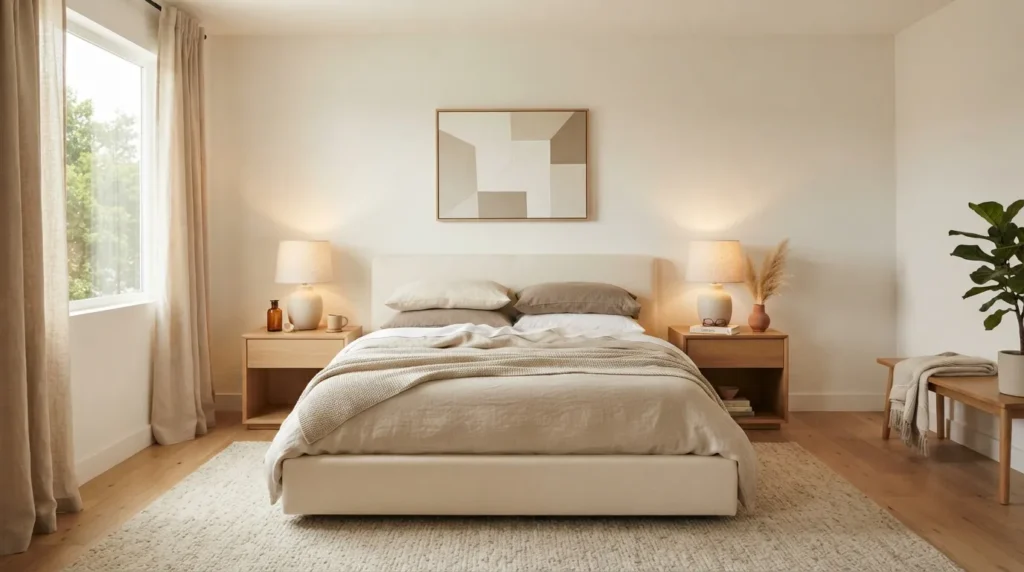
Cream, beige, and soft taupe create a modern minimalist bedroom with warmth and depth.
2. Low Profile Bed
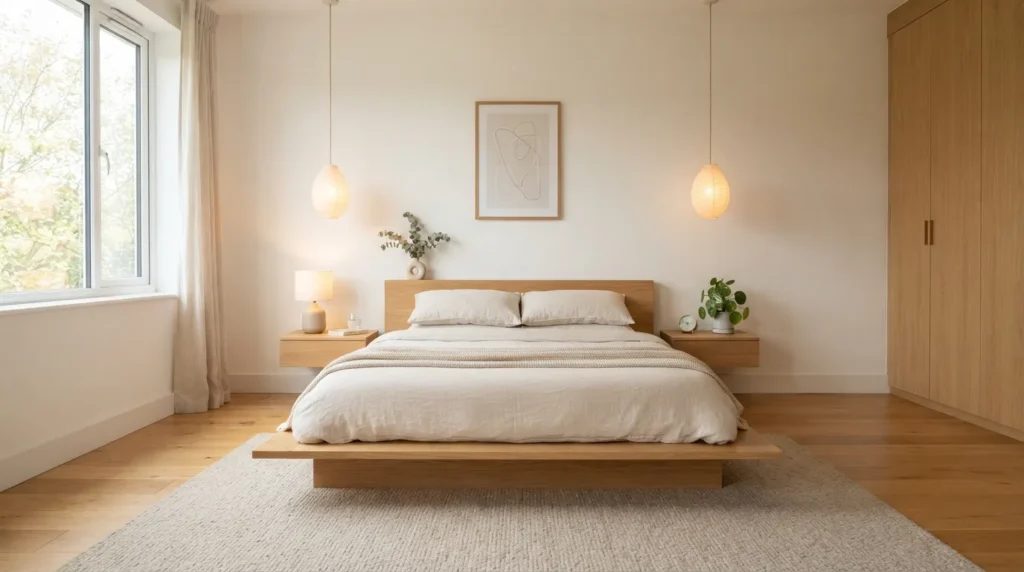
A streamlined bed creates a clean focal point while making the room feel visually open.
3. Natural Wood Details
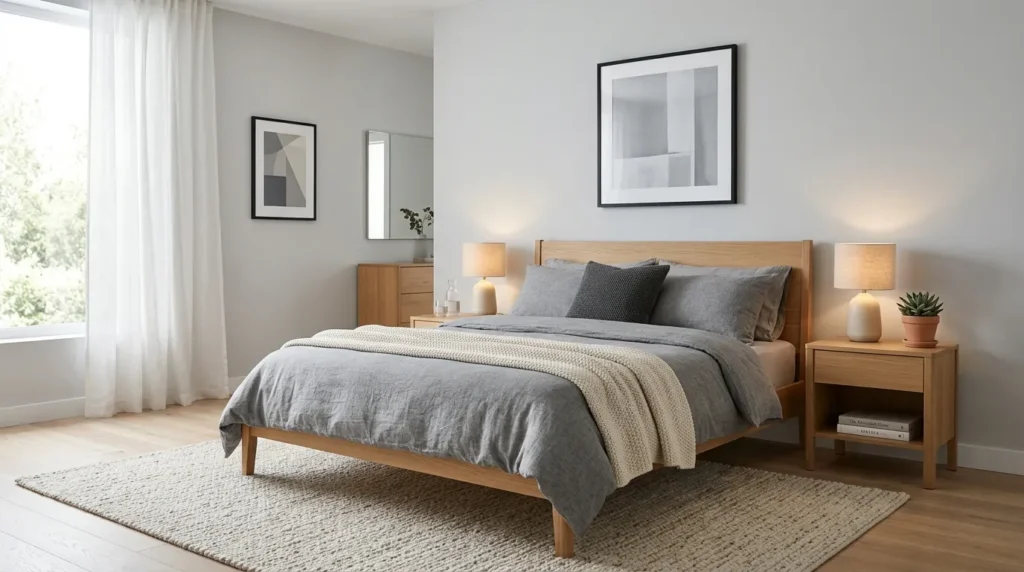
Wood furniture introduces warmth and texture into a restrained modern palette.
4. Soft Gray Layers
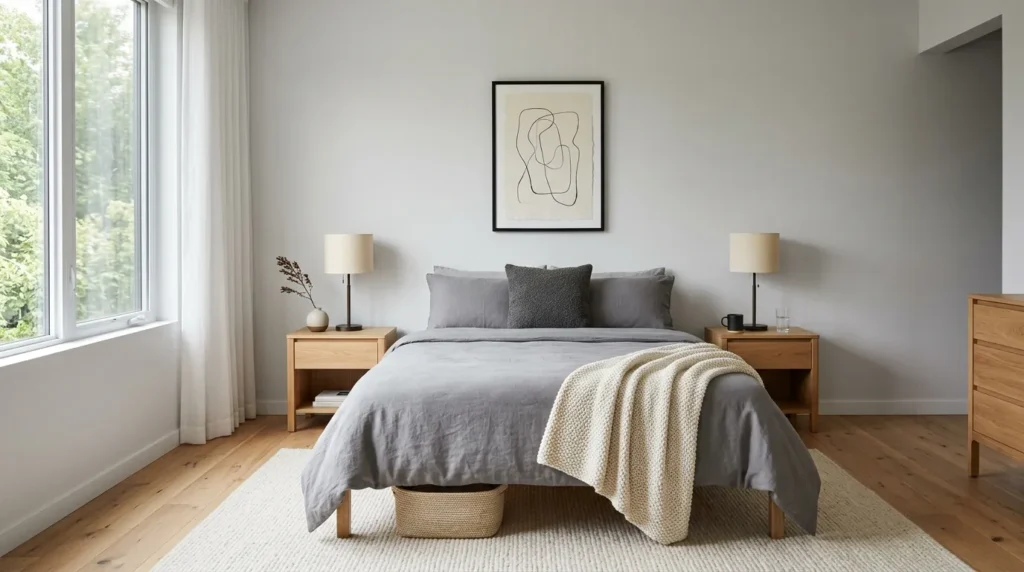
Different shades of gray create a sophisticated minimalist bedroom without relying on bright colors.
5. Minimalist Lighting
Simple lighting fixtures add warmth and function while keeping visual clutter low.
6. Statement Headboard
One strong headboard creates visual interest without requiring extensive wall decoration.
7. Floating Nightstands
Wall-mounted bedside surfaces maximize floor space and reinforce clean modern lines.
8. Textured Neutral Bedding
Layered fabrics add comfort and dimension while maintaining a minimalist appearance.
9. Simple Accent Wall
A restrained wall treatment adds architectural character without overwhelming the room.
10. Clutter-Free Layout
Thoughtful furniture placement creates a spacious, functional, and peaceful bedroom.
1. Warm Neutral Palette
Quick Benefits
- Creates a calming atmosphere
- Makes modern furniture feel softer
- Works in small and large rooms
- Easy to update
- Complements natural materials
Why It Works
Warm neutrals are one of the easiest ways to make minimalism feel inviting. Instead of using bright white throughout the room, combine cream, beige, oatmeal, taupe, and soft brown for subtle variation.
This approach creates depth without introducing visual noise. The room can remain simple while still feeling layered and comfortable.
Natural light also works beautifully with warm neutrals. During the day, subtle differences between the wall, bedding, and furniture become more visible. In the evening, warm lamps emphasize the cozy side of the palette.
The key is to use several related shades rather than one identical color everywhere. Slight variations make the room feel intentional.
How To Style It
Choose warm white or light beige for the walls.
Use cream bedding with a slightly darker throw and a textured neutral rug.
Add light or medium wood furniture to introduce natural contrast.
Keep artwork simple, using soft abstract shapes or muted botanical prints.
Choose warm lighting rather than very cool bulbs so the neutral palette remains inviting at night.
2. Low Profile Bed
Quick Benefits
- Creates a streamlined appearance
- Makes ceilings feel taller
- Works beautifully with modern interiors
- Reduces visual bulk
- Keeps attention on the bedding and architecture
Why It Works
A low-profile bed can instantly make a bedroom feel more contemporary. With less visual height, the room often appears more open and uncluttered.
This design works particularly well in smaller bedrooms because the furniture doesn’t dominate the space.
A simple upholstered platform bed can provide softness, while a wood platform frame creates a more architectural appearance.
Because the bed becomes a major visual element, bedding becomes especially important. Simple layers and restrained colors reinforce the minimalist design.
How To Style It
Choose a platform-style bed with clean lines and minimal detailing.
For warmth, consider light oak, walnut, or natural wood.
For a softer look, choose an upholstered frame in cream, beige, gray, or taupe.
Use simple bedding with one or two layers of texture.
Avoid excessive decorative pillows that can make the bed feel visually busy.
Keep the area around the bed open whenever possible.
3. Natural Wood Details
Quick Benefits
- Adds warmth
- Prevents minimalism from feeling cold
- Works with neutral colors
- Introduces natural texture
- Creates a timeless appearance
Why It Works
Natural wood is one of the most effective materials for balancing modern minimalism. Its grain provides visual texture without requiring patterns or decorative objects.
A wood bed, nightstand, dresser, bench, or floating shelf can become a subtle focal point.
Light oak works especially well in bright Scandinavian-inspired spaces, while walnut and darker wood can create a richer modern appearance.
You don’t need several matching wood pieces. One or two substantial elements may be enough.
How To Style It
Choose one primary wood tone and repeat it once or twice.
Pair a light wood bed with cream bedding and beige walls for a soft modern look.
For more contrast, combine walnut furniture with warm white walls and light neutral textiles.
Avoid mixing too many wood finishes unless they have clearly complementary undertones.
Let the natural grain remain visible instead of covering the room with decorative objects.
4. Soft Gray Layers
Quick Benefits
- Creates a sophisticated palette
- Works with modern furniture
- Provides subtle contrast
- Feels calm and understated
- Easy to coordinate
Why It Works
Gray is a natural fit for modern minimalist bedrooms because it provides contrast without becoming visually intense.
Instead of using one gray shade throughout the room, combine several tones. Pale gray walls can work with medium-gray bedding, charcoal accents, and warm beige details.
Adding warmer materials prevents gray from becoming too cool. Wood, cream textiles, and warm lighting can balance the palette beautifully.
This style also works well in bedrooms with contemporary furniture because gray naturally complements black metal, glass, wood, and upholstered surfaces.
How To Style It
Use pale gray on the walls or as the main bedding color.
Add medium-gray cushions or a throw for tonal layering.
Introduce charcoal through a lamp, artwork frame, or small accent.
Balance the palette with cream bedding or warm wood.
Use a textured rug to soften the overall appearance.
Keep patterns subtle so the monochromatic palette remains clean.
5. Minimalist Lighting
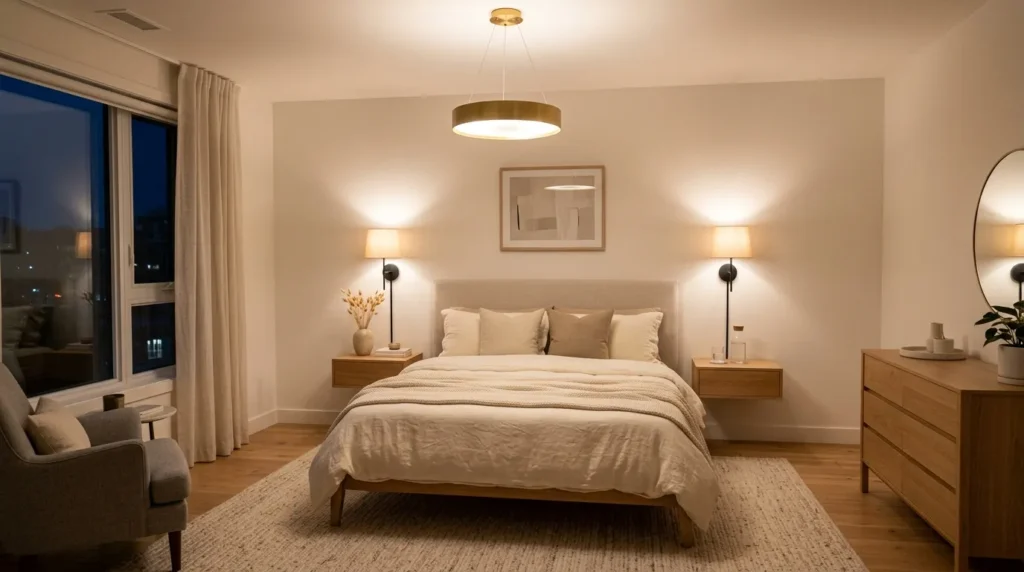
Quick Benefits
- Reduces visual clutter
- Creates a modern focal point
- Improves nighttime comfort
- Highlights architectural details
- Works well in small bedrooms
Why It Works
Lighting is often one of the most important elements in a minimalist bedroom because there are fewer decorative objects competing for attention.
A sculptural pendant, streamlined wall sconce, or simple bedside lamp can provide both function and visual interest.
Wall-mounted lighting is particularly useful when floor and bedside surfaces are limited.
Rather than filling the room with multiple decorative lamps, choose a few carefully positioned fixtures.
How To Style It
Place matching sconces on either side of the bed for a symmetrical appearance.
For a more dramatic design, use one simple pendant above each bedside table.
Choose fixtures with clean geometric forms and finishes that complement the furniture.
Use warm bulbs for a comfortable evening atmosphere.
Avoid oversized fixtures unless the room has enough ceiling height and open space to support them.
6. Statement Headboard
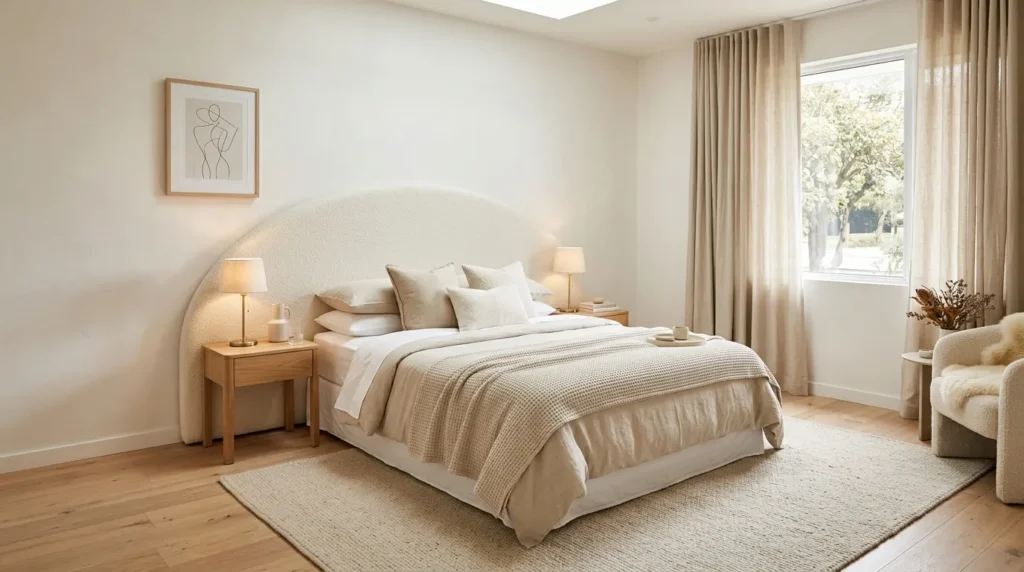
Quick Benefits
- Creates a strong focal point
- Reduces the need for wall decor
- Adds texture
- Makes the bed feel substantial
- Works with neutral palettes
Why It Works
Minimalist rooms don’t have to be visually plain. A single strong feature can provide all the personality the space needs.
A large upholstered headboard is particularly effective because it adds softness and scale while maintaining a simple silhouette.
A wood-paneled headboard can create a more architectural appearance, while a curved upholstered design can soften a modern bedroom.
When the headboard is the focal point, the rest of the wall can remain relatively bare.
How To Style It
Choose a headboard that extends slightly beyond the mattress width.
Neutral upholstery such as cream, taupe, or soft gray works with many palettes.
For a warmer design, choose natural wood with visible grain.
Keep the bedding relatively simple so the headboard remains the primary feature.
Use one small piece of artwork or a subtle wall light if the wall still feels too empty.
7. Floating Nightstands
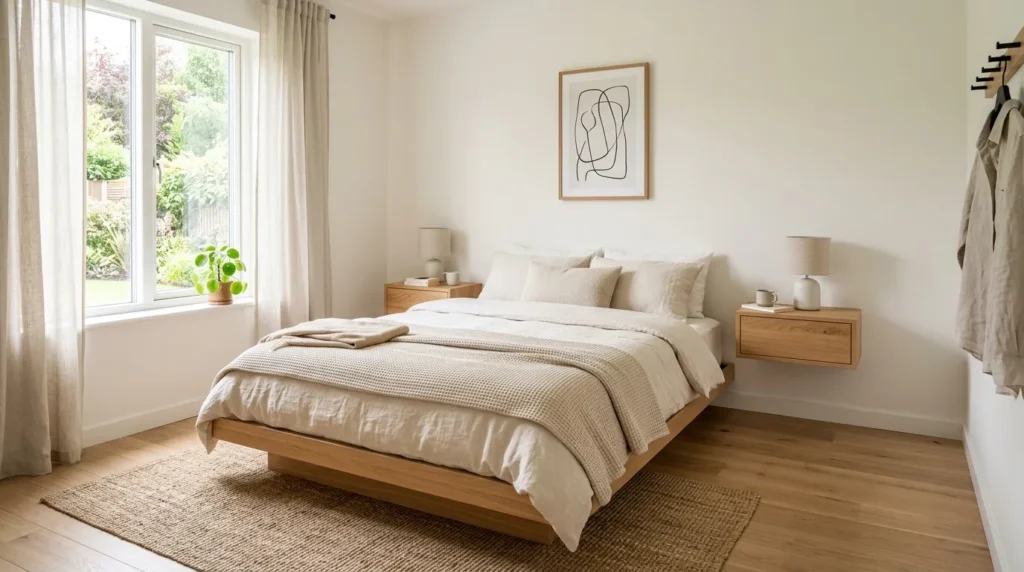
Quick Benefits
- Saves floor space
- Creates clean lines
- Makes cleaning easier
- Works well in small rooms
- Gives the bedroom a custom appearance
Why It Works
Floating nightstands are especially useful in minimalist bedrooms because they visually reduce the amount of furniture touching the floor.
The open area underneath creates a lighter appearance and makes the room easier to clean.
A simple wall-mounted shelf can serve as a bedside surface, while a larger floating drawer provides hidden storage.
This approach is particularly useful for apartments and compact bedrooms where every inch matters.
How To Style It
Install one floating shelf or drawer on each side of the bed when possible.
Keep the surface limited to essentials such as a small lamp, book, or glass of water.
Choose wood for warmth or painted white for a seamless appearance.
Coordinate the hardware and finish with other furniture.
Make sure the mounting system is appropriate for the wall structure and intended weight.
8. Textured Neutral Bedding
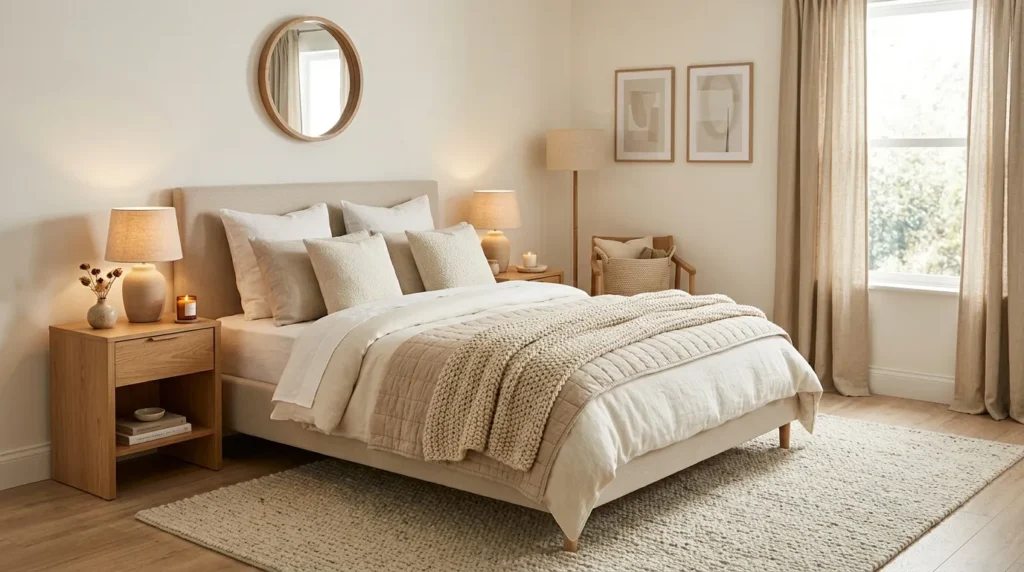
Quick Benefits
- Adds comfort
- Creates visual depth
- Keeps the room uncluttered
- Works with almost any palette
- Makes simple furniture feel more inviting
Why It Works
Texture is one of the most important tools in minimalist design. When patterns and decorative objects are limited, fabrics provide the visual variation that keeps the room interesting.
Linen, cotton, boucle, wool-style blankets, knitted throws, and quilted bedding can all create subtle layers.
The colors can remain almost identical while the different textures make each element visually distinct.
This is also an easy update because bedding can be changed without altering the furniture or walls.
How To Style It
Start with white, cream, beige, or soft gray sheets and a simple duvet.
Add one textured blanket folded across the foot of the bed.
Use two or three cushions in different fabrics rather than many decorative pillows.
Choose a quilt or coverlet with subtle texture.
Keep patterns minimal and let the fabric surfaces create the visual interest.
9. Simple Accent Wall
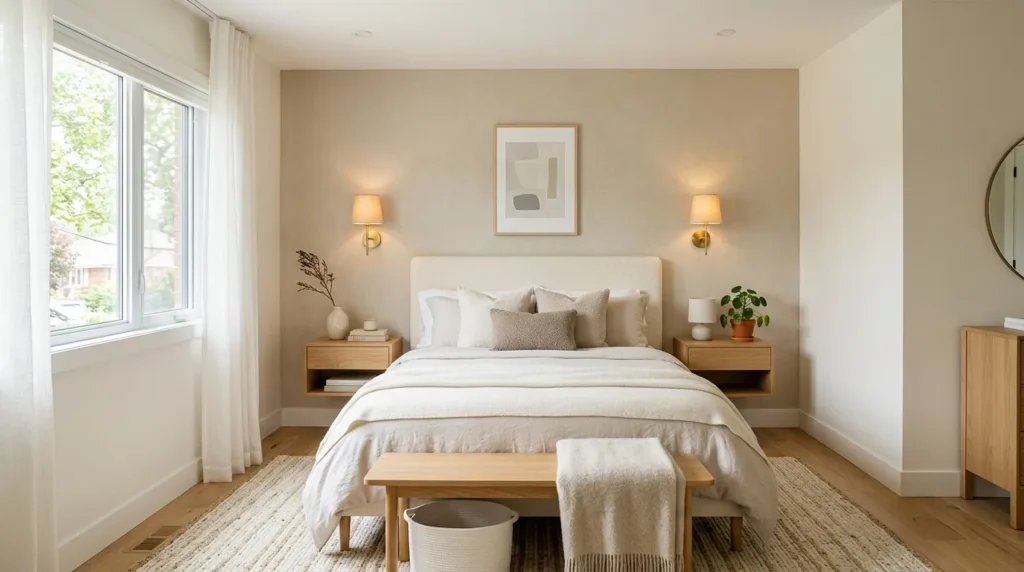
Quick Benefits
- Adds architectural interest
- Creates a focal point
- Works with restrained decor
- Can be inexpensive
- Makes the bed area feel intentional
Why It Works
A minimalist accent wall doesn’t have to involve bold color. Subtle treatments such as warm beige paint, vertical wood slats, limewash-inspired finishes, or simple geometric molding can add dimension.
The wall behind the bed is usually the best location because it naturally functions as the room’s focal point.
A restrained wall treatment allows you to create personality without adding multiple decorative pieces.
How To Style It
Choose one wall, preferably behind the bed.
For an affordable update, use a slightly darker version of the room’s main wall color.
For more texture, consider simple wood slats or narrow vertical paneling.
Keep the furniture and bedding understated so the wall remains the visual feature.
Avoid combining a busy accent wall with heavily patterned bedding.
10. Clutter-Free Layout
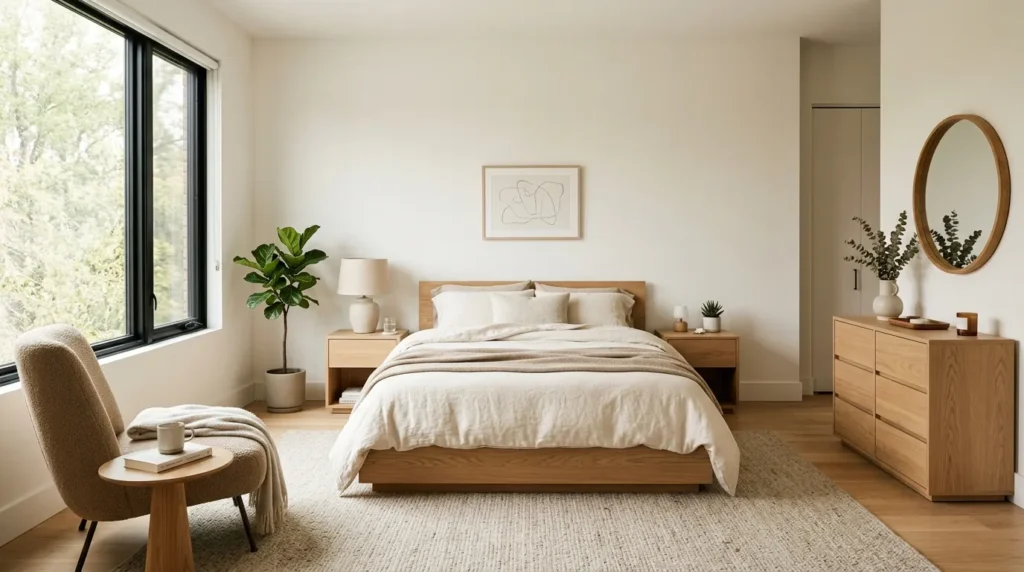
Quick Benefits
- Makes the room feel larger
- Improves circulation
- Creates a calmer atmosphere
- Makes cleaning easier
- Highlights important furniture
Why It Works
Minimalism is as much about layout as decoration. Even a beautifully designed bedroom can feel crowded if furniture blocks pathways or too many pieces compete for attention.
Start with the bed and establish clear walking space around it. Then place storage and seating according to how you actually use the room.
Keeping frequently used surfaces clear also contributes to the minimalist appearance.
A room doesn’t have to be completely empty. It simply needs enough open space for the important elements to breathe.
How To Style It
Position the bed where it doesn’t interfere with doors, windows, or major walking paths.
Keep nightstands proportionate to the bed and room size.
Choose one dresser rather than several small storage pieces when possible.
Use hidden storage for items that create visual clutter.
Leave some empty floor and wall space intentionally.
Before buying anything new, remove unused furniture and see how much the room improves.
Frequently Asked Questions
How do I make a bedroom minimalist?
Start by removing unnecessary furniture and decorative objects. Choose a limited color palette, simple furniture silhouettes, and functional storage. Layer texture through bedding, rugs, and curtains rather than relying on numerous accessories. Keep frequently used surfaces clear and allow some open space around the main furniture.
What colors work best for a minimalist bedroom?
Warm white, cream, beige, taupe, soft gray, muted green, dusty blue, and natural wood tones all work well. A monochromatic palette can create a sophisticated look, while combining two or three closely related shades adds depth. Warm undertones can help prevent a minimalist bedroom from feeling cold.
Can a minimalist bedroom still be cozy?
Absolutely. Minimalism focuses on intentional design rather than removing comfort. Use soft bedding, textured rugs, linen curtains, upholstered furniture, warm lighting, and natural wood to create a cozy atmosphere. The key is choosing a few comfortable elements instead of filling the room with decorative objects.
How do I make a small bedroom look minimalist?
Start with appropriately scaled furniture and remove anything that isn’t useful. Use vertical storage, floating nightstands, under-bed storage, and wall-mounted lighting to preserve floor space. A restrained color palette and clear walking paths can make the room feel more open and organized.
What furniture belongs in a minimalist bedroom?
The essentials typically include a bed, bedside surface, and practical clothing storage. Depending on the room, you might also include a small bench, desk, or reading chair. Choose furniture with simple silhouettes and avoid adding pieces simply to fill empty space.
How do I decorate minimalist bedroom walls?
Choose one or two intentional elements rather than covering every wall. A large abstract artwork, subtle accent wall, wood paneling, or simple pair of sconces can provide enough visual interest. Leave some walls completely empty so the room maintains its spacious appearance.
Is minimalist design expensive?
It doesn’t have to be. Minimalism can actually work well with a limited budget because fewer pieces are required. Focus on decluttering, rearranging furniture, using simple textiles, improving lighting, and choosing versatile pieces. A carefully edited room can look polished without expensive decoration.
Final Thoughts
A modern minimalist bedroom is less about having almost nothing and more about making every element count. When furniture, color, lighting, and texture work together, the room can feel both sophisticated and genuinely comfortable.
Start with the largest visual elements: the walls, bed, flooring, and major furniture. Choose a restrained palette and then introduce warmth through wood, textiles, and lighting.
If your room feels cluttered, resist the urge to buy more storage immediately. First remove items you no longer use and reconsider the layout. You may discover that the room has more potential than it seemed.
Texture can bring personality to an otherwise simple space. A linen duvet, soft rug, upholstered headboard, or natural wood nightstand can create plenty of visual interest without compromising the clean aesthetic.
You also don’t need to finish the entire transformation in one weekend. Start with one area, such as the bed or lighting, and build from there.
The most successful minimalist bedrooms leave enough space to breathe while still giving you everything you need for a comfortable daily routine.
Related Articles
- 10 Bedroom Ideas for Every Style
- 10 Bedroom Renovation Ideas That Are Budget Friendly
- How to Decorate a Bedroom That Feels Like Home
- 10 Neutral Bedroom Ideas With Soft Cozy Layers
- 10 Small Bedroom Ideas With Functional Storage