
11 Living Room Wall Decoration Ideas for a Cozy Home
Blank living room walls can make an otherwise comfortable home feel unfinished. You may have a beautiful sofa, a soft rug, and plenty of cozy pillows, yet the room can still lack warmth simply because the walls are empty. The good news is that you do not need a major renovation or an expensive collection of artwork to change that.
Cozy wall decorating is really about creating layers, personality, and visual warmth. A large piece of artwork can instantly anchor a room, while a collection of family photographs can make it feel personal. Shelves, mirrors, woven pieces, wall sconces, and even textured finishes can add dimension without making the room feel crowded.
In my experience, the most inviting living rooms rarely rely on one decorating trick. Instead, they combine a few different elements that work together. A neutral wall might feature a large landscape painting, a wooden frame, a soft lamp, and a small shelf with meaningful objects. These details give the eye somewhere to travel while making the room feel more lived-in.
The best part is that many of these ideas work in apartments, rentals, small homes, and larger family rooms alike. You can choose one dramatic focal point or gradually build a gallery-style arrangement over time.
Whether your decorating style leans modern, farmhouse, traditional, Scandinavian, boho, or simply comfortable and casual, these cozy living room wall ideas can help you turn empty walls into an inviting part of your home.
Table of Contents
1. Oversized Landscape Art
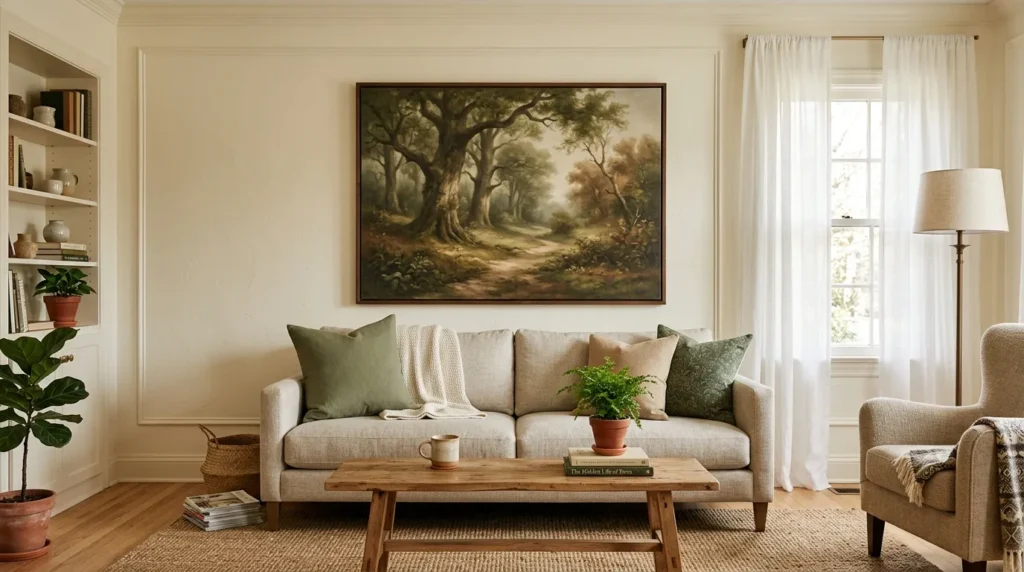
Use one large nature-inspired artwork to create a warm and calming focal point.
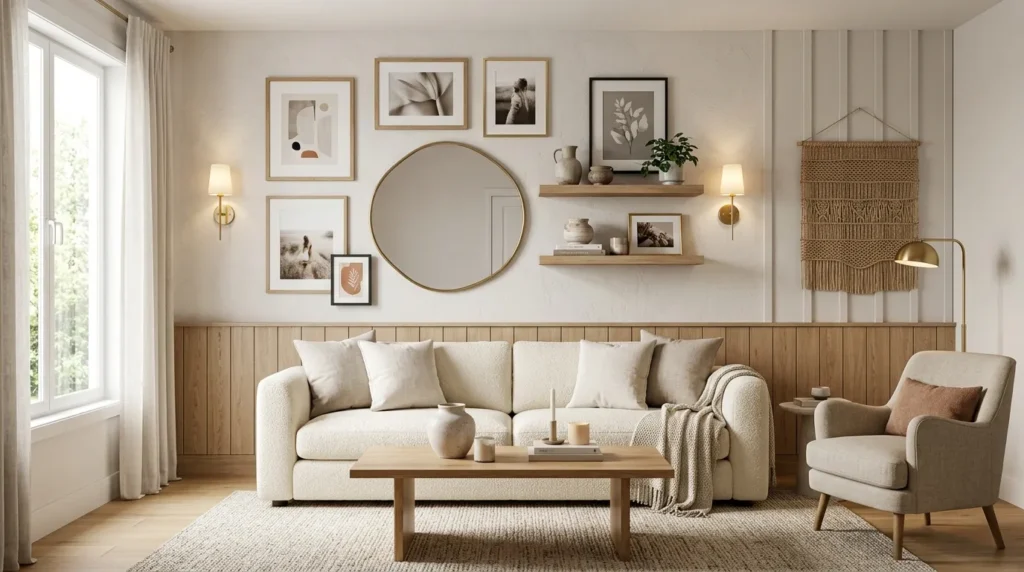
2. Layered Gallery Wall
Combine framed artwork, photographs, and meaningful objects for a collected look.
3. Warm Wood Shelves
Add floating or picture ledges to display books, ceramics, plants, and treasured pieces.
4. Cozy Accent Mirror
Use a decorative mirror to reflect light while adding softness and character.
5. Textured Woven Art
Bring natural texture to the walls with baskets, woven panels, and fiber artwork.
6. Family Photo Display
Create a personal wall arrangement with photographs displayed in a cohesive style.
7. Statement Wall Sconces
Use warm lighting to make your walls and seating area feel especially inviting.
8. Neutral Botanical Prints
Introduce gentle nature-inspired artwork for an easy, timeless decorating layer.
9. Wall-Mounted Vintage Finds
Give character to your room with antique-inspired plates, clocks, signs, or collected objects.
10. Textured Accent Wall
Use paint, limewash, paneling, or subtle wall texture to create a cozy backdrop.
11. Built-In Cozy Styling
Turn an entire wall into a warm focal point with shelving, storage, artwork, and lighting.
1. Oversized Landscape Art
Quick Benefits
- Creates an instant focal point
- Makes a blank wall feel finished
- Adds calming natural colors
- Works with many decorating styles
- Helps large rooms feel more balanced
Why It Works
An oversized landscape painting or nature-inspired print is one of the simplest ways to make a living room feel cozy. Rather than filling the wall with lots of small decorations, one substantial piece gives the room a clear visual anchor.
Landscape artwork is especially effective because it naturally introduces colors and imagery associated with comfort: muted greens, warm browns, soft blues, cream, beige, and earthy neutrals. These tones work beautifully with wood furniture, linen upholstery, woven rugs, and other cozy materials.
The artwork does not need to be expensive or genuinely antique. A vintage-inspired print, canvas reproduction, or modern painting with an organic subject can create a similar atmosphere.
I’ve noticed that large artwork also works particularly well above sofas because it visually connects the wall to the furniture below it. The important thing is choosing a size that feels proportional rather than making a large wall feel even emptier.
How To Style It
Choose a landscape with a relatively soft color palette if your living room already has several textures. Forest scenes, countryside views, coastal landscapes, botanical fields, and abstract nature-inspired artwork are all good options.
Hang the artwork above the sofa with enough breathing room between the frame and furniture. If you have a large wall, avoid choosing a tiny piece that gets visually lost.
For a cozy finish, repeat one or two colors from the artwork elsewhere in the room. A muted green in the painting could appear again in a cushion or plant, while warm brown can be echoed through a wood coffee table.
Keep the surrounding wall relatively simple. One large piece should have room to breathe.
2. Layered Gallery Wall
Quick Benefits
- Adds personality and visual interest
- Works well on large blank walls
- Can incorporate meaningful pieces
- Allows decorating to evolve over time
- Creates a collected, lived-in feeling
Why It Works
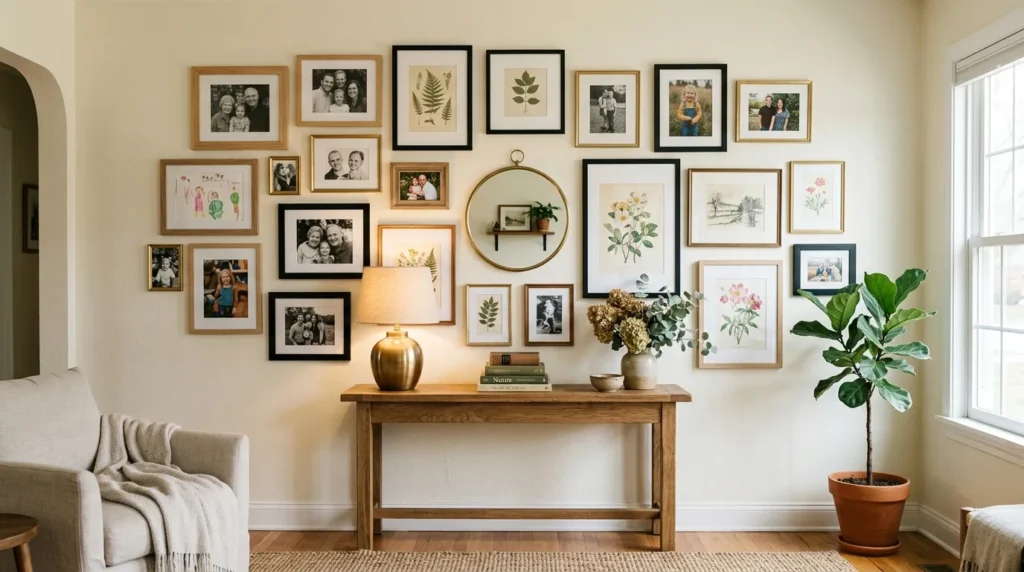
A gallery wall can instantly make a living room feel more personal. Instead of relying on one piece of artwork, you create a visual story using several frames, photographs, paintings, sketches, and small decorative objects.
The key to making a gallery wall cozy rather than chaotic is having some form of consistency. You might use similar frame colors, a limited palette, or artwork with a shared subject.
A completely matching gallery can feel formal, while a collection with slightly different frames and artwork can feel more relaxed. That imperfect quality is often what makes a home feel authentic.
Gallery walls are also useful when you have pieces collected from different places. A family photograph, vintage landscape, botanical print, children’s artwork, and small mirror can coexist when the overall arrangement is intentional.
How To Style It
Start by choosing your largest piece and placing it roughly in the center. Build outward with smaller frames.
For a cozy arrangement, use warm wood, black, brass, or cream frames. You can mix frame styles, but try to repeat each finish at least once so the arrangement feels connected.
Before putting holes in the wall, arrange the frames on the floor. Take a photograph from above and adjust the spacing until the composition looks balanced.
Leave fairly consistent gaps between pieces, but do not worry about perfect symmetry. A relaxed arrangement often feels warmer than a rigid grid.
Include one or two personal pieces so the gallery wall feels like part of your home rather than a store display.
3. Warm Wood Shelves
Quick Benefits
- Adds useful display space
- Introduces natural warmth
- Makes empty walls functional
- Provides room for seasonal decorating
- Works in both large and small living rooms
Why It Works
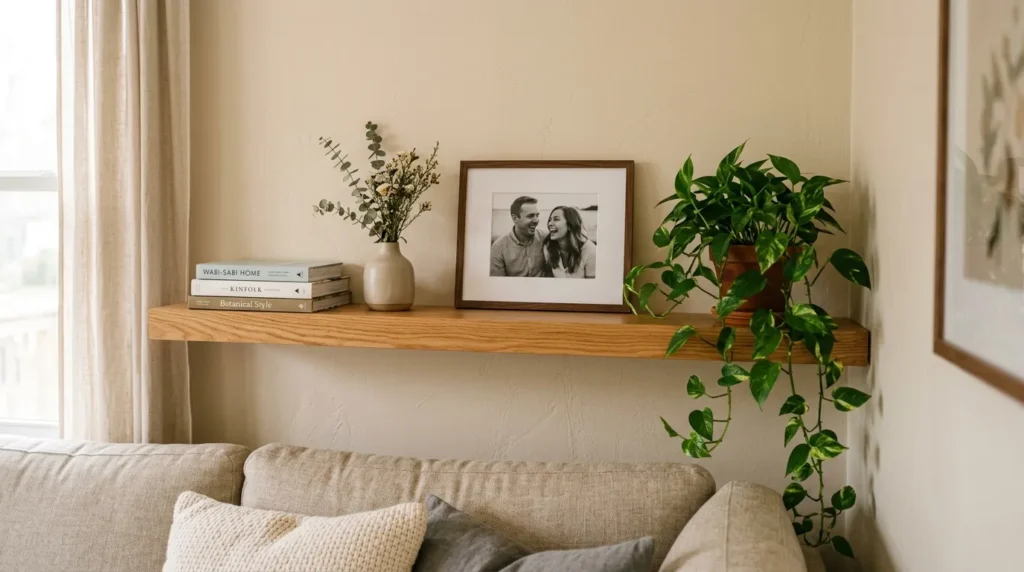
Floating shelves and picture ledges are wonderful for cozy wall decorating because they combine beauty with function. Instead of hanging decorative pieces directly on the wall, you can layer objects at different heights.
Natural wood is especially effective because it immediately brings warmth to painted walls. A simple oak shelf against a cream, beige, or soft white wall can make a living room feel more inviting without requiring much decoration.
Shelves also allow your decor to change throughout the year. You might display greenery and light ceramics during spring, then introduce books, candles, woven pieces, and deeper colors during fall.
One mistake many homeowners make is filling every inch of a shelf. Leaving some empty space allows individual objects to stand out and prevents the wall from feeling cluttered.
How To Style It
Choose shelves with enough depth to hold the objects you actually want to display. A long picture ledge works beautifully above a sofa, while two or three shorter floating shelves can create a more layered arrangement.
Mix different types of objects: books, framed photographs, ceramic vases, small plants, candles, baskets, and collected accessories.
Vary the heights of your objects. Place a tall vase beside a stack of horizontal books and a smaller decorative object.
For the coziest effect, use natural wood rather than a highly glossy finish. Warm oak, walnut, reclaimed wood, and softly stained pine can all work depending on your room.
4. Cozy Accent Mirror
Quick Benefits
- Reflects natural light
- Makes a room feel more open
- Adds decorative interest
- Works above sofas and consoles
- Can provide an elegant focal point
Why It Works
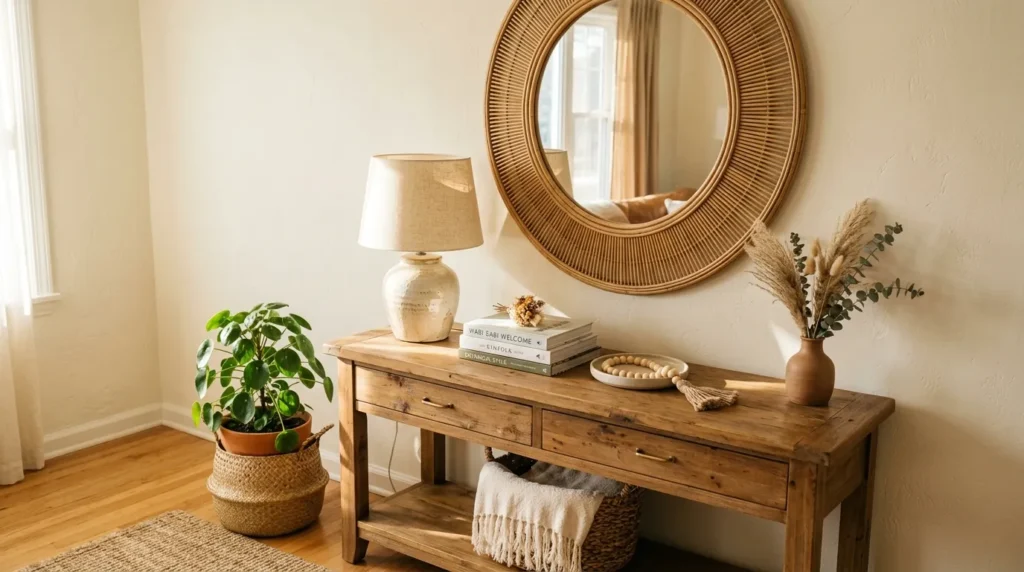
Mirrors are practical, but they can also be surprisingly cozy when the frame and surrounding decor are chosen carefully. Instead of selecting a very sleek, frameless mirror, consider one with a warm wood, antique brass, rattan, or softly distressed frame.
A mirror can help bounce daylight around the living room, particularly when placed opposite or near a window. This makes it useful in spaces that feel darker or smaller.
The frame is what determines much of the mood. A rounded wooden mirror can feel relaxed and organic, while an aged brass frame can create a more traditional atmosphere.
A large mirror above a console can also become a strong focal point without adding visual heaviness.
How To Style It
Choose the shape according to the furniture beneath it. A round or arched mirror can soften a room filled with rectangular furniture, while a rectangular mirror can complement a long console.
If you’re placing it above a sofa, make sure it is large enough to feel intentional. A tiny mirror floating above a large sectional may look disconnected.
Add a few simple pieces underneath if the mirror is above a console: a ceramic lamp, small plant, stack of books, or decorative bowl.
Avoid placing too many objects directly around the mirror. The reflective surface already adds visual activity.
5. Textured Woven Art
Quick Benefits
- Adds tactile warmth
- Softens hard walls
- Works beautifully with neutral decor
- Introduces natural materials
- Creates a relaxed, handmade feeling
Why It Works
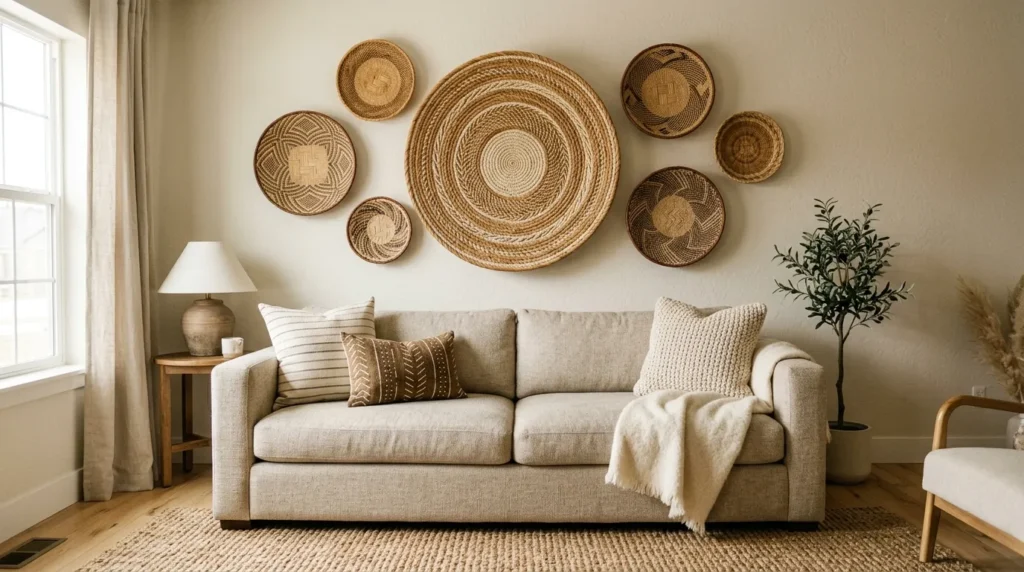
If your living room already has plenty of framed artwork, woven wall decor can provide a welcome change. Baskets, macramé, woven panels, rattan pieces, and fiber art introduce texture that traditional flat artwork cannot.
This is particularly effective in neutral rooms. When the color palette is simple, texture becomes an important source of visual interest.
Woven materials also have an inherently relaxed quality. They work beautifully with linen sofas, cotton throws, jute rugs, natural wood, and houseplants.
You do not need a large collection. One substantial woven piece can soften a large wall, or a small group of baskets can create an organic focal point.
How To Style It
For a modern cozy room, choose woven pieces with simple patterns and natural colors. Cream, tan, beige, camel, and warm brown are easy to incorporate.
A large round basket can work beautifully above a console. Several smaller woven baskets can be arranged together for a more collected appearance.
You can also combine woven art with framed artwork. For example, place one woven piece in the center of a gallery arrangement to break up the rows of rectangular frames.
Keep the rest of the wall decor relatively simple so the texture remains noticeable.
6. Family Photo Display
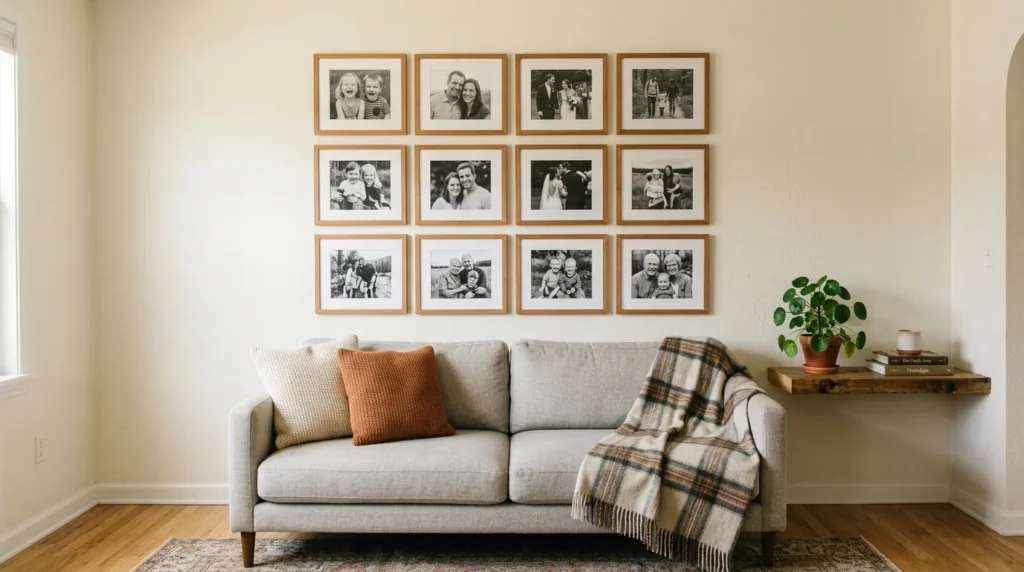
Quick Benefits
- Makes the room personal
- Creates emotional warmth
- Works with many decorating styles
- Can be updated easily
- Turns everyday memories into decor
Why It Works
A cozy living room should feel like it belongs to the people who live there. Family photographs can accomplish that more effectively than almost any decorative accessory.
The trick is to display photographs in a way that feels intentional. A wall covered with mismatched frames can quickly look cluttered, while a thoughtfully arranged collection can look polished and personal.
Black-and-white photographs create a timeless appearance, while color photography can make the room feel more casual and lively.
You can also include photographs of meaningful places, vacations, pets, celebrations, or everyday moments rather than limiting the wall to formal family portraits.
How To Style It
Choose a consistent frame finish if you want a cleaner appearance. Warm wood frames create a particularly cozy effect, while black frames provide a more modern contrast.
For a sophisticated gallery, print photographs in black and white and mix them with a few neutral art prints.
Arrange the frames around eye level and keep the spacing relatively consistent.
If you are decorating a family room, consider placing the photo display on a wall that is visible from the main seating area. It should be somewhere you naturally see and enjoy rather than hidden in a corner.
7. Statement Wall Sconces
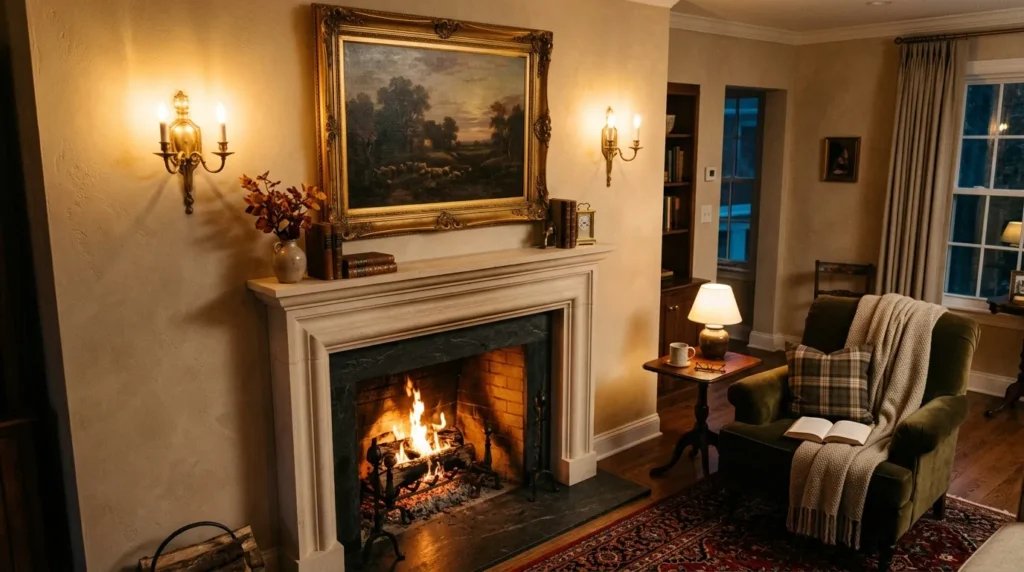
Quick Benefits
- Adds warm evening light
- Creates an elegant focal point
- Makes walls feel layered
- Works beautifully beside artwork
- Adds function as well as decoration
Why It Works
Cozy rooms need good lighting, and wall sconces offer a way to combine illumination with wall decoration. Instead of treating lighting as an afterthought, you can use it as part of the room’s visual design.
A pair of sconces on either side of artwork, a fireplace, or a mirror creates symmetry and a warm glow. This can make the seating area feel especially inviting in the evening.
Sconces are also useful when floor and table space is limited. They keep surfaces clear while still providing soft illumination.
Warm metal finishes, linen shades, ceramic fixtures, and simple sculptural designs tend to work particularly well with cozy decorating.
How To Style It
If your wall has a large piece of artwork, consider placing sconces on either side rather than adding additional wall decor.
For a fireplace, symmetrical sconces can create a classic arrangement. If your room is more casual, mismatched or single sconces can work as well.
Choose bulbs with a warm color temperature for a softer evening atmosphere.
If you’re renting, plug-in sconces can provide a similar decorative effect without requiring permanent electrical work.
8. Neutral Botanical Prints
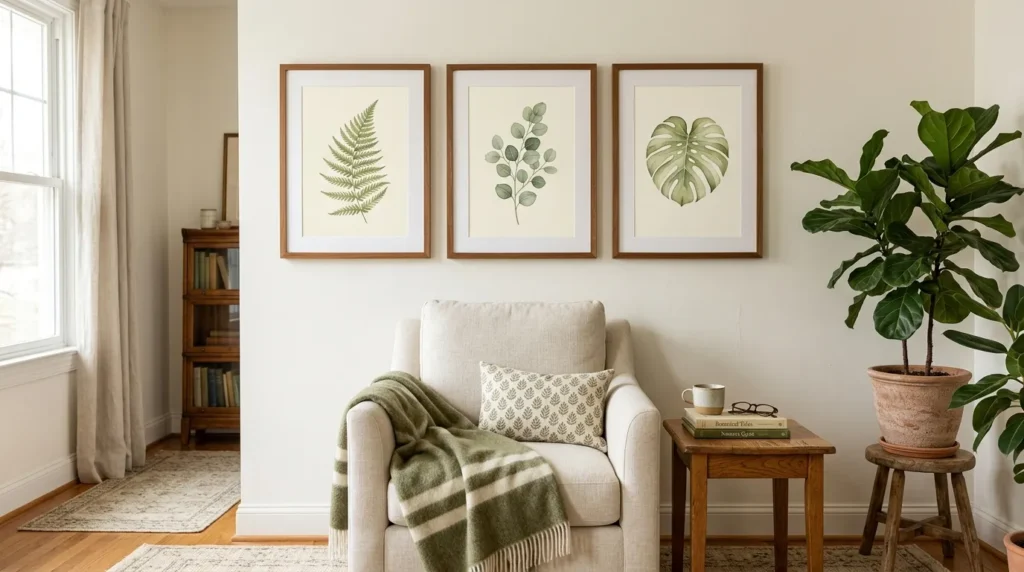
Quick Benefits
- Adds natural beauty
- Introduces subtle color
- Works with neutral interiors
- Creates a timeless look
- Easy to coordinate with plants and wood
Why It Works
Botanical artwork is one of those decorating choices that can work across many interior styles. Leaves, flowers, branches, herbs, and vintage plant illustrations bring a quiet connection to nature.
For a cozy living room, muted botanical prints are often more versatile than bright floral artwork. Soft green, olive, beige, cream, brown, and dusty blue can add color without overpowering the room.
Botanical prints also make it easy to connect wall decor with real plants. A framed leaf illustration beside a potted olive tree or leafy houseplant can create a cohesive natural theme.
This approach is particularly useful if you want your room to feel fresh and welcoming without relying on bold colors.
How To Style It
Choose a collection of two, three, or four prints in coordinating frames. They can be identical for a symmetrical arrangement or slightly different for a more relaxed look.
Warm wood frames work beautifully with botanical artwork. Cream mats can help the prints feel more substantial.
Hang them above a console, sofa, or reading chair. You can also combine botanical artwork with a small mirror or woven piece.
Repeat the artwork’s green or earthy tones in cushions, plants, or small accessories around the room.
9. Wall-Mounted Vintage Finds
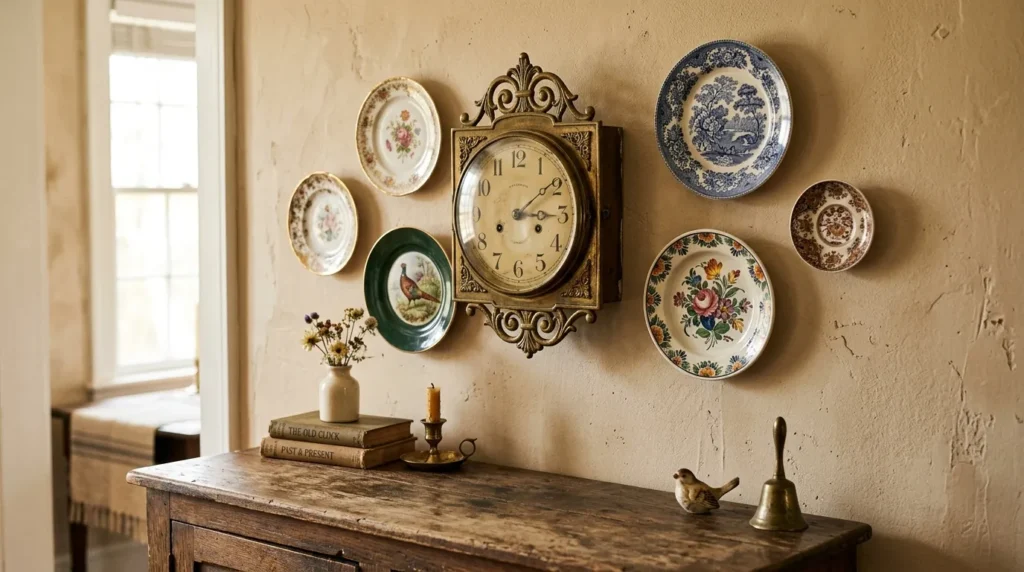
Quick Benefits
- Adds character and history
- Makes the room feel collected
- Creates conversation pieces
- Works well with neutral furniture
- Gives ordinary walls more personality
Why It Works
Sometimes the most interesting wall decor is not traditional artwork at all. Vintage-inspired objects can make a living room feel as though it has evolved over time.
Think decorative plates, old clocks, architectural fragments, vintage signs, antique-style trays, carved wooden pieces, or small collections of ceramics.
These objects work particularly well in cozy homes because they bring irregular shapes and visual history into the room.
The goal is not to create a themed vintage wall. One or two carefully chosen pieces can be much more effective than covering the entire wall with collectibles.
How To Style It
Choose objects that complement the existing color palette. A weathered wood piece can warm up a neutral wall, while antique brass can coordinate with lighting fixtures.
A large vintage clock can serve as a focal point by itself. A collection of decorative plates can work above a dining-adjacent living area or console.
For a more modern approach, combine one vintage object with contemporary artwork.
If you are shopping secondhand, look for items with natural imperfections. Slight wear can make a room feel more authentic and lived-in.
10. Textured Accent Wall
Quick Benefits
- Adds architectural interest
- Creates a strong backdrop
- Makes furniture stand out
- Can transform an ordinary room
- Offers a subtle alternative to artwork
Why It Works
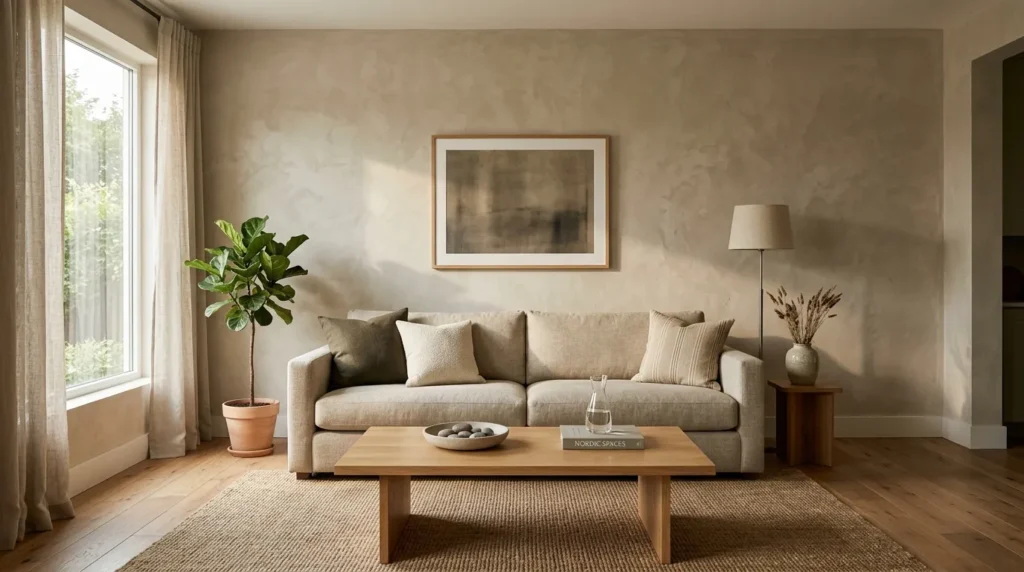
Sometimes the best way to decorate a wall is to change the wall itself. Texture can create depth without requiring numerous decorative objects.
Depending on your home and budget, possibilities include warm paint colors, limewash-style finishes, wood paneling, beadboard, picture-frame molding, or subtle plaster-inspired treatments.
A textured wall can make a cozy sofa or fireplace feel much more substantial. It also provides a backdrop for simple furniture, meaning you may need fewer accessories.
For renters, removable wallpaper and temporary wall treatments can provide similar visual interest without making permanent changes.
How To Style It
Choose a finish that complements the existing architecture. Traditional molding can work beautifully in a classic home, while limewash or subtle plaster texture may suit a relaxed modern interior.
Keep the color relatively soft if you want the room to remain cozy. Warm white, mushroom, taupe, muted olive, clay, and soft beige can all work.
Once the wall has texture, avoid overdecorating it. One large artwork, mirror, or console arrangement may be enough.
The wall should provide the visual interest while the furniture and accessories maintain a sense of calm.
11. Built-In Cozy Styling
Quick Benefits
- Maximizes wall space
- Provides storage and display
- Creates a custom appearance
- Makes large walls feel intentional
- Combines practicality with decoration
Why It Works
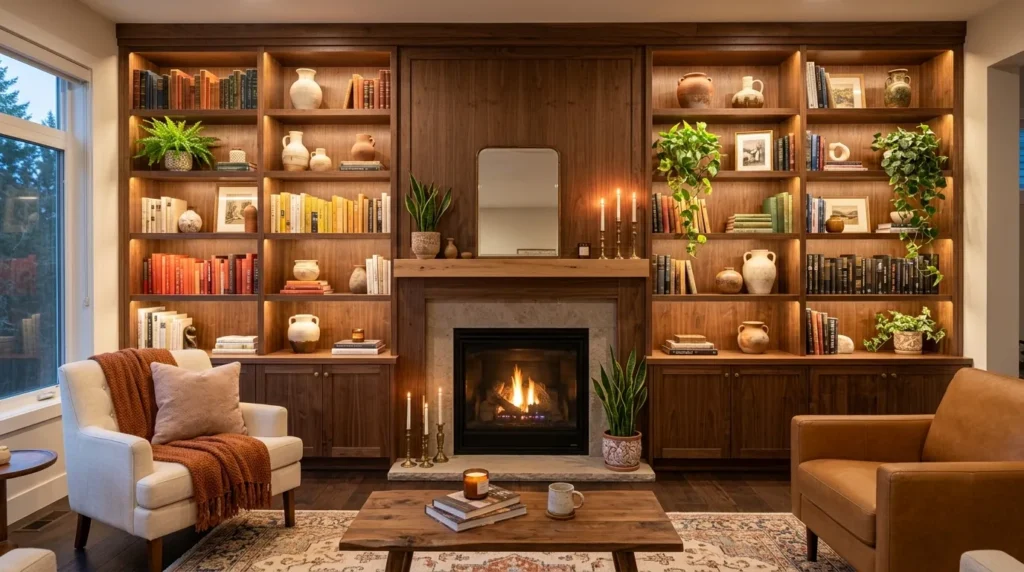
If you have a large empty wall, built-in shelving can turn it into the architectural centerpiece of your living room.
Built-ins are especially useful because they provide both concealed storage and open display space. You can hide everyday clutter behind cabinet doors while using the visible shelves for books, artwork, ceramics, plants, and meaningful objects.
The result can feel warm and sophisticated without requiring a traditional gallery wall.
Built-ins also help balance large televisions, fireplaces, and oversized seating arrangements. Rather than allowing a television or fireplace to dominate an entire wall, surrounding it with shelves creates a more integrated composition.
How To Style It
Use a combination of open shelving and closed storage whenever possible. Keep the lower sections closed so the room does not become visually cluttered.
On open shelves, mix books, framed photographs, ceramic pieces, baskets, plants, and small decorative objects.
Avoid filling every shelf completely. Empty space is just as important as the objects themselves.
Repeat materials throughout the shelves—such as wood, woven fibers, ceramics, and brass—to create cohesion.
For evening coziness, incorporate small lamps or integrated lighting. A warm glow across shelves can make the entire living room feel more inviting.
How To Choose the Right Wall Decor for Your Living Room
Before buying anything, look at the wall from the main seating position. The best wall decoration should feel connected to the furniture rather than floating independently.
Consider the size of the wall first.
A large wall usually needs either one substantial focal point or a larger composition such as a gallery wall, shelving system, or built-in. A small wall may look better with one mirror, artwork, or compact collection.
Next, consider the color palette.
If your furniture is neutral, wall decor can introduce muted color. If your sofa already has a strong color, keep artwork and accessories relatively simple.
Then think about texture.
A room filled with smooth surfaces benefits from woven art, wood, baskets, and textured frames. A room that already contains many patterns may need simpler wall decoration.
Finally, consider how you want the room to feel.
For a cozy farmhouse atmosphere, use warm wood, vintage artwork, and woven pieces. For modern coziness, try oversized artwork, simple shelves, organic shapes, and warm lighting. For a traditional room, decorative mirrors, framed landscapes, and classic sconces can work beautifully.
How High Should You Hang Living Room Wall Decor?
As a general guideline, wall art should be positioned so the center of the artwork is around eye level. When hanging artwork above a sofa or console, leave a comfortable visual gap between the furniture and the frame rather than placing it extremely high.
A common mistake is hanging artwork too close to the ceiling. This can make the furniture below feel disconnected from the wall.
For gallery walls, think of the entire collection as one visual object. The center of that composition should generally sit around eye level.
There is no single measurement that works for every room, though. Ceiling height, furniture scale, artwork size, and the height of the people using the room all matter.
When in doubt, temporarily tape paper versions of your artwork to the wall. Step back and look from different parts of the room before making permanent holes.
How To Make a Blank Wall Feel Cozy Without Clutter
The secret is layering rather than filling.
You do not need dozens of decorations. Instead, combine a few different elements:
- One substantial artwork
- Natural wood
- Warm lighting
- Soft textiles
- One decorative object
- A plant or branch
- A personal photograph
- A mirror or reflective surface
Texture can often create more coziness than quantity. A woven wall hanging, linen curtain, wooden frame, and soft lighting may make a room feel warmer than an entire wall covered with small decorations.
Another useful strategy is to leave some negative space. Empty wall areas help the decorated sections feel intentional.
Budget-Friendly Living Room Wall Decorating Ideas
You can make a significant difference without purchasing expensive artwork.
Try these simple updates:
- Frame pages from an old botanical book.
- Create a gallery wall using family photographs.
- Install inexpensive wooden picture ledges.
- Paint one wall in a warm neutral shade.
- Shop thrift stores for vintage frames.
- Use baskets as wall art.
- Rearrange artwork you already own.
- Create your own abstract artwork with neutral paint.
- Display children’s artwork in matching frames.
- Add removable wallpaper to a small accent wall.
One of the easiest ways to make inexpensive wall decor look elevated is to keep the color palette consistent. Even budget artwork can look sophisticated when the frames, colors, and surrounding furniture work together.
Frequently Asked Questions
What should I put on a large living room wall?
Large living room walls work well with oversized artwork, gallery walls, large mirrors, floating shelves, built-ins, or a combination of artwork and lighting. Choose the scale based on the size of the wall and furniture underneath it. A small decorative piece can easily become visually lost on a large empty wall.
How can I decorate my living room walls without making them cluttered?
Use fewer, larger pieces rather than many tiny decorations. An oversized painting, large mirror, or carefully arranged gallery wall can create more impact with less visual clutter. Leave some negative space around your main pieces and repeat a small number of colors or materials throughout the arrangement.
What wall decor makes a living room feel cozy?
Warm wood frames, landscape artwork, woven wall pieces, family photographs, soft lighting, mirrors, natural materials, and textured finishes can all make a living room feel cozier. The combination of warm colors and tactile materials is often more important than the number of decorations.
Should wall art match my living room furniture?
Artwork does not need to match your furniture exactly. It should, however, relate to the room through color, texture, or mood. If your sofa is beige, for example, artwork can introduce muted green, brown, blue, or cream rather than using the exact same beige shade.
Is a gallery wall still popular for living rooms?
Gallery walls remain a versatile decorating option because they can be customized to almost any interior style. A more current approach is to mix artwork with photographs, mirrors, woven pieces, or objects rather than creating a perfectly uniform arrangement.
How do I decorate a living room wall behind a sofa?
Large artwork, a gallery wall, a large mirror, floating shelves, or a combination of artwork and sconces can work well behind a sofa. Keep the overall width visually related to the sofa and avoid hanging everything too high. The arrangement should feel connected to the seating area.
How can renters decorate living room walls?
Renters can use removable hooks, picture ledges, lightweight mirrors, removable wallpaper, framed artwork, and freestanding shelving. Plug-in wall sconces can also provide the appearance of built-in lighting without permanent electrical changes.
Conclusion
Decorating living room walls is one of those small home projects that can have a surprisingly big effect. The right wall treatment can make your furniture feel more connected, add personality to an otherwise plain space, and create the warm atmosphere that makes you want to stay a little longer.
You do not have to decorate every wall. Start with the wall that feels most unfinished or the one you see most often from your main seating area. An oversized landscape painting, warm wood shelf, vintage mirror, family photo collection, or woven wall piece may be all you need to begin.
For an especially cozy result, combine visual interest with practical comfort. Add warm lighting, natural materials, meaningful objects, and plenty of breathing room. Think about how the wall will look during the day and how it will feel in the evening when lamps are glowing and the room is being used.
Most importantly, choose pieces that feel like you. A living room should not look like a showroom. It should tell a story about the people who live there.
Start with one wall, experiment with scale and texture, and gradually build a space that feels welcoming, personal, and comfortable every day.
Related Articles
- 15 Cozy Living Room Ideas for a Warm and Inviting Home
- 12 Small Living Room Decorating Ideas That Feel Spacious
- 15 Neutral Living Room Ideas for a Timeless Look
- 11 Modern Farmhouse Living Room Ideas
- 12 Beautiful Living Room Layout Ideas for Any Home